



The Capitol Forum published an article with analysis of Yageo Kemet acquisition review by CFIUS (interagency committee authorized to review certain transactions involving foreign investment in the United States)
Taiwan-based Yageo is likely to attract the close scrutiny U.S. national security officials reserve for a mainland Chinese company as they review its proposed $1.8 billion Kemet (KEM) takeover, government and industry experts said. Although a longtime U.S. ally, Taiwan in recent decades has expanded business ties to the mainland, the experts said.
The growing symbiotic relationship between the two increases the potential for the Chinese government to exert influence on Taiwanese companies, even cutting off U.S. access to vital products, the experts said.
“CFIUS’s informal practice is to treat Taiwanese businesses as Chinese,” said an expert who requested anonymity because of dealings with the Committee on Foreign Investment in the United States, which conducts national security reviews of proposed foreign takeovers of American assets. Yageo’s connections to the mainland are considerable: The New Taipei City-based electronic components maker generated 54% of its 2018 sales in Greater China, an area that includes mainland China, Taiwan, Hong Kong and Macau. The company has production facilities in Dongguan, Qingdao and Jiangsu provinces.
CFIUS’s practice of regarding Taiwanese and Chinese companies as similar threats could at the very least delay the deal’s completion as Yageo answers the committee’s questions and potentially proposes mitigation measures to address its concerns. With trade and security tensions between the U.S. and China continuing, CFIUS has restricted or prohibited Chinese companies’ acquisitions of U.S. companies. That’s especially true of deals involving computer chip-related businesses such as Kemet that supply U.S. Defense Department contractors.
CFIUS would be concerned about China exercising any leverage over Yageo if it acquires Kemet, the experts said. Fort Lauderdale, Florida-based Kemet is one of DOD’s main suppliers of tantalum capacitors, the rugged, high performance electronic components used in military drones, satellites and missile defense systems. “Given Yageo’s extensive activities in China, CFIUS will consider whether there is a third-country risk with respect to China,” said Damara Chambers, a partner at Vinson & Elkins, and co-leader of the firm’s National Security and International Trade practice.
CFIUS isn’t the only one with reservations about the evolving Taiwan-China relationship. Taiwan’s growing dependence on China, its No. 1 trading partner, has become a major issue in the island’s presidential election, which will take place Saturday. Incumbent Tsai Ing-wen has established a double-digit lead over her main rival by rebuffing Chinese overtures for closer ties.
Spokespeople for CFIUS, Yageo and Kemet didn’t respond to requests for comment. Kemet CEO William Lowe said on a November call with analysts that he expected the companies would file with CFIUS in the next 60 days, triggering a deal review that would take six to seven months.
“We’re not expecting that to be a particular issue,” he said on the call. But experts told The Capitol Forum that Lowe likely was understating CFIUS’s concerns.
“The deal is going to get probed rigorously,” said a second expert who asked for anonymity because of dealings with CFIUS.
Important capacitors supplier
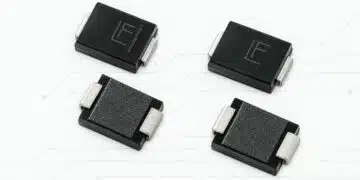
Kemet is the second-largest supplier of tantalum capacitors to U.S. government contractors, according Dennis Zogbi, founder and CEO of Paumanok Publications, a publisher of industry research. U.S. rival Vishay Intertechnology is the largest such supplier, while American manufacturer AVX and Paris-based Exxelia Group also sell the contractors a significant quantity of the components, he said.
The U.S. military has four dedicated specifications for the construction and configuration of tantalum capacitors used in its equipment. Only Kemet and Vishay make capacitors that meet all four, and, contractors requiring that expertise would need to rely on Vishay or a new vendor not currently in the market if the Kemet supply is cut, Zogbi said.
Kemet has captured a 33% share in the worldwide tantalum capacitor market, which was valued at $1.7 billion in 2017, according to a company investor presentation. The company has boasted that it controls more than half of the market for tantalum capacitors that use polymer technology, which can endure extreme temperatures and humidity. Kemet has said its tantalum-polymer sales accounted for 41% of its fiscal 2019 revenue—a year-over-year increase of 14%. The company also does a brisk business in ceramic capacitors, sales of which accounted for 27% of 2019 revenue. In 2018, Kemet became the first—and still only—supplier of base metal electrode ceramic capacitors that meet the Defense Logistics Agency’s specifications for defense and aerospace applications.
Still, the company has emphasized in presentations and regulatory filings that it’s focused on selling capacitors used in products with civilian uses. Kemet makes only “a small percentage” of capacitors under military specifications, the company said in its May 2019 10-K. Military-grade tantalum capacitors often cost more than those used in products geared for the general public because of their higher reliability and durability. They require extensive testing before receiving DOD approval.
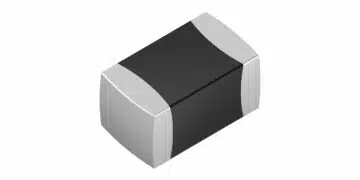
Capacitors store an electric charge, preventing memory loss on computer applications during a power failure. DOD prizes capacitors manufactured out of tantalum, a hard, gray metal more resistant to heat and corrosion than ceramic, the other major material used in making the components.
Tantalum capacitors are the most reliable capacitor type, storing a lot of electric charge in a small space, said Tomas Zednicek, president and CEO of the European Passive Components Institute, an industry research group. The components are critical for military drones’ display and control features. In addition to applications in missile defense and satellite technology, tantalum capacitors help provide navigation and communication features in antennas and other military equipment. The components also are in cell phones, laptops, hearing aids and pacemakers.
China’s ability to halt capacitor supply
DOD, a member of the interagency CFIUS, will focus on China’s ability to restrict the supply of Kemet’s tantalum capacitors post merger, the national security and industry experts said.
“If a company is dependent upon a supply chain in China and China is able to limit access to that supply chain, that creates a problem,” said Giovanna Cinelli, a former Naval Intelligence officer who’s now a CFIUS adviser at Morgan Lewis.
The U.S. has been concerned for some time about its reliance on tantalum-based technology. Some of that worry stems from sporadic shortages in the mineral, which mostly is mined in Australia, Brazil, Canada and the Democratic Republic of the Congo. A 2018 executive order issued by President Donald Trump lists tantalum among 35 minerals deemed critical to national security and the economy. The list is part of an administration effort to lessen the vulnerability of U.S. supply chains for essential technology.
The U.S. has accelerated such initiatives since China, the dominant supplier of rare-earth minerals, in 2010 banned shipments of the material to Japan after that country detained a Chinese fishing trawler captain in the disputed waters of the East China Sea. The export ban negatively affected Japan’s manufacture of cars, wind turbines and guided missiles.
More recently, China has seemed to make veiled threats during its trade dispute with the U.S. to curtail the supply of rare-earth minerals, which also are used in cell phone and computers. CFIUS will want to ensure that China can’t do the same with Kemet’s tantalum capacitors, the experts said.
But Kemet’s record of guaranteeing product shipments could work in the deal’s favor. The company has been “a champion of securing that supply chain,” industry researcher Zogbi said.
Kemet is subject to U.S. trade restrictions, such as the Export Administration Regulations (EAR), because some of its products can be used by the military and the general public. Such “dual use” technology is put on the Commerce Control List (CCL), which is enforced by the Commerce Department’s Bureau of Industry and Security. The Commerce Department, which is represented on CFIUS, will play a crucial role in determining whether the committee approves the deal, the experts said.
Kemet also makes sensitive defense technology whose export is controlled under the International Traffic in Arms Regulations (ITAR). “CFIUS is likely to closely scrutinize Kemet’s and Yageo’s export control practices and compliance records,” Vinson & Elkins’ Chambers said. The committee has devoted increased scrutiny to computer chip-related deals, particularly those involving semiconductors, which it considers critical technology. Recently, CFIUS has blocked several of these transactions, including German chipmaker Infineon’s proposed acquisition of Cree’s Wolfspeed Power & RF unit in 2017.
Taiwanese acquisitions
Yageo’s planned Kemet acquisition follows its $740 million purchase in 2018 of components manufacturer Pulse Electronics. The acquisition of the California company, which wasn’t a DOD supplier, didn’t raise CFIUS concerns. The acquisitions are part of a broader trend begun more than a decade ago of Taiwanese firms investing in European and American semiconductor, biotech and chemical companies.
In their November announcement, Yageo and Kemet said the deal would create a leading maker of passive components, which don’t generate energy but can store or dissipate it. The transaction would increase Yageo’s presence in the automotive, 5G network, robotics and automation segments, according to the companies.
Potential mitigation. CFIUS could impose conditions on the Yageo deal to address any concerns, Chambers said. The committee, for example, could demand Kemet maintain some operations in the U.S. and put American citizens in charge of them. The companies also might have to take steps to ensure that Yageo and its affiliates won’t have access to certain Kemet technology and defense programs. It’s even possible CFIUS could insist on the divestiture of some or all of Kemet’s defense business, she said.
Taiwan’s ties to China and U.S. CFIUS’s caution toward Taiwanese buyers has increased as the island’s ties with China have strengthened. Once a bastion of anti-Communism in Asia, Taiwan has established significant links, particularly on the business front, with its longtime nemesis. At the same time, the island’s leaders and the U.S. have continued to cultivate their longtime alliance. The U.S. has maintained a strong relationship with Taiwan despite breaking off formal relations in 1979 to establish diplomatic ties with China.
China considers Taiwan one of its provinces and President Xi Jingping has proposed establishing there the same “one country, two systems” approach used in Hong Kong and Macau. Tsai quickly rejected the proposal and has accused Beijing of meddling in the election. Her positions, particularly in light of the ongoing Hong Kong protests, helped boost her poll numbers over a challenger who is urging more cooperation with the mainland.
Trump has been supportive of Taiwan generally and Tsai, in particular, talking with her on the phone shortly after being elected in 2016. The call is believed to be the first between a U.S. president or president-elect and a Taiwanese leader since the end of formal diplomatic relations in 1979. Trump also has signed laws fostering relations between senior U.S. and Taiwanese officials and approving the sale of billions of dollars of U.S. arms to the island. That goodwill, though, likely won’t translate into an easier national security review for Yageo, said the second CFIUS expert who requested anonymity. “It is a Taiwanese company that has some connections to China that are not insignificant,” the expert said.
Published at passive-components.eu website under permission from © 2020 The Capitol Forum. Direct or indirect reproduction or distribution of this article without prior written permission from The Capitol Forum is a violation of Federal Copyright Law.