





Passive Components Blog
No Result
View All Result
  • Home
  • News
    • All
    • Aerospace & Defence
    • Antenna
    • Applications
    • Automotive
    • Capacitors
    • Circuit Protection Devices
    • electro-mechanical news
    • Filters
    • Fuses
    • Inductors
    • Industrial
    • Integrated Passives
    • inter-connect news
    • Market & Supply Chain
    • Market Insights
    • Medical
    • Modelling and Simulation
    • New Materials & Supply
    • New Technologies
    • Non-linear Passives
    • Optoelectronics and Isolation
    • Oscillators
    • Passive Sensors News
    • Resistors
    • RF & Microwave
    • Telecommunication
    • Weekly Digest
    Siemens executives Markus Grabmeier and Barry Powell with Skeleton Technologies CEO Taavi Madiberk at the investment announcement

    Siemens Backs Skeleton’s US AI Power Manufacturing Expansion

    Concept illustration of an LTCC antenna module with multilayer ceramic substrate, antenna elements and an integrated beamforming IC

    Murata LTCC 6G Antenna Module Demonstrates 135 GHz Operation

    TDK X series surface-mount multilayer varistors with ceramic chip bodies and metal end terminations

    TDK X Series SMD Varistors for Industrial Transient Protection

    Littelfuse TP7.0SMD-XC automotive TVS diodes with black surface-mount bodies and silver end terminals.

    Littelfuse Introduces Extremely Low Clamping Voltage TVS Diodes for Automotive Protection

    Supercapacitor LSM production

    LS Materials Wins $51.5M AI Data Center Supercapacitor Order

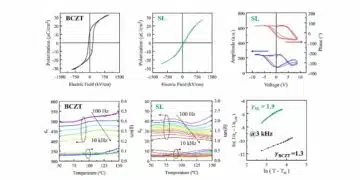
    Features of BCZT and strontium titanate dielectric layers in a thin-film superlattice

    Relaxor superlattice capacitors approach 99% efficiency

    Stackpole RMAN thick-film chip resistors with rectangular bodies and metal end terminations

    Stackpole 2512 AlN Thick-Film Resistors Rated up to 3.5 W

    ECIA September 2026 Industry Pulse electronic component trends and sentiment report

    ECIA September 2026 Pulse: Growth Holds, Supply Pressure Persists

    Wk 39 Electronics Supply Chain Digest

    Trending Tags

    • Ripple Current
    • RF
    • Leakage Current
    • Tantalum vs Ceramic
    • Snubber
    • Low ESR
    • Feedthrough
    • Derating
    • Dielectric Constant
    • New Products
    • Market Reports
  • Knowledge Blog
  • Dossiers
    • Aerospace and Defense Passive Components Dossier
    • AI Hardware Dossier
    • Automotive Dossier
    • Industrial Robotics Dossier
    • Power Converter Dossier
    • Capacitor Dossier
    • Circuit Protection Dossier
    • Inductor Dossier
    • Resistor Dossier
    • Silicon Capacitors and Integrated Passives Dossier
  • Suppliers
    • Who is Who
  • PCNS
    • PCNS 2025
    • PCNS 2023
    • PCNS 2021
    • PCNS 2019
    • PCNS 2017
  • Events
  • Home
  • News
    • All
    • Aerospace & Defence
    • Antenna
    • Applications
    • Automotive
    • Capacitors
    • Circuit Protection Devices
    • electro-mechanical news
    • Filters
    • Fuses
    • Inductors
    • Industrial
    • Integrated Passives
    • inter-connect news
    • Market & Supply Chain
    • Market Insights
    • Medical
    • Modelling and Simulation
    • New Materials & Supply
    • New Technologies
    • Non-linear Passives
    • Optoelectronics and Isolation
    • Oscillators
    • Passive Sensors News
    • Resistors
    • RF & Microwave
    • Telecommunication
    • Weekly Digest
    Siemens executives Markus Grabmeier and Barry Powell with Skeleton Technologies CEO Taavi Madiberk at the investment announcement

    Siemens Backs Skeleton’s US AI Power Manufacturing Expansion

    Concept illustration of an LTCC antenna module with multilayer ceramic substrate, antenna elements and an integrated beamforming IC

    Murata LTCC 6G Antenna Module Demonstrates 135 GHz Operation

    TDK X series surface-mount multilayer varistors with ceramic chip bodies and metal end terminations

    TDK X Series SMD Varistors for Industrial Transient Protection

    Littelfuse TP7.0SMD-XC automotive TVS diodes with black surface-mount bodies and silver end terminals.

    Littelfuse Introduces Extremely Low Clamping Voltage TVS Diodes for Automotive Protection

    Supercapacitor LSM production

    LS Materials Wins $51.5M AI Data Center Supercapacitor Order

    Features of BCZT and strontium titanate dielectric layers in a thin-film superlattice

    Relaxor superlattice capacitors approach 99% efficiency

    Stackpole RMAN thick-film chip resistors with rectangular bodies and metal end terminations

    Stackpole 2512 AlN Thick-Film Resistors Rated up to 3.5 W

    ECIA September 2026 Industry Pulse electronic component trends and sentiment report

    ECIA September 2026 Pulse: Growth Holds, Supply Pressure Persists

    Wk 39 Electronics Supply Chain Digest

    Trending Tags

    • Ripple Current
    • RF
    • Leakage Current
    • Tantalum vs Ceramic
    • Snubber
    • Low ESR
    • Feedthrough
    • Derating
    • Dielectric Constant
    • New Products
    • Market Reports
  • Knowledge Blog
  • Dossiers
    • Aerospace and Defense Passive Components Dossier
    • AI Hardware Dossier
    • Automotive Dossier
    • Industrial Robotics Dossier
    • Power Converter Dossier
    • Capacitor Dossier
    • Circuit Protection Dossier
    • Inductor Dossier
    • Resistor Dossier
    • Silicon Capacitors and Integrated Passives Dossier
  • Suppliers
    • Who is Who
  • PCNS
    • PCNS 2025
    • PCNS 2023
    • PCNS 2021
    • PCNS 2019
    • PCNS 2017
  • Events
No Result
View All Result
Passive Components Blog
No Result
View All Result

Murata LTCC 6G Antenna Module Demonstrates 135 GHz Operation

15.10.2026
Reading Time: 5 mins read
A A
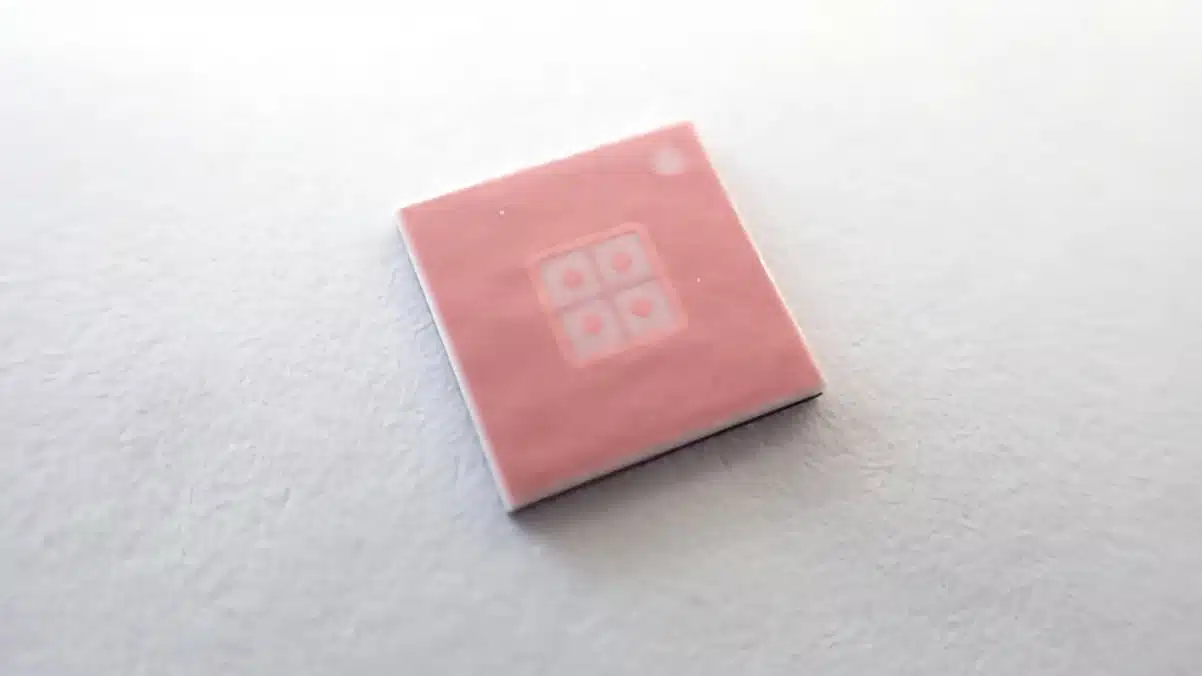
Concept illustration of an LTCC antenna module with multilayer ceramic substrate, antenna elements and an integrated beamforming IC

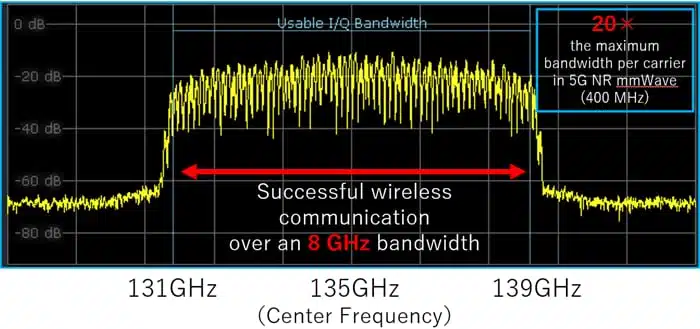
Murata has developed an LTCC antenna module for D-band wireless systems, demonstrating communication at 135 GHz, signal transmission with bandwidths up to 8 GHz, and two-dimensional beam control for transmission and reception.

Developed jointly with imec, the module integrates a ceramic substrate, antennas, RF wiring and a beamforming IC for potential use in 6G communications and sub-terahertz sensing.

RelatedPosts

Murata Previews SiC Power and AI Sensors at electronica 2026

Murata Begins Production of 0201 Three-Terminal Low-ESL MLCCs for IC Decoupling

Samsung MLCC Revenue Seen Above KRW 8T by 2027, Murata EOL Actions Reshape Supply

Key features and benefits

  • D-band technology covering the 110–170 GHz frequency band.
  • Wireless communication demonstrated at 135 GHz.
  • Signal transmission using bandwidths up to 8 GHz.
  • Two-dimensional beam control in both transmit and receive operation.
  • Integrated antenna, RF interconnects and imec-developed beamforming IC.
  • Multilayer ceramic construction based on low-temperature co-fired ceramic technology.

The central development is the combination of D-band operation and transmit-and-receive beam steering on an LTCC platform. The ceramic substrate forms part of the RF architecture, integrating the antennas and signal routing with the active circuitry.

Technical highlights

ParameterValue or implementationEngineering relevance
Frequency bandD-band: 110–170 GHzRF architecture
Demonstrated communication frequency135 GHzEvaluated operating point
Signal bandwidthUp to 8 GHzWideband transmission
Beam controlTwo-dimensional, transmit and receiveHorizontal and vertical steering
Substrate technologyLTCCMultilayer RF integration
Beamforming ICimec-developed D-band ICAntenna beam control

Ceramic substrate and RF integration

The LTCC substrate consists of ceramic sheets carrying wiring that are laminated and co-fired. The module combines this multilayer structure with antennas, RF wiring and a D-band-compatible beamforming IC.

The ceramic material was developed in-house and tailored to the high-frequency application. Dielectric constant and dielectric loss tangent are central material properties in this architecture: dielectric loss tangent relates to signal energy dissipated within the substrate.

At frequencies above 100 GHz, small differences in wiring length and mounting position can materially affect communication performance. Antenna geometry, RF routing and component placement therefore need to be treated as a coordinated design rather than independent layout tasks.
Bandwidth and beam steering serve different functions

The demonstrated 8 GHz bandwidth concerns the frequency span used for signal transmission. It is distinct from the 135 GHz communication frequency and from the wider 110–170 GHz D-band designation.

Two-dimensional beam control directs the radio beam horizontally and vertically. Transmit beamforming concentrates radiation towards the intended communication partner, while receive beamforming controls the reception direction. Supporting both functions is relevant to directional communication at frequencies above 100 GHz.

Typical applications

  • Next-generation 6G communications requiring wideband wireless transmission.
  • High-speed, high-capacity wireless communication systems.
  • Sub-terahertz radar and sensing.
  • Integrated sensing and communication, or ISAC, combining communications with detection of the surrounding environment, object positions and movement.

The demonstrated 135 GHz operation, bandwidth up to 8 GHz and two-dimensional beam control make the module a development platform for wideband, directional communications. Radar, sensing and ISAC are prospective applications of the technology.

Design-in notes for engineers

  • Treat the antenna, ceramic substrate, RF wiring and beamforming IC as an integrated RF assembly when assessing system architecture.
  • Keep the demonstrated communication frequency, signal bandwidth and D-band frequency designation separate when defining system requirements.
  • Assess wiring-length differences and mounting variation alongside antenna geometry; these implementation details affect performance at frequencies above 100 GHz.
  • Evaluate beam control in both transmission and reception, including horizontal and vertical direction control.
  • Validate the integrated RF assembly under the intended operating conditions before schematic, layout or production release.

Development and commercialisation

The module remains in technology development towards practical implementation and volume production. Commercialisation is targeted from 2030 onward, using an LTCC manufacturing process with an established mass-production history.

Further reading

  • Murata Develops Millimeter-wave RF Antenna Module for Next Generation High-Speed Wireless Networks
  • Approaching the 5G mmWave Filter Challenge

Source

This article is based on the Murata product announcement and official product documentation. Engineers should refer to the current manufacturer datasheet for final design and qualification.

References

  1. 6G向け100GHz超の高周波帯に対応したアンテナモジュールを開発― 135GHz帯での無線通信動作、最大8GHzの広帯域信号伝送、送受信双方の2次元ビーム制御を実証 ―, Murata Manufacturing Co., Ltd., 5 October 2026.
  2. https://corporate.murata.com/en-global/newsroom/news/company/general/2026/1005 Murata Manufacturing Co., Ltd., 5 October 2026.


Related

Recent Posts

Murata electronica 2026 technology preview featuring MGJ2T2 power converters and SCI36LT inertial sensors.

Murata Previews SiC Power and AI Sensors at electronica 2026

6.10.2026
59
Bourns CRT-TN TaN thin-film chip resistors in 0402, 0603, 0805 and 1206 package sizes

Bourns Releases TaN Thin Film Resistors Target Precision Circuits

1.10.2026
22
Two Murata LLD three-terminal MLCCs beside a metal ruler, showing beige ceramic bodies and silver-coloured terminals.

Murata Begins Production of 0201 Three-Terminal Low-ESL MLCCs for IC Decoupling

30.9.2026
54
Murata DLW32SH_MF 1210 surface-mount common mode choke coil with metal terminals for automotive CAN FD signal-line noise suppression

Murata Introduces Common Mode Chokes for Automotive CAN FD up to 150°C

10.9.2026
63

Murata Expands Automotive Metal Power Inductor Range

7.9.2026
67

KYOCERA AVX Adds 0201 C0G RF MLCCs to KGU Ultra-Low-ESR Capacitor Series

3.9.2026
65

Vishay IFBT SMT Flyback Transformers Target PoE and Isolated DC/DC Designs up to 30 W

28.8.2026
34

Murata Launches 100V 10 µF Lead-Type MLCCs for 48V Systems

27.8.2026
71

KYOCERA AVX Releases Vibration-Proof SMD Aluminum Electrolytic Capacitors for Harsh Industrial Designs

26.8.2026
64

Upcoming Events

Oct 19
15:00 - 16:00 CEST

ESCC-qualified Pt Temperature Sensors for Space Applications

Oct 27
15:00 - 16:00 CET

Heraeus Electronics Webinar: What materials perform when failure is not an option?

Oct 27
16:00 - 17:00 CET

Power Inductor technologies

View Calendar

Popular Posts

  • Buck Converter Design and Calculation

    0 shares
    Share 0 Tweet 0
  • Boost Converter Design and Calculation

    0 shares
    Share 0 Tweet 0
  • LLC Resonant Converter Design and Calculation

    0 shares
    Share 0 Tweet 0
  • Flyback Converter Design and Calculation

    0 shares
    Share 0 Tweet 0
  • Capacitor Charging and Discharging

    0 shares
    Share 0 Tweet 0
  • Audio Capacitors: Choosing Capacitors for Crossover Circuits

    0 shares
    Share 0 Tweet 0
  • MLCC and Ceramic Capacitors

    0 shares
    Share 0 Tweet 0
  • Resistor Symbols

    0 shares
    Share 0 Tweet 0
  • Thermistors Basics, NTC and PTC Thermistors

    0 shares
    Share 0 Tweet 0
  • Passive Low Pass Filters: Fundamentals and EMI Design

    0 shares
    Share 0 Tweet 0

Newsletter Subscription


Passive Components Blog

© 2015–2026
All rights reserved

  • Home
  • Privacy Policy
  • EPCI Membership & Advertisement
  • About

No Result
View All Result
  • Home
  • Knowledge Blog
  • Dossiers
  • PCNS

© 2015–2026
All rights reserved