




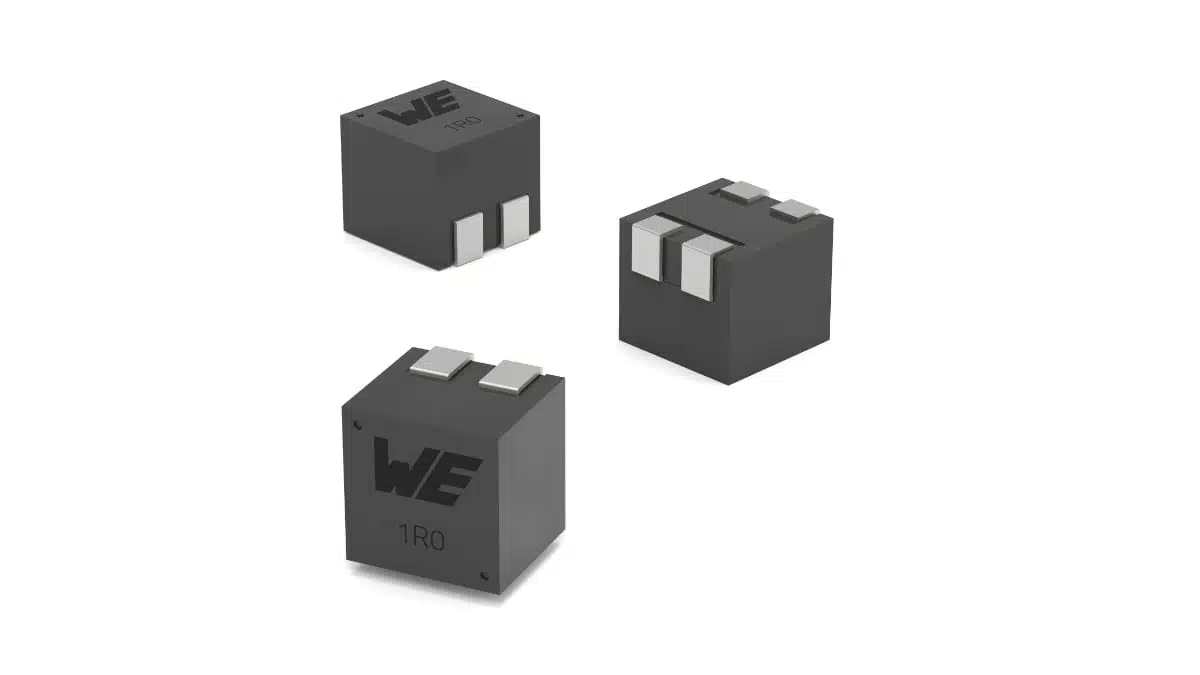
Würth Elektronik has introduced a new High Leakage (HL) variant to its WE-MCRI molded coupled inductor family, targeting SEPIC, ZETA and Ćuk converter designs.
The Würth Elektronik coupled inductor component is engineered to deliberately use leakage inductance as a design tool rather than treating it as a parasitic, enabling more compact and EMC‑robust converters. For engineers and purchasers, this opens up an interesting option to reduce magnetics count, board area and ripple current in non‑isolated DC‑DC stages.
Key features and benefits
- Molded double choke for SEPIC, ZETA, Ćuk topologies
The WE‑MCRI 1090HL variant is a dual inductor in one package, optimized for non‑isolated converters that rely on coupled inductors and AC coupling capacitors between input and output energy storage elements. - Deliberate use of leakage inductance
Instead of trying to minimize leakage, the HL version is designed with a controlled, higher leakage inductance that contributes to ripple current reduction and improved filtering, especially in converters with wide input ranges and demanding EMC requirements. - Compact SMT package
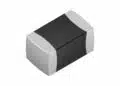
The molded body measures approximately 11 × 10 × 9 mm, allowing designers to replace two separate inductors with a single footprint and reduce PCB area and component height in crowded converter layouts. - Reduced ripple at lower inductance values
Thanks to the controlled coupling and leakage, designers can achieve similar or better ripple performance with lower nominal inductance than discrete alternatives, which can translate into faster transient response and smaller magnetics. - Smaller AC coupling capacitor requirement
In SEPIC, ZETA and Ćuk converters, the size of the series capacitor is often dictated by ripple and energy transfer. The HL coupled inductor helps reduce the required capacitance value, enabling smaller capacitor sizes without sacrificing efficiency. - Temperature‑stable, soft saturation behavior
The molded construction and core choice are aimed at maintaining inductance and coupling characteristics across temperature, and at avoiding abrupt saturation under peak load or transient conditions. - Specified coupling factor and leakage tolerances
Würth Elektronik explicitly specifies tolerances for coupling factor and leakage inductance, giving engineers predictable behavior across production and making worst‑case design and simulation more robust compared to generic coupled chokes. - Design support and free samples
The series is available from stock with no minimum order quantity, and the manufacturer offers design and EMC support, plus free samples to help teams evaluate the HL concept in their own converter platforms.
Typical applications
Coupled inductors with controlled leakage inductance are particularly relevant wherever compact, non‑isolated DC‑DC converters must meet tight EMC limits and size constraints.
- SEPIC converters for wide‑range input front‑end stages in industrial and communications equipment
- ZETA converters used for regulated outputs from variable battery or bus voltages
- Ćuk converters where low output ripple and good dynamic performance are important
- Pre‑regulator stages in automotive ECUs and auxiliary supplies where board space and EMC compliance are critical
- Compact power modules in instrumentation, sensor interfaces and embedded systems that must fit magnetics into constrained housings
- Upgrades of existing SEPIC/ZETA/Ćuk designs that currently use two discrete inductors and large series capacitors
Technical highlights
Package and construction
The WE‑MCRI 1090HL version is a surface‑mount molded coupled inductor with a double choke structure. The mechanical outline is given as approximately 11 mm in length, 10 mm in width and 9 mm in height, putting it into a mid‑size range for medium‑power non‑isolated DC‑DC designs. As a molded part, the windings and core are encapsulated, which supports mechanical robustness and environmental protection according to the manufacturer datasheet.
Electrical behavior and leakage inductance
In conventional designs, leakage inductance is minimized because it can introduce undesired voltage spikes, extra ripple and reduced efficiency. In this HL variant, leakage inductance is instead treated as a controlled parameter: the coupled inductor is designed so that the leakage helps shape current waveforms and improve filtering. For SEPIC and ZETA stages, this means that the combination of magnetizing and leakage inductance can reduce input and output ripple and ease the burden on downstream filters.
The manufacturer specifies tolerances for both the coupling factor and leakage inductance. For practical design work, this allows engineers to include realistic bounds in simulation models and worst‑case calculations, rather than treating these quantities as undefined parasitics that may vary significantly with production.
Impact on AC coupling capacitors
In SEPIC, ZETA and Ćuk converter topologies, the AC coupling capacitor sits between the inductors (or between input and output energy storage nodes) and plays a key role in energy transfer and ripple control. The HL coupled inductor improves filtering performance such that a smaller capacitance can be used for the same ripple specification, according to the manufacturer. In practice, this can reduce the physical size and cost of the capacitor, and open up more options for selecting voltage rating, dielectric and package type.
Thermal and saturation characteristics
The soft saturation behavior of the molded coupled inductor is particularly important in converters subjected to load steps, inrush or fault conditions. Instead of a sharp inductance drop that can lead to instability or large current spikes, the component is intended to roll off more gradually, maintaining control over current ramp and limiting stress on switching devices and rectifiers. The temperature stability of inductance and coupling helps maintain converter performance across ambient and self‑heating conditions in typical power electronics environments.
Availability and part numbers
Würth Elektronik is expanding its WE‑MCRI series with the new 1090HL High Leakage variant. The component belongs to the SMT molded coupled inductor family and is available from stock. According to the manufacturer, there is no minimum order quantity, which is useful for engineering teams starting with small prototype batches or pilot builds.
Free samples of the WE‑MCRI HL variant can be requested directly from Würth Elektronik. For detailed part numbering, including inductance values, current ratings, resistance and tolerance codes, designers should refer to the official series overview page and individual datasheets. Exact electrical specifications are provided according to the manufacturer datasheet rather than being inferred or approximated.
For production projects, it is advisable to lock down the exact ordering code, package tape‑and‑reel details and qualification status based on the current datasheet and product page.
Design‑in notes for engineers
- Model leakage inductance explicitly
When using the WE‑MCRI HL variant, include both magnetizing and leakage inductance in your simulation models. This allows you to predict ripple currents, voltage stress and EMI behavior more accurately and to exploit the intended filtering benefit. - Review SEPIC/ZETA/Ćuk design equations
The HL component alters the effective inductance seen by the converter stages compared with ideal coupled inductors. Use your standard design equations for SEPIC, ZETA and Ćuk topologies and adjust them to account for the specified leakage and coupling factor from the datasheet instead of assuming perfect coupling. - Optimize AC coupling capacitor selection
With improved filtering, you may be able to reduce capacitance value while keeping ripple within specification. Evaluate different capacitor technologies (for example MLCC vs. film) based on the reduced requirement, and verify voltage rating and ESR against the converter’s operating conditions. - Check EMC performance early
Since the HL variant is intended to improve EMC behavior, plan early conducted and radiated emissions measurements in the lab. Compare results against a baseline design with discrete inductors to quantify the benefit and potentially simplify external filtering. - Consider thermal layout and airflow
Even with soft saturation and temperature‑stable behavior, the coupled inductor will dissipate power under load. Place the component with adequate copper area and airflow, and validate temperature rise at maximum operating current according to the manufacturer’s thermal guidance. - Use manufacturer design support
Würth Elektronik offers support for both topology selection and EMC optimization. Leveraging this input, especially around leakage inductance usage, can shorten design cycles and reduce the number of PCB iterations needed to meet efficiency and EMC targets. - Plan component reuse across platforms
Because the HL variant is suited to multiple non‑isolated topologies, consider standardizing on this coupled inductor across several product platforms that share similar power levels. This can simplify logistics and purchasing while keeping design flexibility.
Source
This article is based on Würth Elektronik’s official press release and associated product information for the WE‑MCRI High Leakage coupled inductor series, complemented by general engineering context for SEPIC, ZETA and Ćuk converter designs according to the manufacturer datasheet and product overview.