



Passive Components Blog
No Result
View All Result
  • Home
  • NewsFilter
    • All
    • Aerospace & Defence
    • Antenna
    • Applications
    • Automotive
    • Capacitors
    • Circuit Protection Devices
    • electro-mechanical news
    • Filters
    • Fuses
    • Inductors
    • Industrial
    • Integrated Passives
    • inter-connect news
    • Market & Supply Chain
    • Market Insights
    • Medical
    • Modelling and Simulation
    • New Materials & Supply
    • New Technologies
    • Non-linear Passives
    • Oscillators
    • Passive Sensors News
    • Resistors
    • RF & Microwave
    • Telecommunication
    • Weekly Digest

    High‑Speed Supercapacitor Balancing for AI Data Center Power Systems

    Bourns Introduced Automotive TVS Diodes for Compact ESD Protection

    EMC‑Compliant PCB and Connector Design Guidelines

    Practical Value of Structural Diagnostics for Tantalum Capacitor Anodes

    Hall-Effect Sensing for Harsh Environments: TT Electronics Selected in NASA’s Dragonfly Fan

    Bourns Releases Automotive Gate Driver Transformer for Isolated Power

    Stackpole Releases High-Frequency Thin Film Chip Resistors for RF up to 50 GHz

    Knowles Expands High‑Q Ceramic Core Inductors for RF designs

    Vishay Unveils 1.5 kV IHDV High Voltage Power Inductors for EV and Industrial Converters

    Trending Tags

    • Ripple Current
    • RF
    • Leakage Current
    • Tantalum vs Ceramic
    • Snubber
    • Low ESR
    • Feedthrough
    • Derating
    • Dielectric Constant
    • New Products
    • Market Reports
  • VideoFilter
    • All
    • Antenna videos
    • Capacitor videos
    • Circuit Protection Video
    • Filter videos
    • Fuse videos
    • Inductor videos
    • Inter-Connect Video
    • Non-linear passives videos
    • Oscillator videos
    • Passive sensors videos
    • Resistor videos

    EMC‑Compliant PCB and Connector Design Guidelines

    Why Isolated DC/DC Power Supplies Fail Late, Würth Elektronik Podcast

    Designing 800 V DC EMC Filters: Calculation, Simulation and Measurement

    Current Sense Transformer Datasheet and Design‑in Guide

    Designing a USB Type‑C Flyback Planar Transformer with Frenetic’s Planar Tool

    Magnetics Design in High‑Frequency GaN Converters

    Qi2 Wireless Charging: Inductors, Capacitors and EMC Filters

    Two‑capacitor paradox explained for engineers

    Capacitances of Nonlinear MLCCs: What Datasheets Don’t Tell You

    Trending Tags

    • Capacitors explained
    • Inductors explained
    • Resistors explained
    • Filters explained
    • Application Video Guidelines
    • EMC
    • New Products
    • Ripple Current
    • Simulation
    • Tantalum vs Ceramic
  • Knowledge Blog
  • DossiersNew
  • Suppliers
    • Who is Who
  • PCNS
    • PCNS 2025
    • PCNS 2023
    • PCNS 2021
    • PCNS 2019
    • PCNS 2017
  • Events
  • Home
  • NewsFilter
    • All
    • Aerospace & Defence
    • Antenna
    • Applications
    • Automotive
    • Capacitors
    • Circuit Protection Devices
    • electro-mechanical news
    • Filters
    • Fuses
    • Inductors
    • Industrial
    • Integrated Passives
    • inter-connect news
    • Market & Supply Chain
    • Market Insights
    • Medical
    • Modelling and Simulation
    • New Materials & Supply
    • New Technologies
    • Non-linear Passives
    • Oscillators
    • Passive Sensors News
    • Resistors
    • RF & Microwave
    • Telecommunication
    • Weekly Digest

    High‑Speed Supercapacitor Balancing for AI Data Center Power Systems

    Bourns Introduced Automotive TVS Diodes for Compact ESD Protection

    EMC‑Compliant PCB and Connector Design Guidelines

    Practical Value of Structural Diagnostics for Tantalum Capacitor Anodes

    Hall-Effect Sensing for Harsh Environments: TT Electronics Selected in NASA’s Dragonfly Fan

    Bourns Releases Automotive Gate Driver Transformer for Isolated Power

    Stackpole Releases High-Frequency Thin Film Chip Resistors for RF up to 50 GHz

    Knowles Expands High‑Q Ceramic Core Inductors for RF designs

    Vishay Unveils 1.5 kV IHDV High Voltage Power Inductors for EV and Industrial Converters

    Trending Tags

    • Ripple Current
    • RF
    • Leakage Current
    • Tantalum vs Ceramic
    • Snubber
    • Low ESR
    • Feedthrough
    • Derating
    • Dielectric Constant
    • New Products
    • Market Reports
  • VideoFilter
    • All
    • Antenna videos
    • Capacitor videos
    • Circuit Protection Video
    • Filter videos
    • Fuse videos
    • Inductor videos
    • Inter-Connect Video
    • Non-linear passives videos
    • Oscillator videos
    • Passive sensors videos
    • Resistor videos

    EMC‑Compliant PCB and Connector Design Guidelines

    Why Isolated DC/DC Power Supplies Fail Late, Würth Elektronik Podcast

    Designing 800 V DC EMC Filters: Calculation, Simulation and Measurement

    Current Sense Transformer Datasheet and Design‑in Guide

    Designing a USB Type‑C Flyback Planar Transformer with Frenetic’s Planar Tool

    Magnetics Design in High‑Frequency GaN Converters

    Qi2 Wireless Charging: Inductors, Capacitors and EMC Filters

    Two‑capacitor paradox explained for engineers

    Capacitances of Nonlinear MLCCs: What Datasheets Don’t Tell You

    Trending Tags

    • Capacitors explained
    • Inductors explained
    • Resistors explained
    • Filters explained
    • Application Video Guidelines
    • EMC
    • New Products
    • Ripple Current
    • Simulation
    • Tantalum vs Ceramic
  • Knowledge Blog
  • DossiersNew
  • Suppliers
    • Who is Who
  • PCNS
    • PCNS 2025
    • PCNS 2023
    • PCNS 2021
    • PCNS 2019
    • PCNS 2017
  • Events
No Result
View All Result
Passive Components Blog
No Result
View All Result

EMI Noise Mitigation in Automotive 48V Power Supply Systems

24.9.2025
Reading Time: 6 mins read
A A

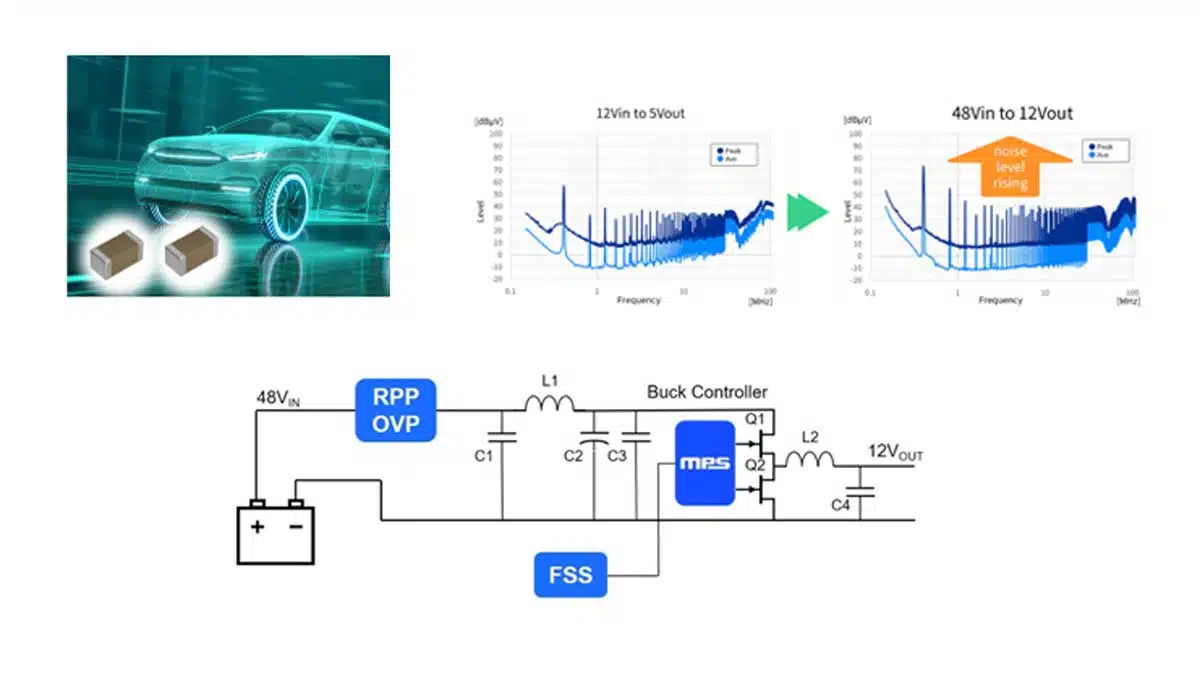
This article based on TDK blog article discus a technical perspective of EMI electromagnetic noise mitigation in automotive 48v power supply systems.

This article integrates deeper insight from multiple sources, including TDK’s measurements and broader industry perspectives from Texas Instruments and Monolithic Power Systems.

RelatedPosts

TDK Releases DC-link Film Capacitors with Ultra-low Inductance for SiC Power Converters

Tapped Inductor Buck Converter Fundamentals

TDK Introduces High‑Voltage Common‑Mode Chokes for Compact 1250 V DC Converters

The shift toward 48V electrical architectures in modern vehicles—driven by the demands of electrification, ADAS, and autonomous systems—has introduced new challenges in electromagnetic compatibility (EMC). This paper explores the underlying causes of increased EMI in 48V systems, evaluates filter design strategies, and presents empirical data from conducted noise measurements. It synthesizes insights from component-level behavior, system integration constraints, and regulatory compliance, drawing on both manufacturer data and independent engineering analyses.

1. Introduction

The automotive industry is undergoing a profound transformation, with electrification and digitalization pushing the boundaries of traditional power distribution systems. The 12V architecture, long a staple of vehicular electronics, is increasingly inadequate for supporting high-performance processors, electric turbochargers, and integrated starter generators (ISGs). In response, manufacturers are adopting 48V systems, which offer reduced current for equivalent power delivery, enabling lighter wiring harnesses and improved thermal efficiency.

However, this transition is not without consequence. The increased voltage inherently amplifies switching transients and parasitic coupling, leading to elevated levels of conducted and radiated noise. These effects are particularly pronounced in systems with high-frequency DC/DC converters and dense PCB layouts. As such, EMC design has become a critical bottleneck in 48V system deployment.

2. Noise Generation Mechanisms in 48V Systems

The root of the EMI problem lies in the physics of switching power conversion. When a DC/DC converter operates at higher input voltages, the energy stored and released during each switching cycle increases proportionally. This results in sharper voltage and current transitions, which in turn excite parasitic elements—such as stray inductance and capacitance—across the board.

TDK’s comparative measurements between 12V and 48V systems using identical board layouts reveal a marked increase in conducted noise across the 150 kHz to 108 MHz spectrum. The higher voltage not only increases the amplitude of switching noise but also broadens its frequency content, making suppression more complex. These findings align with broader industry observations, such as those from Texas Instruments, which note that 48V systems must meet stringent CISPR 25 Class 5 requirements for EMI compliance.
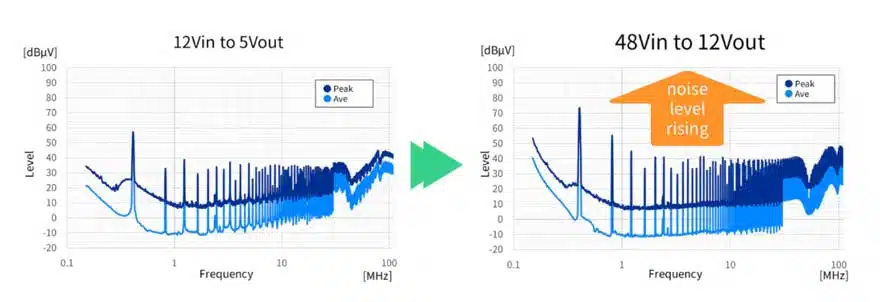
Figure 1: Comparison of Noise Levels Between 12V and 48V Systems; source: TDK

3. Filter Design Strategies

To address these challenges, engineers typically employ multi-stage filtering architectures. The most effective configurations combine common-mode chokes (CMCs), π-type low-pass filters, and multilayer ceramic capacitors (MLCCs) with tailored impedance profiles.
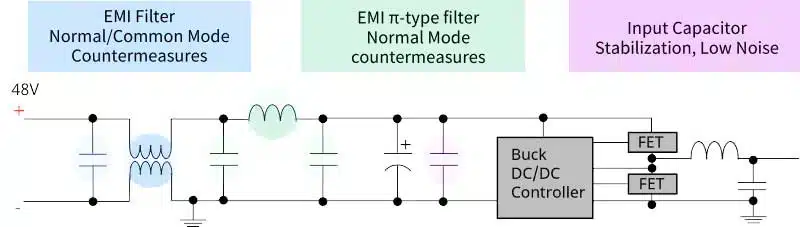
Figure 2: Example Circuit Block Diagram of 48V Input Line; source: TDK

The common-mode choke plays a pivotal role in suppressing noise that couples through parasitic capacitance between power and ground planes. Its differential winding structure allows it to attenuate both common-mode and differential-mode currents, especially in the 1–30 MHz range where automotive EMI is most problematic.

The π-type filter, composed of series inductors and shunt capacitors, targets normal-mode noise generated by switching regulators. Its effectiveness depends heavily on the selection of capacitors with low ESR and stable capacitance over temperature. MLCCs with X7R dielectric and high voltage ratings (e.g., 100V) are preferred, as they maintain performance under thermal and mechanical stress.

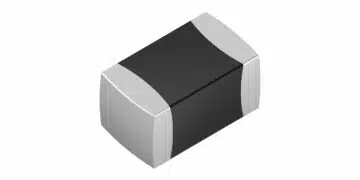
TDK’s implementation, for instance, uses CGA6P1X7R2A106K250AC (10 µF, 100V) and CGA5L1X7R2A475K160AC (4.7 µF, 100V) MLCCs in combination with ACM12V-172-2PL-TL00 CMCs and SPM7054VC-1R5M-D inductors. This configuration achieves substantial noise attenuation while minimizing component count and PCB footprint.
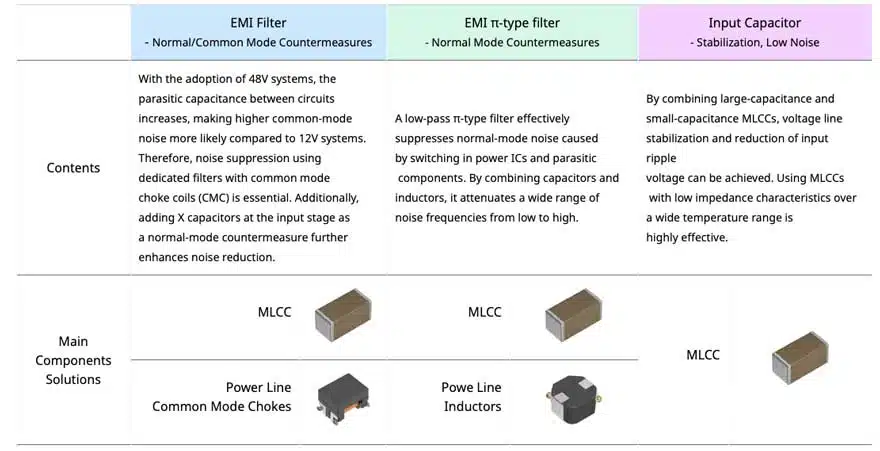
Figure 3. 48V Input Line Filters and Component Solutions; source: TDK

4. Measurement and Validation

Empirical validation is essential in EMC design. TDK conducted measurements in a 3-meter anechoic chamber using a 48V-to-12V DC/DC converter operating at 400 kHz and 7.2A output. The conducted noise was measured using the voltage method across the 150 kHz–108 MHz band.

Without filtering, the system exhibited significant peaks in both low and mid-frequency ranges. Upon integrating the multi-stage filter, noise levels dropped markedly, confirming the effectiveness of the chosen topology. Notably, the use of large-capacitance MLCCs allowed for a reduction in the number of components—from five 4.7 µF units to three 10 µF units—without compromising performance.

These results are consistent with findings from Monolithic Power Systems, which emphasize that 48V buck converters must be carefully designed to meet EMC regulations while maintaining thermal and electrical efficiency.

5. System-Level Considerations

Beyond component selection, system-level integration poses additional challenges. The increased voltage necessitates careful attention to creepage and clearance distances, especially in environments subject to high humidity or contamination. ISO 21780 specifies transient voltage requirements up to 70V, which must be factored into regulator design and layout.

Moreover, the dual-voltage nature of mild hybrid electric vehicles (mHEVs)—which combine 12V and 48V subsystems—introduces complexity in grounding schemes and isolation. Designers must ensure that noise from the 48V domain does not propagate into sensitive 12V circuits, particularly those associated with infotainment and safety-critical functions.

6. Conclusion

The adoption of 48V power supply systems in automotive applications offers compelling benefits in terms of efficiency, weight reduction, and support for high-performance electronics. However, it also introduces significant EMC challenges that must be addressed through rigorous filter design and validation.

Multi-stage filters incorporating CMCs, π-type topologies, and high-voltage MLCCs have proven effective in suppressing both common-mode and normal-mode noise. Empirical data supports their use, and industry standards provide a framework for compliance. As automotive systems continue to evolve, the integration of robust noise mitigation strategies will remain a cornerstone of reliable and safe vehicle design.

Related

Source: TDK

Recent Posts

High‑Speed Supercapacitor Balancing for AI Data Center Power Systems

23.6.2026
5

Bourns Introduced Automotive TVS Diodes for Compact ESD Protection

23.6.2026
3

EMC‑Compliant PCB and Connector Design Guidelines

22.6.2026
19

Practical Value of Structural Diagnostics for Tantalum Capacitor Anodes

22.6.2026
13

Bourns Releases Automotive Gate Driver Transformer for Isolated Power

22.6.2026
13

Knowles Expands High‑Q Ceramic Core Inductors for RF designs

19.6.2026
20

Vishay Unveils 1.5 kV IHDV High Voltage Power Inductors for EV and Industrial Converters

19.6.2026
27

TrendForce: CSP in‑house AI ASIC Boom Reshapes Capacitor Demand

18.6.2026
98

Würth Elektroniks Flexible EMI Shielding Sheets Provides Quick and Easy Schielding Solution

17.6.2026
41

Upcoming Events

Jun 30
17:00 - 18:00 CEST

PSMA Capacitor Committee Webinar: High Voltage Pulse Capacitors

Jul 14
16:00 - 17:00 CEST

EMC Design Essentials: Mastering Varistors and Common Mode Chokes

Jul 21
16:00 - 17:00 CEST

Safety by design: X and Y Interference suppression capacitors for power line filters

View Calendar

Popular Posts

  • Boost Converter Design and Calculation

    0 shares
    Share 0 Tweet 0
  • Buck Converter Design and Calculation

    0 shares
    Share 0 Tweet 0
  • LLC Resonant Converter Design and Calculation

    0 shares
    Share 0 Tweet 0
  • Flyback Converter Design and Calculation

    0 shares
    Share 0 Tweet 0
  • MLCC and Ceramic Capacitors

    0 shares
    Share 0 Tweet 0
  • Earthing Systems and IEC Classification Explained

    0 shares
    Share 0 Tweet 0
  • Nvidia Vera Rubin: Why One AI Rack Needs So Many More MLCC Capacitors

    0 shares
    Share 0 Tweet 0
  • Dual Active Bridge (DAB) Topology

    0 shares
    Share 0 Tweet 0
  • SEPIC Converter Design and Calculation

    0 shares
    Share 0 Tweet 0
  • MLCC Case Sizes Standards Explained

    0 shares
    Share 0 Tweet 0

Newsletter Subscription


Passive Components Blog

© EPCI - Leading Passive Components Educational and Information Site

  • Home
  • Privacy Policy
  • EPCI Membership & Advertisement
  • About

No Result
View All Result
  • Home
  • Knowledge Blog
  • Dossiers
  • PCNS

© EPCI - Leading Passive Components Educational and Information Site

This website uses cookies. By continuing to use this website you are giving consent to cookies being used. Visit our Privacy and Cookie Policy.
Go to mobile version