




Passive Components Blog
No Result
View All Result
  • Home
  • News
    • All
    • Aerospace & Defence
    • Antenna
    • Applications
    • Automotive
    • Capacitors
    • Circuit Protection Devices
    • electro-mechanical news
    • Filters
    • Fuses
    • Inductors
    • Industrial
    • Integrated Passives
    • inter-connect news
    • Market & Supply Chain
    • Market Insights
    • Medical
    • Modelling and Simulation
    • New Materials & Supply
    • New Technologies
    • Non-linear Passives
    • Optoelectronics and Isolation
    • Oscillators
    • Passive Sensors News
    • Resistors
    • RF & Microwave
    • Telecommunication
    • Weekly Digest

    Bourns Adds ACXX57SQ Air Coil Inductors for RF Design

    Samsung Electro-Mechanics MLCC capacitor solutions for high-voltage converter snubbing and GPU power delivery

    Samsung MLCC Options for 1 MW AI Rack Power

    Frenetic planar ER transformer simulation for a 5 kW 800 V-to-50 V PSFB converter, showing low-profile core geometry and high-current planar winding arrangement

    5 kW 800 V-to-50 V PSFB Transformer Design for Data Centers

    Samtec 100-CM 1.0 mm vertical solderless compression-mount 50 ohm RF PCB connector

    Samtec 100-CM 1.0 mm RF Connectors Extend to 120 GHz

    Exxelia PM film capacitor and passive-component technologies for BepiColombo space electronics

    Exxelia Passive Components Support BepiColombo Mission

    TT Electronics OPI1268T green through-hole phototransistor optocoupler used for optical isolation in power systems.

    Optocoupler Reliability: Designing Optical Isolation for 25-Year Grid Assets

    TDK B43657 and B43658 ultra-compact snap-in aluminum electrolytic capacitors for 500 V DC power-supply and DC-link applications

    TDK Extends Compact Snap-In Capacitors to 500 V for AI Servers

    Stackpole RNAN aluminium nitride thin-film chip resistors in 0603, 0805, 1206 and 2512 package sizes for precision high-power electronics

    Stackpole RNAN AlN Thin-Film Resistors Reach 6 W

    binder angled M12-A midmount panel-mount PCB connector for centric board mounting, showing compact front-facing industrial connector geometry

    binder Adds Midmount M12-A PCB Connectors for Slim Sensors

    Trending Tags

    • Ripple Current
    • RF
    • Leakage Current
    • Tantalum vs Ceramic
    • Snubber
    • Low ESR
    • Feedthrough
    • Derating
    • Dielectric Constant
    • New Products
    • Market Reports
  • Knowledge Blog
  • Dossiers
    • AI Hardware Dossier
    • Automotive Dossier
    • Industrial Robotics Dossier
    • Power Converter Dossier
    • Capacitor Dossier
    • Resistor Dossier
    • Inductor Dossier
    • Circuit Protection Dossier
  • Suppliers
    • Who is Who
  • PCNS
    • PCNS 2025
    • PCNS 2023
    • PCNS 2021
    • PCNS 2019
    • PCNS 2017
  • Events
  • Home
  • News
    • All
    • Aerospace & Defence
    • Antenna
    • Applications
    • Automotive
    • Capacitors
    • Circuit Protection Devices
    • electro-mechanical news
    • Filters
    • Fuses
    • Inductors
    • Industrial
    • Integrated Passives
    • inter-connect news
    • Market & Supply Chain
    • Market Insights
    • Medical
    • Modelling and Simulation
    • New Materials & Supply
    • New Technologies
    • Non-linear Passives
    • Optoelectronics and Isolation
    • Oscillators
    • Passive Sensors News
    • Resistors
    • RF & Microwave
    • Telecommunication
    • Weekly Digest

    Bourns Adds ACXX57SQ Air Coil Inductors for RF Design

    Samsung Electro-Mechanics MLCC capacitor solutions for high-voltage converter snubbing and GPU power delivery

    Samsung MLCC Options for 1 MW AI Rack Power

    Frenetic planar ER transformer simulation for a 5 kW 800 V-to-50 V PSFB converter, showing low-profile core geometry and high-current planar winding arrangement

    5 kW 800 V-to-50 V PSFB Transformer Design for Data Centers

    Samtec 100-CM 1.0 mm vertical solderless compression-mount 50 ohm RF PCB connector

    Samtec 100-CM 1.0 mm RF Connectors Extend to 120 GHz

    Exxelia PM film capacitor and passive-component technologies for BepiColombo space electronics

    Exxelia Passive Components Support BepiColombo Mission

    TT Electronics OPI1268T green through-hole phototransistor optocoupler used for optical isolation in power systems.

    Optocoupler Reliability: Designing Optical Isolation for 25-Year Grid Assets

    TDK B43657 and B43658 ultra-compact snap-in aluminum electrolytic capacitors for 500 V DC power-supply and DC-link applications

    TDK Extends Compact Snap-In Capacitors to 500 V for AI Servers

    Stackpole RNAN aluminium nitride thin-film chip resistors in 0603, 0805, 1206 and 2512 package sizes for precision high-power electronics

    Stackpole RNAN AlN Thin-Film Resistors Reach 6 W

    binder angled M12-A midmount panel-mount PCB connector for centric board mounting, showing compact front-facing industrial connector geometry

    binder Adds Midmount M12-A PCB Connectors for Slim Sensors

    Trending Tags

    • Ripple Current
    • RF
    • Leakage Current
    • Tantalum vs Ceramic
    • Snubber
    • Low ESR
    • Feedthrough
    • Derating
    • Dielectric Constant
    • New Products
    • Market Reports
  • Knowledge Blog
  • Dossiers
    • AI Hardware Dossier
    • Automotive Dossier
    • Industrial Robotics Dossier
    • Power Converter Dossier
    • Capacitor Dossier
    • Resistor Dossier
    • Inductor Dossier
    • Circuit Protection Dossier
  • Suppliers
    • Who is Who
  • PCNS
    • PCNS 2025
    • PCNS 2023
    • PCNS 2021
    • PCNS 2019
    • PCNS 2017
  • Events
No Result
View All Result
Passive Components Blog
No Result
View All Result

Microhardness — the Hidden Key to Understanding MnOx Cathode Quality in Tantalum Capacitors

23.2.2026
Reading Time: 8 mins read
A A

Dr. Vladimir Azbel, an independent consultant on tantalum capacitors, discusses impact of MnOx parameters to cathode quality of tantalum capacitors in this paper.

Key Takeaways

  • The study identifies microhardness (MH) as a key indirect metric for assessing MnOₓ cathode quality.
  • Higher drying temperatures and Mn(NO₃)₂ concentrations increase MH, indicating denser, less conductive phases that raise ESR.
  • The difference in MH (ΔMH) before and after stripping the MnOₓ layer serves as a diagnostic tool for cathode quality and ESR levels.
  • This ΔMH-based approach acts as a benchmark for monitoring the MnOₓ deposition process in various capacitor designs.

The objective of this work was to identify a quantitative parameter that could “digitize” the deposition process and use MH as an indirect metric of MnOₓ cathode quality. The goal is to enhance the yield and reliability of conventional MnO2 tantalum capacitors. 

RelatedPosts

From DCL to SSC: Bridging Electrical Symptoms and Structural Indicators in Tantalum Capacitors

Using a Virtual Anode Thermal Model to Evaluate Miniaturization Risk in Tantalum Capacitors

Practical Value of Structural Diagnostics for Tantalum Capacitor Anodes

Introduction

In materials science, microhardness (MH) is traditionally used as an indirect indicator of a material’s electrical resistivity because it is sensitive to defect density, porosity, and the degree of crystallinity.

At manufacturing stages where direct electrical measurements are not possible (for example, during pressing and sintering of tantalum capacitor anodes), the material condition can be assessed through its mechanical properties, which reflect its microstructure.

While working with tantalum capacitor anodes, I asked whether this approach could also be applied to the cathode layer formed from manganese oxide (MnOₓ), which directly affects the equivalent series resistance (ESR) of the finished capacitor.

MnOₓ forms through the thermal decomposition of manganese nitrate (Mn(NO₃)2 within the pores of the anodic Ta₂O₅ oxide. Although this reaction appears simple, the actual composition and structure of the resulting oxide strongly depend on the deposition conditions, primarily on the drying temperature and solution concentration.

These parameters determine not only the phase composition of MnOₓ but also its microhardness. The phase composition, in turn, influences the electrical conductivity of the cathode layer and, consequently, the ESR of the capacitor.

Results and Discussion

To evaluate the influence of drying temperature and Mn(NO₃)₂ concentration on the properties of the cathode layer, MH measurements were performed on polished cross-sections of identical anodes. All anodes underwent anodization at 200 V, followed by various impregnation and thermal treatment regimes.

The obtained data are summarized in Table 1.

SampleNumber of dipsRelative Mn concentrationT°C, dry/steamAverage HV (kg/mm²)Mn oxide contribution
Sint (pellet)–––65–
Sint + 200V–––148–
Sint + 200V5 (no dips)0250130-18
Sint + 200V51.3525017325
Sint + 200V51.1630016618
Sint + 200V51.55300334186
Sint + 200V21.55300 steam18537
Sint + 200V71.55300 steam345197
Sint + 200V7+11.55+1.17300 steam+          400 dry298150
Table 1. Influence of Mn concentration and drying temperature on the microhardness of the MnOₓ layer

Cathode Layer Morphology

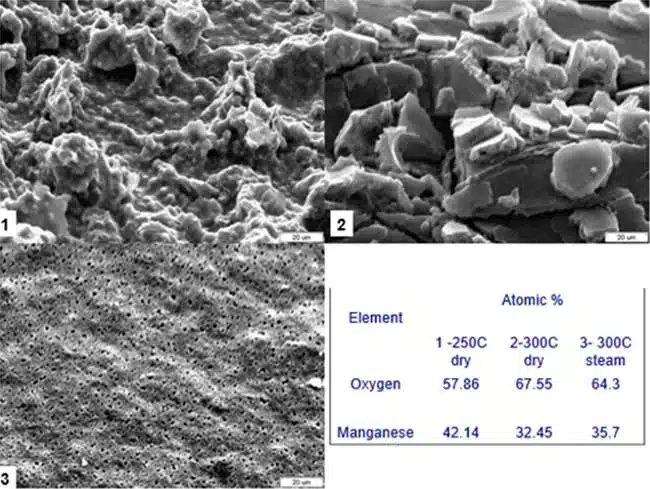
Figure 1: SEM images of MnOₓ surface at different conditions with EDX data

Interpretation of Results

Increasing both the temperature and Mn(NO₃)₂ concentration leads to higher MH.
The transition from the sintered anode (65 HV) to the anodized one (148 HV) reflects densification due to the formation of the Ta₂O₅ layer.
Further increase in MH after cathode deposition corresponds to the formation of MnOₓ.

Under moderate conditions (250 °C, baseline concentration), MH ≈ 130–170 HV, which corresponds to defective and partially reduced phases such as MnO₂₋δ or γ-MnO₂. These phases exhibit high electrical conductivity, leading to low ESR.

At higher concentrations and temperatures (up to 300 °C), MH increases to > 300 HV, indicating a transition to denser, more crystalline phases such as β-MnO₂ or Mn₂O₃, which are less defective and less conductive, resulting in higher ESR.

Thus, for MnOₓ cathode layers, the following relationship can be established:

Low MH → defective, highly conductive phases → low ESR
High MH → dense, poorly conductive phases → high ESR

Correlation with Known Properties of Manganese Oxides

The electrical conductivity of manganese oxides is strongly linked to the oxidation state of manganese ions (Mnⁿ⁺) and their electronic structure, which affects electron hopping between different valence states (see Table 2).

As the formal oxidation state of manganese increases (from MnO to MnO₂), electrical conductivity tends to improve, while microhardness increases with phase densification and crystallinity.

Type of oxideMicrohardness, HV (kg/mm²)Relative Conductivity  (see Appendix)Effect on ESR (trend)
MnO~400–600Very Poor (Insulator)low, but unstable
Mn₃O₄~700–900moderate (n-type)moderate
Mn₂O₃~900–1100Poorhigh
MnO₂~1200–1500Goodhigh
Table 2. Microhardness and conductivity trends for different manganese oxides

Comparison of Products from Different Manufacturers

To validate this approach, a series of measurements was conducted on three tantalum capacitor designs — 15 µF / 35 V, 22 µF / 35 V, and 10 µF / 50 V — manufactured by KEMET, AVX, Nichicon, and Vishay.

All samples were purchased from the open market and met their nominal specifications, allowing comparison based on anode structure and process quality.

At the first stage, polished cross-sections of the finished capacitors were prepared (Figure 2), and MH measurements were taken, representing the combined contribution of the anode and the cathode layer of manganese oxide.
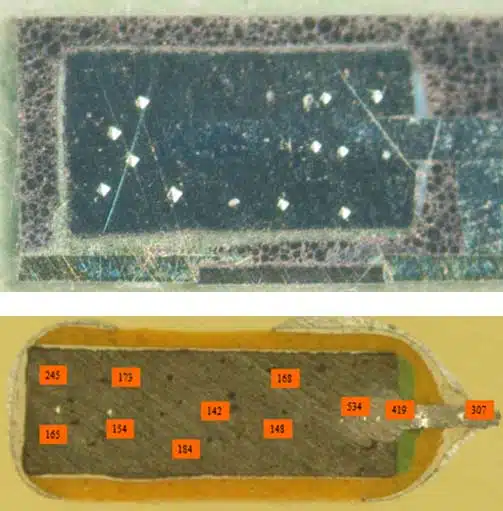
Figure 2: Cross-sections of tantalum capacitors from companies with MH measurements, before stripping.

Next, the capacitors underwent a stripping procedure, after which MH was measured again on the same anodes without the MnOₓ layer.
The difference between these two MH values represents the characteristic microhardness contribution of the MnOₓ layer.

Each value was averaged over 7–10 measurements on representative cross-section regions.

The measured difference in MH (ΔMH) ranged from 70 to 100 kg/mm², depending on capacitor design and manufacturer.
For these samples, ESR values were 25–40% below the upper datasheet limits.

In contrast, for capacitors where ΔMH = 130–150 kg/mm², ESR values were close to or above the upper specification limit.

It can therefore be inferred that a ΔMH of approximately 100 kg/mm² corresponds to the formation of an optimal MnOₓ phase combining adequate electrical conductivity with structural stability under operating conditions.
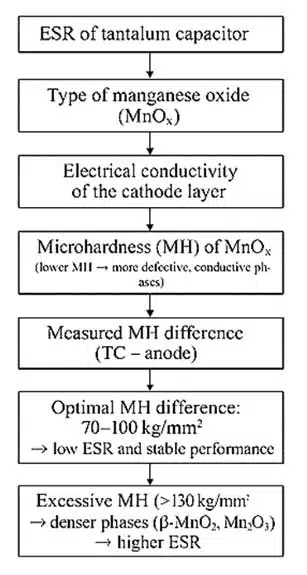
Figure 3 — Correlation between microhardness difference (ΔMH) and expected ESR behavior.

Conclusions

  1. Microhardness (MH) is an informative and quantitatively reproducible parameter that reflects the phase composition and defectiveness of manganese oxide (MnOₓ) formed during impregnation of tantalum anodes with Mn(NO₃)₂ solution.
  2. Increasing Mn concentration and drying temperature leads to higher MH (from 130–170 to > 300 kg/mm²), indicating a transition from defective, conductive MnO₂₋δ phases to dense β-MnO₂ or Mn₂O₃ phases with lower conductivity.
  3. Higher MH correlates with increased ESR, since harder and more oxidized MnOₓ phases possess reduced electrical conductivity, while lower MH corresponds to more defective, conductive structures yielding lower ESR.
  4. The difference in MH measured before and after removal (stripping) of the MnOₓ layer serves as a diagnostic parameter — a “mechanical fingerprint” of cathode quality — and an indirect indicator of ESR level and deposition accuracy.
  5. MH measurement on capacitor cross-sections thus provides a universal, design-independent tool for monitoring the MnOₓ deposition process and for controlling impregnation and drying regimes during the qualification of new tantalum capacitor designs.
  6. The proposed ΔMH-based approach can also be used as a benchmark reference when similar tantalum capacitor designs are qualified. Once established on a validated (qualified) capacitor type, the measured ΔMH value serves as a reproducible benchmark for assessing cathode quality and ESR behavior in production or during process transfers.

Appendix
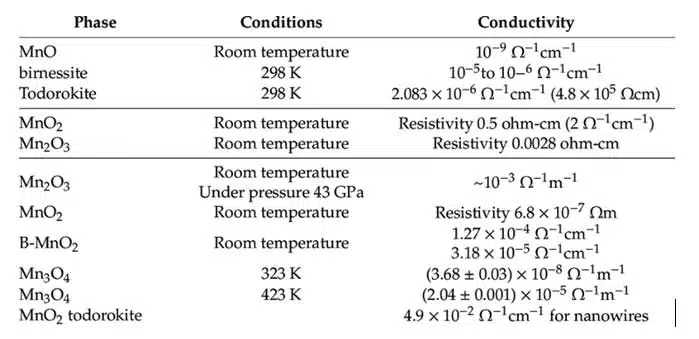
MnxOy phases conductivity

References

Vladimir Azbel: Structural Interpretation of Reliability in Tantalum Capacitor Anodes

Related

Source: Vladimir Azbel

Recent Posts

Samsung Electro-Mechanics MLCC capacitor solutions for high-voltage converter snubbing and GPU power delivery

Samsung MLCC Options for 1 MW AI Rack Power

18.9.2026
2
Frenetic planar ER transformer simulation for a 5 kW 800 V-to-50 V PSFB converter, showing low-profile core geometry and high-current planar winding arrangement

5 kW 800 V-to-50 V PSFB Transformer Design for Data Centers

18.9.2026
3
Exxelia PM film capacitor and passive-component technologies for BepiColombo space electronics

Exxelia Passive Components Support BepiColombo Mission

16.9.2026
21
TDK B43657 and B43658 ultra-compact snap-in aluminum electrolytic capacitors for 500 V DC power-supply and DC-link applications

TDK Extends Compact Snap-In Capacitors to 500 V for AI Servers

16.9.2026
30

Samsung MLCC Revenue Seen Above KRW 8T by 2027, Murata EOL Actions Reshape Supply

11.9.2026
72

LG Innotek Demonstrates FC-BGA Substrates With Embedded Silicon Capacitors for AI Power Delivery

10.9.2026
54

Emerging Capacitor Markets in Fusion Energy

10.9.2026
58
onsemi solid-state transformer concept for 800 V HVDC AI data center power conversion with SiC modules, DC-link capacitors and high-frequency magnetics

Solid-State Transformers for 800 V AI Data Centers: Passive Component Design Considerations

9.9.2026
123
TDK CN series 10 µF 100 V X7R soft-termination multilayer ceramic capacitor in 3225 EIA 1210 package

TDK Releases 100 V Soft-Termination X7R MLCCs 10 uF in 3225 Package

9.9.2026
37

Upcoming Events

Sep 29
16:00 - 17:00 CEST

Cybersecurity 2026

Sep 30
15:00 - 16:00 CEST

Positronic Space and Military Connectors

Oct 14
17:00 - 18:00 CEST

Live Demo! Discover KYOCERA AVX Antenna Integrator Studio (AIS)

View Calendar

Popular Posts

  • Buck Converter Design and Calculation

    0 shares
    Share 0 Tweet 0
  • LLC Resonant Converter Design and Calculation

    0 shares
    Share 0 Tweet 0
  • Boost Converter Design and Calculation

    0 shares
    Share 0 Tweet 0
  • Flyback Converter Design and Calculation

    0 shares
    Share 0 Tweet 0
  • Resistor Symbols

    0 shares
    Share 0 Tweet 0
  • Capacitor Charging and Discharging

    0 shares
    Share 0 Tweet 0
  • MLCC and Ceramic Capacitors

    0 shares
    Share 0 Tweet 0
  • Earthing Systems and IEC Classification Explained

    0 shares
    Share 0 Tweet 0
  • Audio Capacitors: Choosing Capacitors for Crossover Circuits

    0 shares
    Share 0 Tweet 0
  • Capacitor Symbols

    0 shares
    Share 0 Tweet 0

Newsletter Subscription


Passive Components Blog

© 2015–2026
All rights reserved

  • Home
  • Privacy Policy
  • EPCI Membership & Advertisement
  • About

No Result
View All Result
  • Home
  • Knowledge Blog
  • Dossiers
  • PCNS

© 2015–2026
All rights reserved