





Passive Components Blog
No Result
View All Result
  • Home
  • NewsFilter
    • All
    • Aerospace & Defence
    • Antenna
    • Applications
    • Automotive
    • Capacitors
    • Circuit Protection Devices
    • electro-mechanical news
    • Filters
    • Fuses
    • Inductors
    • Industrial
    • Integrated Passives
    • inter-connect news
    • Market & Supply Chain
    • Market Insights
    • Medical
    • Modelling and Simulation
    • New Materials & Supply
    • New Technologies
    • Non-linear Passives
    • Oscillators
    • Passive Sensors News
    • Resistors
    • RF & Microwave
    • Telecommunication
    • Weekly Digest

    Modelithics Releases COMPLETE v26.1 for Keysight ADS

    April 2026 Interconnect, Passives and Electromechanical Components Market Insights

    SPICE Simulation of Non-Linear Resistors: Vishay’s Thermistor and PPTC Modelling Ecosystem

    KYOCERA AVX Introduces Traction‑Grade DC Link Film Capacitors

    When More Capacitance Hurts Reliability: The Role of the Metallic Skeleton in Tantalum Anodes

    Why Power Inductors Use a Ferrite Core With an Air Gap

    Wk 16 Electronics Supply Chain Digest

    YAGEO Introduces High‑Current Y2/X1 Film Capacitors for Wide-bandgap Power Systems

    Amphenol Explanded Liquid Cooling Connectors for AI, ESS and EV Systems

    Trending Tags

    • Ripple Current
    • RF
    • Leakage Current
    • Tantalum vs Ceramic
    • Snubber
    • Low ESR
    • Feedthrough
    • Derating
    • Dielectric Constant
    • New Products
    • Market Reports
  • VideoFilter
    • All
    • Antenna videos
    • Capacitor videos
    • Circuit Protection Video
    • Filter videos
    • Fuse videos
    • Inductor videos
    • Inter-Connect Video
    • Non-linear passives videos
    • Oscillator videos
    • Passive sensors videos
    • Resistor videos

    Why Power Inductors Use a Ferrite Core With an Air Gap

    Transformer-Based Power-Line Harvester Magnetic Design

    Thermal Modeling of Magnetics

    Standard vs Planar LLC transformers Comparison for Battery Chargers

    How Modern Tools Model Magnetic Components for Power Electronics

    Advanced Loss Modeling for Planar Magnetics in the Frenetic Planar Tool

    2026 Power Magnetics Design Trends: Flyback, DAB and Planar

    Enabling Software‑Defined Vehicle Architectures: Automotive Ethernet and Zonal Smart Power

    Calculating Resistance Value of a Flyback RC Snubber 

    Trending Tags

    • Capacitors explained
    • Inductors explained
    • Resistors explained
    • Filters explained
    • Application Video Guidelines
    • EMC
    • New Products
    • Ripple Current
    • Simulation
    • Tantalum vs Ceramic
  • Knowledge Blog
  • DossiersNew
  • Suppliers
    • Who is Who
  • PCNS
    • PCNS 2025
    • PCNS 2023
    • PCNS 2021
    • PCNS 2019
    • PCNS 2017
  • Events
  • Home
  • NewsFilter
    • All
    • Aerospace & Defence
    • Antenna
    • Applications
    • Automotive
    • Capacitors
    • Circuit Protection Devices
    • electro-mechanical news
    • Filters
    • Fuses
    • Inductors
    • Industrial
    • Integrated Passives
    • inter-connect news
    • Market & Supply Chain
    • Market Insights
    • Medical
    • Modelling and Simulation
    • New Materials & Supply
    • New Technologies
    • Non-linear Passives
    • Oscillators
    • Passive Sensors News
    • Resistors
    • RF & Microwave
    • Telecommunication
    • Weekly Digest

    Modelithics Releases COMPLETE v26.1 for Keysight ADS

    April 2026 Interconnect, Passives and Electromechanical Components Market Insights

    SPICE Simulation of Non-Linear Resistors: Vishay’s Thermistor and PPTC Modelling Ecosystem

    KYOCERA AVX Introduces Traction‑Grade DC Link Film Capacitors

    When More Capacitance Hurts Reliability: The Role of the Metallic Skeleton in Tantalum Anodes

    Why Power Inductors Use a Ferrite Core With an Air Gap

    Wk 16 Electronics Supply Chain Digest

    YAGEO Introduces High‑Current Y2/X1 Film Capacitors for Wide-bandgap Power Systems

    Amphenol Explanded Liquid Cooling Connectors for AI, ESS and EV Systems

    Trending Tags

    • Ripple Current
    • RF
    • Leakage Current
    • Tantalum vs Ceramic
    • Snubber
    • Low ESR
    • Feedthrough
    • Derating
    • Dielectric Constant
    • New Products
    • Market Reports
  • VideoFilter
    • All
    • Antenna videos
    • Capacitor videos
    • Circuit Protection Video
    • Filter videos
    • Fuse videos
    • Inductor videos
    • Inter-Connect Video
    • Non-linear passives videos
    • Oscillator videos
    • Passive sensors videos
    • Resistor videos

    Why Power Inductors Use a Ferrite Core With an Air Gap

    Transformer-Based Power-Line Harvester Magnetic Design

    Thermal Modeling of Magnetics

    Standard vs Planar LLC transformers Comparison for Battery Chargers

    How Modern Tools Model Magnetic Components for Power Electronics

    Advanced Loss Modeling for Planar Magnetics in the Frenetic Planar Tool

    2026 Power Magnetics Design Trends: Flyback, DAB and Planar

    Enabling Software‑Defined Vehicle Architectures: Automotive Ethernet and Zonal Smart Power

    Calculating Resistance Value of a Flyback RC Snubber 

    Trending Tags

    • Capacitors explained
    • Inductors explained
    • Resistors explained
    • Filters explained
    • Application Video Guidelines
    • EMC
    • New Products
    • Ripple Current
    • Simulation
    • Tantalum vs Ceramic
  • Knowledge Blog
  • DossiersNew
  • Suppliers
    • Who is Who
  • PCNS
    • PCNS 2025
    • PCNS 2023
    • PCNS 2021
    • PCNS 2019
    • PCNS 2017
  • Events
No Result
View All Result
Passive Components Blog
No Result
View All Result

Chip Varistors for Automotive Ethernet Communication, Compliant with the Open Alliance Standard

28.6.2019
Reading Time: 3 mins read
A A

Source: TDK article

Measures to achieve the practical implementation of autonomous driving for automobiles are proceeding across the world. In order to reach that goal, the number of devices such as cameras and sensors installed in each automobile is increasing, with greater demands for their ability to quickly and accurately process information obtained from the areas around vehicle bodies.
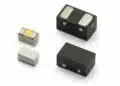
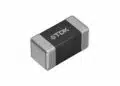
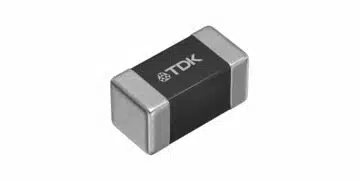
Automotive Ethernet communication is an effective method of fulfilling these requirements, and the products in TDK’s AVRH series of chip varistors have been designated as components recommended for use with Marvell ICs to function as ESD protective devices, essential components which can reliably support Marvell’s Ethernet communications technology.

RelatedPosts

Modelithics Releases COMPLETE v26.1 for Keysight ADS

April 2026 Interconnect, Passives and Electromechanical Components Market Insights

SPICE Simulation of Non-Linear Resistors: Vishay’s Thermistor and PPTC Modelling Ecosystem

Marvell-Recommended ESD Protection Devices and Recommended Circuit Diagram

TDK’s AVRH10C101KT4R7FA8 chip varistor has been designated as an ESD protection device recommended for the Marvell 88Q1010, which implements the Ethernet physical layer portion of the 100BASE-T1 standard. Additionally, TDK’s AVRH10C101KT1R1NE8 chip varistor has been designated as an ESD protection device recommended for the Marvell 88Q2110/88Q2112, which implements the Ethernet physical layer portion of the 1000BASE-T1 standard.  As shown by the recommended circuit diagram in Figure 1, it is preferable for these chip varistors to be installed in close proximity to connectors which are likely to generate static electricity/ESD.

Figure 1: Marvell-Recommended ESD Protection Devices and Recommended Circuit Diagram
Marvell-Recommended ESD Protection Devices and Recommended Circuit Diagram

Marvell-Recommended ESD Protection Devices and Recommended Circuit Diagram

Compliance with the “Open Alliance” Automotive Ethernet Communication Standard

Under OPEN Alliance (www.openSIG.org), standardization of the BroadR-Reach® physical layer is proceeding as an automotive Ethernet communication standard. OABR (OPEN Alliance BroadR-Reach®) requires the following tests to be conducted on ESD protection devices, and it will become necessary for ESD protection devices to pass these tests for automotive Ethernet applications. TDK’s chip varistors passed all of the following tests and our products can be used without any issues as ESD protection devices for Ethernet communication.

Advantages of TDK’s Chip Varistors over TVS Diodes

Under OPEN Alliance, confirmation of RF immunity test performance is becoming a required specification. Countermeasures against static electricity and ESD which uses TVS diodes have the potential to cause communication errors when the immunity test is applied. However, TDK’s chip varistors have taken BCI tests and RF immunity into full consideration, and succesfully achieved high varistor voltage characteristics to prevent communication errors. The AVRH10C101KT4R7FA8 is compliant with the “OPEN Alliance: IEEE 100BASE-T1 EMC Test Specification for ESD suppression devices” standard. A test specification for 1000Base-T1 is also currently being formulated. The AVRH10C101KT1R1NE8 is compliant with the draft version of the 1000Base-T1 ESD suppression devices specification.

Figure 2: Advantages of TDK’s Chip Varistors over TVS Diodes
Advantages of TDK's Chip Varistors over TVS Diodes

Product Overview and Features of Chip Varistors for Automotive Ethernet Communication

  • Recommended by Marvell
  • Compliant with the AEC-Q200 automotive standard
  • Compliant with the OPEN Alliance automotive Ethernet communication standard
Figure 3: Product Overview and Features of Chip Varistors for Automotive Ethernet Communication
Product Overview and Features of Chip Varistors for Automotive Ethernet Communication

Related

Recent Posts

Modelithics Releases COMPLETE v26.1 for Keysight ADS

23.4.2026
5

April 2026 Interconnect, Passives and Electromechanical Components Market Insights

22.4.2026
8

KYOCERA AVX Introduces Traction‑Grade DC Link Film Capacitors

21.4.2026
21

YAGEO Introduces High‑Current Y2/X1 Film Capacitors for Wide-bandgap Power Systems

17.4.2026
21

Samsung Introduces Ultra-High-Voltage 1500 V MLCCs for xEV Powertrains

16.4.2026
26

YAGEO Releases Ferrite Shielded Power Inductors for High‑Density Designs

15.4.2026
17

ECIA March 2026 Industry Pulse Points to Best Sales Climate in Five Years

13.4.2026
50

Coilcraft Unveils Molded Power Inductors for High‑Current VRMs

8.4.2026
48

Murata Automotive MLCCs Push Capacitance Limits for ADAS and Power Lines

16.4.2026
50

Upcoming Events

Apr 27
15:00 - 16:00 CEST

Commercial Space Screening Approach for Agile, High-Reliability Payloads

Apr 29
10:00 - 11:00 CDT

SEPIC Design Done Right

Apr 30
10:00 - 11:00 CDT

Programming Embedded Systems

View Calendar

Popular Posts

  • Buck Converter Design and Calculation

    0 shares
    Share 0 Tweet 0
  • Boost Converter Design and Calculation

    0 shares
    Share 0 Tweet 0
  • Flyback Converter Design and Calculation

    0 shares
    Share 0 Tweet 0
  • LLC Resonant Converter Design and Calculation

    0 shares
    Share 0 Tweet 0
  • MLCC and Ceramic Capacitors

    0 shares
    Share 0 Tweet 0
  • Dual Active Bridge (DAB) Topology

    0 shares
    Share 0 Tweet 0
  • Capacitor Charging and Discharging

    0 shares
    Share 0 Tweet 0
  • MLCC Case Sizes Standards Explained

    0 shares
    Share 0 Tweet 0
  • Ripple Current and its Effects on the Performance of Capacitors

    3 shares
    Share 3 Tweet 0
  • What Electronics Engineer Needs to Know About Passive Low Pass Filters

    0 shares
    Share 0 Tweet 0

Newsletter Subscription


Passive Components Blog

© EPCI - Leading Passive Components Educational and Information Site

  • Home
  • Privacy Policy
  • EPCI Membership & Advertisement
  • About

No Result
View All Result
  • Home
  • Knowledge Blog
  • PCNS

© EPCI - Leading Passive Components Educational and Information Site

This website uses cookies. By continuing to use this website you are giving consent to cookies being used. Visit our Privacy and Cookie Policy.
Go to mobile version