




Passive Components Blog
No Result
View All Result
  • Home
  • NewsFilter
    • All
    • Aerospace & Defence
    • Antenna
    • Applications
    • Automotive
    • Capacitors
    • Circuit Protection Devices
    • electro-mechanical news
    • Filters
    • Fuses
    • Inductors
    • Industrial
    • Integrated Passives
    • inter-connect news
    • Market & Supply Chain
    • Market Insights
    • Medical
    • Modelling and Simulation
    • New Materials & Supply
    • New Technologies
    • Non-linear Passives
    • Oscillators
    • Passive Sensors News
    • Resistors
    • RF & Microwave
    • Telecommunication
    • Weekly Digest

    High-Q RF & Microwave MLCCs: A Cross-Vendor Benchmark

    Molex Unveils Automotive Ethernet Connectors for Next‑Gen SDV Architectures

    TAIYO YUDEN Introduced Hybrid Aluminum Capacitors for 48V Automotive Power Supplies

    ECIA Industry Pulse June 2026 Reaches Five‑Year High

    YAGEO Announces July 2026 Capacitor Price Increase

    YAGEO Presents Single-Phase Common Mode Chokes for Industrial EMI Suppression

    Enabling the 800 V AI Server Era: How C0G High-Voltage MLCC Supports Next-Generation Power Architectures

    binder Prints Electronics on 3D Components Connector Surface

    Vishay Introduces SMD Polymer PTC Thermistors for Fast Resettable Overcurrent Protection

    Trending Tags

    • Ripple Current
    • RF
    • Leakage Current
    • Tantalum vs Ceramic
    • Snubber
    • Low ESR
    • Feedthrough
    • Derating
    • Dielectric Constant
    • New Products
    • Market Reports
  • VideoFilter
    • All
    • Antenna videos
    • Capacitor videos
    • Circuit Protection Video
    • Filter videos
    • Fuse videos
    • Inductor videos
    • Inter-Connect Video
    • Non-linear passives videos
    • Oscillator videos
    • Passive sensors videos
    • Resistor videos

    KYOCERA AVX Presents Antenna Integrator Studio Tutorial for Antenna Placement and RF Design

    Power Design Simulation Tools for Faster Inductor Selection and Loss Optimization

    EMC‑Compliant PCB and Connector Design Guidelines

    Why Isolated DC/DC Power Supplies Fail Late, Würth Elektronik Podcast

    Designing 800 V DC EMC Filters: Calculation, Simulation and Measurement

    Current Sense Transformer Datasheet and Design‑in Guide

    Designing a USB Type‑C Flyback Planar Transformer with Frenetic’s Planar Tool

    Magnetics Design in High‑Frequency GaN Converters

    Qi2 Wireless Charging: Inductors, Capacitors and EMC Filters

    Trending Tags

    • Capacitors explained
    • Inductors explained
    • Resistors explained
    • Filters explained
    • Application Video Guidelines
    • EMC
    • New Products
    • Ripple Current
    • Simulation
    • Tantalum vs Ceramic
  • Knowledge Blog
  • DossiersNew
  • Suppliers
    • Who is Who
  • PCNS
    • PCNS 2025
    • PCNS 2023
    • PCNS 2021
    • PCNS 2019
    • PCNS 2017
  • Events
  • Home
  • NewsFilter
    • All
    • Aerospace & Defence
    • Antenna
    • Applications
    • Automotive
    • Capacitors
    • Circuit Protection Devices
    • electro-mechanical news
    • Filters
    • Fuses
    • Inductors
    • Industrial
    • Integrated Passives
    • inter-connect news
    • Market & Supply Chain
    • Market Insights
    • Medical
    • Modelling and Simulation
    • New Materials & Supply
    • New Technologies
    • Non-linear Passives
    • Oscillators
    • Passive Sensors News
    • Resistors
    • RF & Microwave
    • Telecommunication
    • Weekly Digest

    High-Q RF & Microwave MLCCs: A Cross-Vendor Benchmark

    Molex Unveils Automotive Ethernet Connectors for Next‑Gen SDV Architectures

    TAIYO YUDEN Introduced Hybrid Aluminum Capacitors for 48V Automotive Power Supplies

    ECIA Industry Pulse June 2026 Reaches Five‑Year High

    YAGEO Announces July 2026 Capacitor Price Increase

    YAGEO Presents Single-Phase Common Mode Chokes for Industrial EMI Suppression

    Enabling the 800 V AI Server Era: How C0G High-Voltage MLCC Supports Next-Generation Power Architectures

    binder Prints Electronics on 3D Components Connector Surface

    Vishay Introduces SMD Polymer PTC Thermistors for Fast Resettable Overcurrent Protection

    Trending Tags

    • Ripple Current
    • RF
    • Leakage Current
    • Tantalum vs Ceramic
    • Snubber
    • Low ESR
    • Feedthrough
    • Derating
    • Dielectric Constant
    • New Products
    • Market Reports
  • VideoFilter
    • All
    • Antenna videos
    • Capacitor videos
    • Circuit Protection Video
    • Filter videos
    • Fuse videos
    • Inductor videos
    • Inter-Connect Video
    • Non-linear passives videos
    • Oscillator videos
    • Passive sensors videos
    • Resistor videos

    KYOCERA AVX Presents Antenna Integrator Studio Tutorial for Antenna Placement and RF Design

    Power Design Simulation Tools for Faster Inductor Selection and Loss Optimization

    EMC‑Compliant PCB and Connector Design Guidelines

    Why Isolated DC/DC Power Supplies Fail Late, Würth Elektronik Podcast

    Designing 800 V DC EMC Filters: Calculation, Simulation and Measurement

    Current Sense Transformer Datasheet and Design‑in Guide

    Designing a USB Type‑C Flyback Planar Transformer with Frenetic’s Planar Tool

    Magnetics Design in High‑Frequency GaN Converters

    Qi2 Wireless Charging: Inductors, Capacitors and EMC Filters

    Trending Tags

    • Capacitors explained
    • Inductors explained
    • Resistors explained
    • Filters explained
    • Application Video Guidelines
    • EMC
    • New Products
    • Ripple Current
    • Simulation
    • Tantalum vs Ceramic
  • Knowledge Blog
  • DossiersNew
  • Suppliers
    • Who is Who
  • PCNS
    • PCNS 2025
    • PCNS 2023
    • PCNS 2021
    • PCNS 2019
    • PCNS 2017
  • Events
No Result
View All Result
Passive Components Blog
No Result
View All Result

Comparative Evaluation of Wet Testing and Mechanical Testing for Quality Control of Tantalum Powder in Capacitor Production

2.7.2024
Reading Time: 9 mins read
A A

This article written by Dr. Vladimir Azbel, independent consultant on tantalum capacitors, compares conventional wet testing and proposed mechanical testing of anodes to predict quality of tantalum capacitors.

Introduction

    Powder control is a crucial factor in tantalum capacitor production.

    RelatedPosts

    Using a Virtual Anode Thermal Model to Evaluate Miniaturization Risk in Tantalum Capacitors

    Practical Value of Structural Diagnostics for Tantalum Capacitor Anodes

    Mechanical SSC Testing as a Structural Diagnostic Tool for Tantalum Capacitor Anodes

    This paper discusses two methods for assessing the quality of tantalum powder in capacitor production: wet testing and mechanical testing. While wet testing is a reliable method for correlating powder characteristics with capacitance and leakage current, it is limited in the early stages, of evaluation, particularly for leakage currents. Mechanical testing, with significant advantages over wet testing, offers early defect detection and comprehensive quality assessment of the powder. Introducing mechanical testing is recommended to enhance reliability.

    Wet vs Mechanical Anode Reliability Assessment 

    Wet Test Methodology for Evaluating Tantalum Capacitor Anodes

    Of the current powder inspection methods available to capacitor manufacturers, wet testing is currently the most reliable method. The wet test is a direct correlation between powder characteristics and anode capacitance and leakage current.

    The setup (see Fig. 1) and procedures for testing capacitance and leakage current are well standardized.
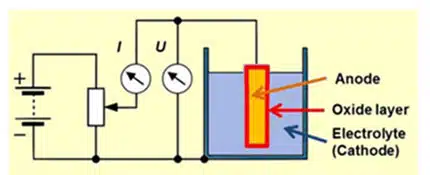
    Figure 1. Wet testing the anode in a tantalum capacitor

    Fig. 1 illustrates the setup for wet testing the anode in a tantalum capacitor, showing how the anode is immersed in the electrolyte and connected to the measurement instruments.

    Wet Test Methodology Involves Several Steps:

    1. Sample Preparation: The anode is placed in the electrolyte (see Fig. 1).
    2. Voltage Application: The rating voltage of the capacitor or slightly higher is applied to the anode.
    3. Measurements: Leakage current and capacitance are measured.
    4. Result Analysis: The obtained data are compared with the technical specifications set by the capacitor manufacturer.

    Mechanical Test Methodology

    Mechanical Test Methodology: Stress-Strain Curve

    Stress-strain curves, demonstrating high sensitivity to changes in the porous structure, are used to assess the material structure obtained by powder metallurgy methods (see Fig. 2). The setup of the testing machine for obtaining stress-strain curves is shown in Fig. 3.
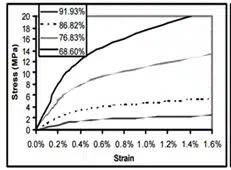
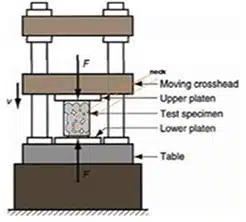
    Figure 2. Stress-strain curves of tantalum with different porosities
    Figure 3. Schematic of the testing machine setup.

    To Obtain the Stress-Strain Curve of a Powder Product, the Following Steps Are Necessary:

    1. Sample Preparation: A pellet is pressed from tantalum powder and subjected to sintering.
    2. Tensile or Compression Testing Equipment: (see Fig. 3).
    3. Testing: The test sample is placed in the testing device, and a compressive force is applied to the sintered pellet, recording the stress-strain curve.
    4. Result Evaluation: The curve parameters allow for determining material characteristics such as tensile strength, yield strength, modulus of elasticity, and plasticity.

    Agglomeration and Its Impact on the Technological Process

    Agglomerated powders are used for pressing tantalum powders for capacitors. An agglomerate is a composition of primary powder particles, usually subjected to adhesive processes during agglomeration, that do not affect the primary powder particle morphology. The agglomeration scheme is shown in Fig. 4.
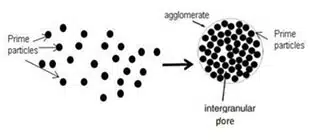
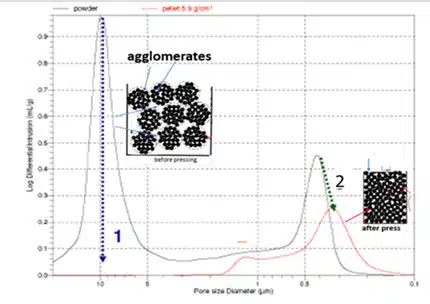
    Figure 4. Scheme of tantalum powder agglomeration
    Figure 5. To estimate the pore diameter, before and after pressing, data obtained using the mercury pycnometer method were used (graph data H.C. Starck)

    The die is filled only with agglomerated powder, providing the necessary flowability and specific bulk density (SBD), ensuring uniform mold filling. During process pressing, the agglomerate distraction is illustrated by prosimetra data (see Fig. 5).

    • Large Pores (Peak 1): These are inter-agglomerate pores in the powder, that distractive during pressing.
    • Small Pores (Peak 2): These are pores of the primary powder particles formed, as a result, of agglomerate distractive during pressing.

    Stress-Strain Curve Parameters Description

    The parameters of the stress-strain curve of sintered pellets reflect the characteristics of their structure, depending on the primary powder particles. The stress-strain curve provides information about the mechanical properties of the powder, such as yield strength and Young’s modulus (see Fig. 6).
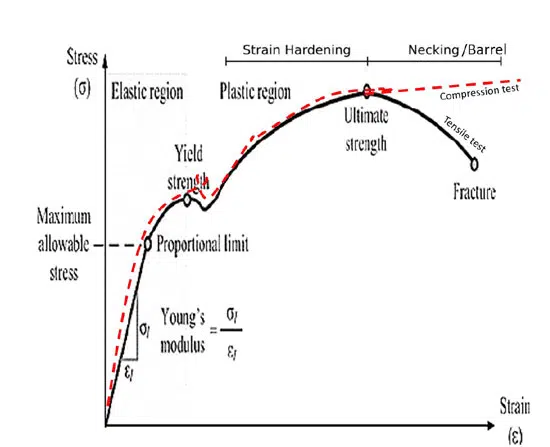
    Figure 6. Stress-strain curve and parameters used to describe it

    Yield Strength (Ay): Ay depends on neck size. The latter affects the value of the maximum permissible formation voltage. For porous materials, yield strength can be calculated using the following equation:

    Ay = b * A0 * (X/D) 2 /2/

    , where b is an empirical constant, Ay is the yield strength of the sintered porous material, A0 is the yield strength of the deformed material. Neck size (X) is divided by the primary powder particle size (D), but this ratio cannot exceed 0.5.

    •Young’s Modulus (E): E is related to porosity, which affects capacitance. The behavior of Young’s modulus of porous material, can be described by the following equation

    E = E0 * (1 – p/pc) /3/

    , where E is the modulus of elasticity of the porous material with the corresponding density p, and E0 is the modulus of the solid material at density pc ~ 1.

    The CC curve can be used to calculate the strain hardening coefficient (n), which is related to the defectiveness of the material. This coefficient can influence leakage currents.

    Advantages and Disadvantages of Wet and Mechanical Testing

    Advantages and Disadvantages of Wet Testing

    Capacitance:

    • Reliability: Capacitance testing is reliable for evaluating the final product. It directly depends on the specific surface area of the powder and the anode manufacturing process.
    • Disadvantages: These tests are conducted late, and results may depend on previous processes, making it difficult to assess the initial powder quality when defect correction is no longer possible.

    Leakage Current:

    • Reliability: Leakage current testing is crucial for assessing anode quality, as high leakage currents indicate defects and internal stresses in the anode.
    • Dependence on Defects: High leakage currents can be caused by inhomogeneities and other defects, resulting from low powder quality or improper manufacturing conditions.

    Advantages and Disadvantages of Mechanical Testing

    Advantages:

    Comparison with the benchmark: The presence of a benchmark curve, allows precise comparison of samples and identification of deviations from the norm, making this method more reliable for assessing powder quality.

    • Early Defect Detection: This method, allows to identify of potential issues, at the sintering stage before the pellet proceeds to the next production stage.
    • Objective Assessment of Mechanical Properties: The stress-strain curve provides a comprehensive evaluation of the powder’s overall characteristics, such as particle size distribution width, shape, and chemical purity.

    Disadvantages:

    • Technical Complexity: Mechanical testing requires equipment similar to that used in production for testing the properties of tantalum wire. In the absence of specialists in mechanical testing, specialized programs exist for analyzing stress-strain curves.

    Conclusion

    Since production conditions are determined by the consumer, powder evaluation based on the benchmark stress-strain curve remains an important method for the early detection of potential problems.

    Recommendations

    For a more accurate assessment of tantalum powder quality, in conditions, where anode manufacturing processes, are determined by the tantalum capacitor producer, a comprehensive approach is recommended:

    1. Stress-Strain Curve Comparison with the Standard: Identify and eliminate potential powder defects at the early stages.
    2. Anode Leakage Currents: Check for the absence of defects and internal stresses that may arise during production.
    3. Capacitance: Confirm that the final product meets requirements despite this parameter not being defect-dependent.

    Thus, the integration of these methods will ensure the quality of the powder used and the reliability of tantalum capacitors.

    Reference

    1. THE EFFECT OF MICROSTRUCTURE ON THE MECHANICAL PROPERTIES OF POROUS TANTALUM: AN FEM BASED THE ORIGINAL MODEL Fang, Z., 53rd Annual Meeting of the Orthopedic Research Society
    2. Characterization of Ti–6Al–4V alloy foams synthesized by space holder technique; Z Esen, Ş Bora; Materials Science and Engineering A 528 (2011) 3200–3209
    3. Correlation between Young’s Modulus and Porosity in Porous Materials
    4. J. Kováčik Journal of Materials Science Letters 18(13):1007-1010

    Related

    Source: Vladimir Azbel

    Recent Posts

    High-Q RF & Microwave MLCCs: A Cross-Vendor Benchmark

    2.7.2026
    39

    TAIYO YUDEN Introduced Hybrid Aluminum Capacitors for 48V Automotive Power Supplies

    2.7.2026
    28

    YAGEO Announces July 2026 Capacitor Price Increase

    1.7.2026
    313

    Enabling the 800 V AI Server Era: How C0G High-Voltage MLCC Supports Next-Generation Power Architectures

    1.7.2026
    82

    MLCCs in the Age of AI: Q2 2026 Market Tightness

    30.6.2026
    254

    AI Hardware Demand for Passive Components Dossier

    30.6.2026
    89

    Power Design Simulation Tools for Faster Inductor Selection and Loss Optimization

    29.6.2026
    27

    Skeleton Supercapacitor Achieves UL‑certified 3,500 A Peak Current for AI Data Centers

    26.6.2026
    68

    100 V Hybrid Polymer Capacitor from VINA Enesol Targets 48–72 V Power Platforms

    26.6.2026
    135

    Upcoming Events

    Jul 14
    16:00 - 17:00 CEST

    EMC Design Essentials: Mastering Varistors and Common Mode Chokes

    Jul 21
    16:00 - 17:00 CEST

    Safety by design: X and Y Interference suppression capacitors for power line filters

    Jul 28
    8:00 - 11:00 CEST

    Post Procurement Testing of EEE Components for LEO Space Applications

    View Calendar

    Popular Posts

    • Boost Converter Design and Calculation

      0 shares
      Share 0 Tweet 0
    • Buck Converter Design and Calculation

      0 shares
      Share 0 Tweet 0
    • Flyback Converter Design and Calculation

      0 shares
      Share 0 Tweet 0
    • LLC Resonant Converter Design and Calculation

      0 shares
      Share 0 Tweet 0
    • MLCC and Ceramic Capacitors

      0 shares
      Share 0 Tweet 0
    • Nvidia Vera Rubin: Why One AI Rack Needs So Many More MLCC Capacitors

      0 shares
      Share 0 Tweet 0
    • Earthing Systems and IEC Classification Explained

      0 shares
      Share 0 Tweet 0
    • Dual Active Bridge (DAB) Topology

      0 shares
      Share 0 Tweet 0
    • MLCC Case Sizes Standards Explained

      0 shares
      Share 0 Tweet 0
    • SEPIC Converter Design and Calculation

      0 shares
      Share 0 Tweet 0

    Newsletter Subscription


    Passive Components Blog

    © EPCI - Leading Passive Components Educational and Information Site

    • Home
    • Privacy Policy
    • EPCI Membership & Advertisement
    • About

    No Result
    View All Result
    • Home
    • Knowledge Blog
    • Dossiers
    • PCNS

    © EPCI - Leading Passive Components Educational and Information Site

    This website uses cookies. By continuing to use this website you are giving consent to cookies being used. Visit our Privacy and Cookie Policy.
    Go to mobile version