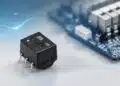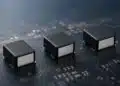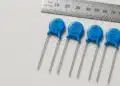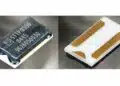











Knowles Precision Devices has expanded its X1/Y2 safety‑certified multilayer ceramic capacitor (MLCC) portfolio with a new 3825 case size aimed at compact, high‑voltage AC line and DC line filtering.
The new Knowles Precision Devices X1/Y2 MLCC ceramic safety capacitor combine safety approvals, extended creepage distance, and higher capacitance values to help designers meet insulation and EMC requirements in increasingly dense automotive and industrial power electronics.
Key features and benefits
- Safety‑certified X1/Y2 construction suitable for across‑the‑line and line‑to‑ground interference suppression in mains‑connected equipment, reducing the need to trade off footprint against insulation distance.
- Capacitance values from 1 nF up to 18 nF at 310 Vac, enabling more effective noise attenuation and EMI filter tuning in space‑constrained designs where film capacitors may be too large.
- Minimum creepage distance of 7 mm in 3825 case size, supporting required clearance on high‑voltage nodes while keeping the footprint in a standard surface‑mount MLCC outline.
- Rated to 1500 Vdc and Humidity Grade IIIB (85 °C/85% RH for 1,000 hours), providing robustness against high voltage stress and long‑term exposure to moisture in harsh environments.
- AEC‑Q200 qualified with flexible terminations, helping absorb PCB flex and thermal cycling, which is critical in automotive ECUs, power modules, and industrial drives.
- Surface‑mount form factor, allowing automated assembly and reflow soldering, simplifying manufacturing compared to leaded safety capacitors in similar voltage classes.
Typical applications
The new 3825 X1/Y2 MLCCs target safety‑critical and high‑reliability power electronics where both insulation and compact size are important.
- AC line filters in on‑board chargers, server power supplies, and industrial SMPS input stages
- Line‑to‑ground Y capacitors and line‑to‑line X capacitors for EMC compliance in single‑ and three‑phase equipment
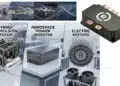
- Noise suppression on high‑voltage DC bus nodes in EV traction inverters, DC fast chargers, and renewable energy inverters
- Auxiliary power supplies, housekeeping SMPS, and bias supplies inside EV and industrial power units
- Industrial control, automation, and drives where high surge immunity and long‑term reliability under humidity are required
In many of these positions, the 3825 safety MLCCs can reduce board area compared with traditional safety‑rated film capacitors, while still maintaining certified insulation distances and surge withstand capability.
Technical highlights
The 3825 case size devices extend the existing Knowles X1/Y2 safety MLCC family by adding higher capacitance values and a larger creepage path within a surface‑mount package.
Core electrical and environmental parameters
- X1/Y2 safety classification for mains applications
- Capacitance range in 3825 series: approximately 1 nF to 18 nF, depending on voltage rating
- AC voltage ratings from 310 Vac up to 660 Vac according to series options
- DC withstand rating of 1500 Vdc
- Humidity Grade IIIB, tested at 85 °C/85% RH for 1,000 hours
- Operating temperature range from −55 °C to +125 °C (typical for this platform; exact limits according to manufacturer datasheet)
- AEC‑Q200 qualification for automotive environments
In practice, the combination of high AC rating and 1500 Vdc withstand is important where capacitors see both continuous mains or high DC bias and superimposed surge events. Humidity Grade IIIB indicates the parts are qualified for use in moisture‑prone environments such as under‑hood automotive or outdoor industrial cabinets, but designers should still follow conformal coating and derating guidelines defined in the datasheet for the harshest conditions.
Mechanical and insulation characteristics
- 3825 case size surface‑mount MLCC
- Minimum creepage distance of 7 mm across the component body
- Flexible termination system to improve resistance to board bending and thermal stress
The 7 mm creepage distance is a key parameter for meeting safety standards at higher mains voltages, especially when working with reinforced insulation or higher overvoltage categories. The flexible termination structure helps mitigate board flex cracking, a common failure mode for large MLCCs in power electronics assemblies.
3825 safety MLCC options overview
The manufacturer presents the 3825 case size X1/Y2 MLCCs in multiple capacitance and voltage combinations. Exact ordering codes and full detail are provided in the official product and safety‑cap catalog, but the portfolio can be summarized as follows:
| Parameter | 3825 X1/Y2 safety MLCCs |
|---|---|
| Case size | 3825 surface‑mount MLCC |
| Safety class | X1/Y2 |
| AC voltage ratings | 310 Vac up to 660 Vac (per series option, see datasheet) |
| Capacitance range | Approx. 1 nF to 18 nF, depending on voltage class |
| DC rating | 1500 Vdc withstand |
| Creepage | Minimum 7 mm |
| Qualification | AEC‑Q200, Humidity Grade IIIB |
When selecting a part, engineers should match both the AC rating and the safety class to the applicable equipment standard, then choose the capacitance needed for the required impedance and EMI performance.
Design‑in notes for engineers
When designing with safety‑certified MLCCs in high‑voltage power electronics, paying attention to both electrical and mechanical aspects is crucial.
Electrical design considerations
- Verify safety class and insulation requirements: Confirm that X1/Y2 classification, creepage distance, and surge performance meet the applicable system standard (such as requirements for across‑the‑line and line‑to‑ground capacitors in mains‑connected equipment).
- Check AC and DC derating: Even though the 3825 series is rated up to 310 Vac and beyond (depending on variant) and 1500 Vdc, apply appropriate derating for worst‑case mains tolerance, overvoltage category, and ambient temperature.
- Capacitance selection for EMI: Choose capacitance to balance conducted noise attenuation against leakage current and inrush behavior. Higher values up to 18 nF at 310 Vac help in achieving better low‑frequency attenuation, but may increase leakage.
- Consider harmonic and surge stresses: Evaluate resonances between Y capacitors, X capacitors, common‑mode chokes, and line impedance. Use the datasheet surge test data as a guide and, where possible, validate with surge and burst testing on the assembled system.
Layout and mechanical implementation
- Respect creepage and clearance on the PCB: The 7 mm creepage across the component supports high‑voltage operation, but PCB layout (tracking, solder mask, slots) must also be designed to meet system‑level creepage and clearance requirements.
- Place near EMI entry points: For best performance, position X1/Y2 capacitors close to AC input connectors, rectifiers, or common‑mode chokes, minimizing loop area and stray inductance.
- Account for board flex and vibration: Although these parts use flexible terminations, avoid placing large MLCCs near board edges, mounting holes, or connectors where flexing is highest; consider mechanical support or coating where appropriate.
- Thermal environment: Ensure local hotspot temperatures remain within the specified operating range from −55 °C to +125 °C according to the series datasheet, especially near power semiconductors and resistive losses in input networks.
Qualification and lifecycle management
- Use AEC‑Q200 data for risk assessment: The automotive‑grade qualification gives additional confidence for use in mission‑critical systems, but designers should still perform application‑specific reliability analysis.
- Second‑source planning: While safety and creepage constraints often limit true second sources, consider designing footprints that can accept alternative safety capacitor styles (for example, film devices) as a contingency, even if the primary design uses the 3825 MLCCs.
Source
The information in this article is based on an official communication from Knowles Precision Devices about the expansion of its X1/Y2 safety‑certified MLCC portfolio with a new 3825 case size, complemented by data available on the manufacturer’s safety‑certified MLCC product pages and distributor listings.