



Passive Components Blog
No Result
View All Result
  • Home
  • NewsFilter
    • All
    • Aerospace & Defence
    • Antenna
    • Applications
    • Automotive
    • Capacitors
    • Circuit Protection Devices
    • electro-mechanical news
    • Filters
    • Fuses
    • Inductors
    • Industrial
    • Integrated Passives
    • inter-connect news
    • Market & Supply Chain
    • Market Insights
    • Medical
    • Modelling and Simulation
    • New Materials & Supply
    • New Technologies
    • Non-linear Passives
    • Oscillators
    • Passive Sensors News
    • Resistors
    • RF & Microwave
    • Telecommunication
    • Weekly Digest

    Modelithics Releases COMPLETE v26.1 for Keysight ADS

    April 2026 Interconnect, Passives and Electromechanical Components Market Insights

    SPICE Simulation of Non-Linear Resistors: Vishay’s Thermistor and PPTC Modelling Ecosystem

    KYOCERA AVX Introduces Traction‑Grade DC Link Film Capacitors

    When More Capacitance Hurts Reliability: The Role of the Metallic Skeleton in Tantalum Anodes

    Why Power Inductors Use a Ferrite Core With an Air Gap

    Wk 16 Electronics Supply Chain Digest

    YAGEO Introduces High‑Current Y2/X1 Film Capacitors for Wide-bandgap Power Systems

    Amphenol Explanded Liquid Cooling Connectors for AI, ESS and EV Systems

    Trending Tags

    • Ripple Current
    • RF
    • Leakage Current
    • Tantalum vs Ceramic
    • Snubber
    • Low ESR
    • Feedthrough
    • Derating
    • Dielectric Constant
    • New Products
    • Market Reports
  • VideoFilter
    • All
    • Antenna videos
    • Capacitor videos
    • Circuit Protection Video
    • Filter videos
    • Fuse videos
    • Inductor videos
    • Inter-Connect Video
    • Non-linear passives videos
    • Oscillator videos
    • Passive sensors videos
    • Resistor videos

    Why Power Inductors Use a Ferrite Core With an Air Gap

    Transformer-Based Power-Line Harvester Magnetic Design

    Thermal Modeling of Magnetics

    Standard vs Planar LLC transformers Comparison for Battery Chargers

    How Modern Tools Model Magnetic Components for Power Electronics

    Advanced Loss Modeling for Planar Magnetics in the Frenetic Planar Tool

    2026 Power Magnetics Design Trends: Flyback, DAB and Planar

    Enabling Software‑Defined Vehicle Architectures: Automotive Ethernet and Zonal Smart Power

    Calculating Resistance Value of a Flyback RC Snubber 

    Trending Tags

    • Capacitors explained
    • Inductors explained
    • Resistors explained
    • Filters explained
    • Application Video Guidelines
    • EMC
    • New Products
    • Ripple Current
    • Simulation
    • Tantalum vs Ceramic
  • Knowledge Blog
  • DossiersNew
  • Suppliers
    • Who is Who
  • PCNS
    • PCNS 2025
    • PCNS 2023
    • PCNS 2021
    • PCNS 2019
    • PCNS 2017
  • Events
  • Home
  • NewsFilter
    • All
    • Aerospace & Defence
    • Antenna
    • Applications
    • Automotive
    • Capacitors
    • Circuit Protection Devices
    • electro-mechanical news
    • Filters
    • Fuses
    • Inductors
    • Industrial
    • Integrated Passives
    • inter-connect news
    • Market & Supply Chain
    • Market Insights
    • Medical
    • Modelling and Simulation
    • New Materials & Supply
    • New Technologies
    • Non-linear Passives
    • Oscillators
    • Passive Sensors News
    • Resistors
    • RF & Microwave
    • Telecommunication
    • Weekly Digest

    Modelithics Releases COMPLETE v26.1 for Keysight ADS

    April 2026 Interconnect, Passives and Electromechanical Components Market Insights

    SPICE Simulation of Non-Linear Resistors: Vishay’s Thermistor and PPTC Modelling Ecosystem

    KYOCERA AVX Introduces Traction‑Grade DC Link Film Capacitors

    When More Capacitance Hurts Reliability: The Role of the Metallic Skeleton in Tantalum Anodes

    Why Power Inductors Use a Ferrite Core With an Air Gap

    Wk 16 Electronics Supply Chain Digest

    YAGEO Introduces High‑Current Y2/X1 Film Capacitors for Wide-bandgap Power Systems

    Amphenol Explanded Liquid Cooling Connectors for AI, ESS and EV Systems

    Trending Tags

    • Ripple Current
    • RF
    • Leakage Current
    • Tantalum vs Ceramic
    • Snubber
    • Low ESR
    • Feedthrough
    • Derating
    • Dielectric Constant
    • New Products
    • Market Reports
  • VideoFilter
    • All
    • Antenna videos
    • Capacitor videos
    • Circuit Protection Video
    • Filter videos
    • Fuse videos
    • Inductor videos
    • Inter-Connect Video
    • Non-linear passives videos
    • Oscillator videos
    • Passive sensors videos
    • Resistor videos

    Why Power Inductors Use a Ferrite Core With an Air Gap

    Transformer-Based Power-Line Harvester Magnetic Design

    Thermal Modeling of Magnetics

    Standard vs Planar LLC transformers Comparison for Battery Chargers

    How Modern Tools Model Magnetic Components for Power Electronics

    Advanced Loss Modeling for Planar Magnetics in the Frenetic Planar Tool

    2026 Power Magnetics Design Trends: Flyback, DAB and Planar

    Enabling Software‑Defined Vehicle Architectures: Automotive Ethernet and Zonal Smart Power

    Calculating Resistance Value of a Flyback RC Snubber 

    Trending Tags

    • Capacitors explained
    • Inductors explained
    • Resistors explained
    • Filters explained
    • Application Video Guidelines
    • EMC
    • New Products
    • Ripple Current
    • Simulation
    • Tantalum vs Ceramic
  • Knowledge Blog
  • DossiersNew
  • Suppliers
    • Who is Who
  • PCNS
    • PCNS 2025
    • PCNS 2023
    • PCNS 2021
    • PCNS 2019
    • PCNS 2017
  • Events
No Result
View All Result
Passive Components Blog
No Result
View All Result

KYOCERA AVX Releases Antenna for Iridium Satellite IoT Applications

6.11.2025
Reading Time: 4 mins read
A A

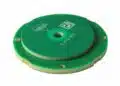
KYOCERA AVX Launches a new LDS Cap Antenna for Iridium Satellite IoT Applications. Developed in collaboration with Iridium and qualified for use with Iridium Certus™ 9704 IoT modules, the new LDS cap antenna and evaluation board significantly outperform the ceramic patch antennas typically used in satellite IoT applications.

KYOCERA AVX, a leading global manufacturer of advanced electronic components engineered to accelerate technological innovation and build a better future, launched a new LDS cap antenna and evaluation board optimized for Iridium® satellite IoT applications and designated as Iridium Qualified Antenna products for Iridium Certus 9704 modules. 

RelatedPosts

KYOCERA AVX Introduces Traction‑Grade DC Link Film Capacitors

KYOCERA AVX MIL-PRF-32535 BME NP0 MLCCs Approved to the DLA QPD

Kyocera Releases 30fs Jitter Differential Clock Oscillator

Developed to provide Iridium with an embedded antenna optimized for low Earth orbit (LEO) satellites used to provide seamless connectivity and data exchange for IoT devices anywhere in the world, the new KYOCERA AVX LDS cap antenna developed for Iridium outperforms the ceramic patch antennas traditionally used in these applications.

Manufactured using laser direct structuring (LDS) technology — an efficient process for creating complex, compact, lightweight, wide-bandwidth, and high-gain 3D antenna designs on myriad substrates — the new LDS cap antenna is smaller and lighter than ceramic patch antennas and exhibits excellent right-hand circular polarization (RHCP) and superior gain from zenith to horizon, which maximizes satellite visibility and reliability and is especially beneficial for improving the connectivity of LEO satellites at low elevation angles. It also exhibits wider bandwidth and higher radiation efficiency than patch antennas. 

This innovative on-board antenna has a small, lightweight form factor with a unique design that measures 35.7mm in diameter and 17.98mm high, weighs 6.85g, facilitates easy SMT assembly, and allows device manufacturers to locate components on its underside, saving space on the main PCB board. 

The new KYOCERA AVX LDS cap antenna developed for Iridium supports GNSS (1,559–1,610MHz) and Iridium (1,616–1626.5MHz) frequencies with ~2dBi peak gain and 60% efficiency, and delivers reliable performance in challenging environments, including over metal. It’s rated for 4W power handling, 50Ω feed point impedance, and operating temperatures extending from -40° to +85°C. It’s also proven to withstand exposure to high temperatures, high humidity, and salt spray, compliant with the latest RoHS and REACH directives, and packaged and shipped on tape and reel for automated assembly with reflow soldering. 

The new antenna is expressly designed for satellite connectivity, targeted for satellite IoT applications, and well-suited for applications including telematics, asset tracking, remote monitoring, smart farming, and smart city applications. And earlier this year, it was shortlisted for Electronic Specifier’s Electronics Excellence Awards in the passive product category. 

Both the KYOCERA AVX LDS cap antenna and its 70 x 70 x 32.5mm (L x W x H) evaluation board — designed to enable seamless integration and support quicker time to market — have also been designated as Iridium Qualified Antenna products for Iridium Certus 9704 products, including the Iridium Certus 9704 IoT module and Iridium Certus 9704 satellite IoT developer kit. The Iridium Certus 9704 IoT module with Iridium Messaging Transport® (IMT®) technology is the company’s smallest, most powerful module. It’s ideal for satellite IoT applications that require real-time data analysis, analytics, and automated decision-making — enabling IIoT, M2M, predictive maintenance, remote asset tracking, remote sensing, and uncrewed aircraft, vehicle, and vessel command and control applications with larger file size transfers and faster messaging speeds than previous Iridium IoT modules. It can also help organizations embrace the integration of AI and the IoT: the Artificial Intelligence of Things (AIoT).

“The Iridium Certus 9704 IoT module packs tons of crucial and value-added capabilities into a small form factor to better support the growing satellite IoT market,” said Omid Nia, Ph.D., Associate Director – Product Engineering and Certification at Iridium. “KYOCERA AVX’s LDS antenna performance is excellent. It meets all defined Iridium performance and compliance requirements and is officially qualified for use with the Iridium Certus 9704.”

“Iridium is the global leader in satellite IoT applications, so we’re honored to have had the opportunity to collaborate with them on the development of our latest innovative LDS cap antenna and enable their cutting-edge satellite IoT solutions,” said Carmen Redondo, Director of Global Marketing – Antennas at KYOCERA AVX. “Our team’s expertise in antenna design allowed us to help the Iridium team overcome challenges posed by traditional ceramic patch antennas and satisfy the unique demands of satellite IoT applications. Our antenna’s RHCP and constant gain from zenith to horizon are especially advantageous for LEO satellite connectivity at low elevation angles, and its peak gain of approximately 2dBi and 60% efficiency ensures reliable performance in challenging environments in various industries. We also optimized its size, performance, and integration flexibility to quicken customers’ time to market, and — like Iridium — are excited to see how customers implement this new technology and the Iridium Certus 9704 IoT solutions it enables.” 

To learn more about the KYOCERA AVX LDS cap antenna and evaluation board developed for Iridium satellite IoT applications, its L-Band LDS cap antenna and evaluation board for other satellite IoT applications, LDS technology, and the complete portfolio of KYOCERA AVX antennas, please visit the links embedded here and above

Related

Source: KYOCERA AVX

Recent Posts

KYOCERA AVX Introduces Traction‑Grade DC Link Film Capacitors

21.4.2026
38

YAGEO Introduces High Rel MLCCs Beyond MIL-Spec Limits

16.4.2026
53

Würth Elektronik Expanded Capacity for Validation and Services in Asia

16.4.2026
17

KYOCERA AVX MIL-PRF-32535 BME NP0 MLCCs Approved to the DLA QPD

16.4.2026
30

ECIA March 2026 Industry Pulse Points to Best Sales Climate in Five Years

13.4.2026
54

Exxelia Releases Updated Microwave Materials and Frequency Tuning Catalogues

8.4.2026
18

Murata Automotive MLCCs Push Capacitance Limits for ADAS and Power Lines

16.4.2026
53

Molex Completes Acquisition of Smiths Interconnect, Expanding Portfolio of High-Reliability Connectivity Solutions

1.4.2026
16

Würth Elektronik Releases Heat Sinks for TO and IC packages

31.3.2026
35

Upcoming Events

Apr 27
15:00 - 16:00 CEST

Commercial Space Screening Approach for Agile, High-Reliability Payloads

Apr 29
10:00 - 11:00 CDT

SEPIC Design Done Right

Apr 30
10:00 - 11:00 CDT

Programming Embedded Systems

View Calendar

Popular Posts

  • Buck Converter Design and Calculation

    0 shares
    Share 0 Tweet 0
  • Boost Converter Design and Calculation

    0 shares
    Share 0 Tweet 0
  • Flyback Converter Design and Calculation

    0 shares
    Share 0 Tweet 0
  • LLC Resonant Converter Design and Calculation

    0 shares
    Share 0 Tweet 0
  • MLCC and Ceramic Capacitors

    0 shares
    Share 0 Tweet 0
  • Dual Active Bridge (DAB) Topology

    0 shares
    Share 0 Tweet 0
  • Capacitor Charging and Discharging

    0 shares
    Share 0 Tweet 0
  • What Electronics Engineer Needs to Know About Passive Low Pass Filters

    0 shares
    Share 0 Tweet 0
  • Ripple Current and its Effects on the Performance of Capacitors

    3 shares
    Share 3 Tweet 0
  • MLCC Case Sizes Standards Explained

    0 shares
    Share 0 Tweet 0

Newsletter Subscription


Passive Components Blog

© EPCI - Leading Passive Components Educational and Information Site

  • Home
  • Privacy Policy
  • EPCI Membership & Advertisement
  • About

No Result
View All Result
  • Home
  • Knowledge Blog
  • PCNS

© EPCI - Leading Passive Components Educational and Information Site

This website uses cookies. By continuing to use this website you are giving consent to cookies being used. Visit our Privacy and Cookie Policy.
Go to mobile version