





Passive Components Blog
No Result
View All Result
  • Home
  • NewsFilter
    • All
    • Aerospace & Defence
    • Antenna
    • Applications
    • Automotive
    • Capacitors
    • Circuit Protection Devices
    • electro-mechanical news
    • Filters
    • Fuses
    • Inductors
    • Industrial
    • Integrated Passives
    • inter-connect news
    • Market & Supply Chain
    • Market Insights
    • Medical
    • Modelling and Simulation
    • New Materials & Supply
    • New Technologies
    • Non-linear Passives
    • Oscillators
    • Passive Sensors News
    • Resistors
    • RF & Microwave
    • Telecommunication
    • Weekly Digest

    Capacitances of Nonlinear MLCCs: What Datasheets Don’t Tell You

    Stackpole Releases Automotive Wide‑Termination Resistors

    How a Digital Structural Twin Can Predict Tantalum Capacitor Reliability

    SCHURTER Buys Biaodi to Boost High-Voltage Protection Portfolio

    Binder Hybrid Connector Simplifies One Cable Automation

    Tapped Inductor Buck Converter Fundamentals

    TAIYO YUDEN Releases Mini Metal Power Inductors

    Molecular Memristor Shows Record 145 kH Emergent Inductance

    Planar vs Conventional Transformer: When it Make Sense

    Trending Tags

    • Ripple Current
    • RF
    • Leakage Current
    • Tantalum vs Ceramic
    • Snubber
    • Low ESR
    • Feedthrough
    • Derating
    • Dielectric Constant
    • New Products
    • Market Reports
  • VideoFilter
    • All
    • Antenna videos
    • Capacitor videos
    • Circuit Protection Video
    • Filter videos
    • Fuse videos
    • Inductor videos
    • Inter-Connect Video
    • Non-linear passives videos
    • Oscillator videos
    • Passive sensors videos
    • Resistor videos

    Capacitances of Nonlinear MLCCs: What Datasheets Don’t Tell You

    Tapped Inductor Buck Converter Fundamentals

    Planar vs Conventional Transformer: When it Make Sense

    Modeling Fringing Field Losses in Inductors & Transformers

    Why Power Inductors Use a Ferrite Core With an Air Gap

    Transformer-Based Power-Line Harvester Magnetic Design

    Thermal Modeling of Magnetics

    Standard vs Planar LLC transformers Comparison for Battery Chargers

    How Modern Tools Model Magnetic Components for Power Electronics

    Trending Tags

    • Capacitors explained
    • Inductors explained
    • Resistors explained
    • Filters explained
    • Application Video Guidelines
    • EMC
    • New Products
    • Ripple Current
    • Simulation
    • Tantalum vs Ceramic
  • Knowledge Blog
  • DossiersNew
  • Suppliers
    • Who is Who
  • PCNS
    • PCNS 2025
    • PCNS 2023
    • PCNS 2021
    • PCNS 2019
    • PCNS 2017
  • Events
  • Home
  • NewsFilter
    • All
    • Aerospace & Defence
    • Antenna
    • Applications
    • Automotive
    • Capacitors
    • Circuit Protection Devices
    • electro-mechanical news
    • Filters
    • Fuses
    • Inductors
    • Industrial
    • Integrated Passives
    • inter-connect news
    • Market & Supply Chain
    • Market Insights
    • Medical
    • Modelling and Simulation
    • New Materials & Supply
    • New Technologies
    • Non-linear Passives
    • Oscillators
    • Passive Sensors News
    • Resistors
    • RF & Microwave
    • Telecommunication
    • Weekly Digest

    Capacitances of Nonlinear MLCCs: What Datasheets Don’t Tell You

    Stackpole Releases Automotive Wide‑Termination Resistors

    How a Digital Structural Twin Can Predict Tantalum Capacitor Reliability

    SCHURTER Buys Biaodi to Boost High-Voltage Protection Portfolio

    Binder Hybrid Connector Simplifies One Cable Automation

    Tapped Inductor Buck Converter Fundamentals

    TAIYO YUDEN Releases Mini Metal Power Inductors

    Molecular Memristor Shows Record 145 kH Emergent Inductance

    Planar vs Conventional Transformer: When it Make Sense

    Trending Tags

    • Ripple Current
    • RF
    • Leakage Current
    • Tantalum vs Ceramic
    • Snubber
    • Low ESR
    • Feedthrough
    • Derating
    • Dielectric Constant
    • New Products
    • Market Reports
  • VideoFilter
    • All
    • Antenna videos
    • Capacitor videos
    • Circuit Protection Video
    • Filter videos
    • Fuse videos
    • Inductor videos
    • Inter-Connect Video
    • Non-linear passives videos
    • Oscillator videos
    • Passive sensors videos
    • Resistor videos

    Capacitances of Nonlinear MLCCs: What Datasheets Don’t Tell You

    Tapped Inductor Buck Converter Fundamentals

    Planar vs Conventional Transformer: When it Make Sense

    Modeling Fringing Field Losses in Inductors & Transformers

    Why Power Inductors Use a Ferrite Core With an Air Gap

    Transformer-Based Power-Line Harvester Magnetic Design

    Thermal Modeling of Magnetics

    Standard vs Planar LLC transformers Comparison for Battery Chargers

    How Modern Tools Model Magnetic Components for Power Electronics

    Trending Tags

    • Capacitors explained
    • Inductors explained
    • Resistors explained
    • Filters explained
    • Application Video Guidelines
    • EMC
    • New Products
    • Ripple Current
    • Simulation
    • Tantalum vs Ceramic
  • Knowledge Blog
  • DossiersNew
  • Suppliers
    • Who is Who
  • PCNS
    • PCNS 2025
    • PCNS 2023
    • PCNS 2021
    • PCNS 2019
    • PCNS 2017
  • Events
No Result
View All Result
Passive Components Blog
No Result
View All Result

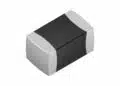
Layer-by-Layer Fabrication of Thin Polypropylene-based Dielectrics

30.9.2025
Reading Time: 5 mins read
A A

The paper “Layer-by-Layer Fabrication of Thin Polypropylene-based Dielectrics” was presented by Bartosz Gackowski, Centre for Industrial Electronics, University of Southern Denmark, Sønderborg, Denmark at the 5th PCNS Passive Components Networking Symposium 9-12th September 2025, Seville, Spain as paper No. 4.3.

Introduction

Polymer film capacitors play a crucial role in electronic systems, such as automotive and renewable energy applications, where they are commonly used for filtering and smoothing power supply outputs.

RelatedPosts

Advances in the Environmental Performance of Polymer Capacitors

How to Manage Supercapacitors Leakage Current and Self Discharge 

Qualification of Commercial Supercapacitors for Space Applications

Traditional film capacitors rely on polypropylene (PP) as the dielectric material because of its high dielectric breakdown strength, low dielectric loss, and scalability in production. However, PP suffers from a low dielectric constant (≈2.2), limiting energy density to about 1–4 J/cm³, which is below the approximately 5 J/cm³ achievable by aluminum electrolytic capacitors.

Increasing the dielectric constant without sacrificing breakdown strength and frequency stability is a key goal for next-generation capacitors. Layer-by-layer (LbL) fabrication techniques allow precise control of the dielectric structure, and incorporating nanoparticles such as barium titanate (BT) used in class II MLCC ceramic capacitors and silicon dioxide (SD) in silicon capacitors offers a path to enhancing performance through engineered nanocomposite dielectrics.

Key Points

  • Objective: Improve the energy density of film capacitors by combining LbL fabrication with PP-based nanocomposites.
  • Materials: Polypropylene (PP) inks with BT (~50 nm) and SD (~8 nm) nanoparticles, modified with either polymer coatings or surfactants (SDS or Triton X-100).
  • Methodology: Multi-layer spin coating to produce five-layer capacitors, with top and bottom layers of neat PP and inner layers of nanocomposites; electrical properties characterized through impedance, ESR, and breakdown tests.
  • Findings:
    • Dielectric constant increased from 2.2 (PP) to 4.7 with SD nanocomposites.
    • Hybrid BT-SD structures improved dielectric strength by 22% over neat PP.
    • Optimal stacking arrangements significantly influenced breakdown strength.
    • Energy density reached up to 4.1 J/cm³, roughly double neat PP.
  • Challenges: Higher Equivalent Series Resistance (ESR) with surfactant-treated nanoparticles and sensitivity of dielectric strength to layer configuration.

Extended Summary

This research addresses the limitations of conventional polypropylene (PP) film capacitors by employing a layer-by-layer (LbL) fabrication method to integrate nanocomposite dielectrics. The approach leverages the controlled deposition of multiple thin polypropylene layers, interspersed with layers doped with nanoparticles to boost dielectric performance. Enhancing the dielectric constant while maintaining high breakdown strength is critical for achieving higher energy density in compact capacitors.

Nanoparticles of barium titanate (BT, 50 nm) and silicon dioxide (SD, 8 nm) were utilized to form nanocomposites. To address the common challenge of nanoparticle agglomeration and poor compatibility with PP, two surface modification strategies were implemented: using ionic (SDS) and nonionic (Triton X-100) surfactants or coating nanoparticles with a thin PP shell via anti-solvent displacement. Surfactant-assisted modification is simpler to implement but leaves residual surfactants in the dielectric, which can increase resistive losses. Polymer coating, on the other hand, enhances interfacial compatibility by matching the dielectric matrix but involves a more complex synthesis.

Film capacitors were fabricated via spin coating on glass substrates with titanium and silver bottom electrodes, followed by sequential deposition of PP and nanocomposite layers to form five-layer stacks. The top electrode was aluminum, patterned with a shadow mask to create multiple devices per sample. Electrical characterization included capacitance measurements across frequencies from 20 Hz to 10⁶ Hz, ESR evaluation, and DC breakdown testing up to 1000 V. Dielectric constant and energy density were calculated using the standard capacitor equations, with Weibull analysis applied to breakdown data.

Results demonstrated that untreated BT decreased the dielectric constant due to clustering and localized electric fields, while surfactant-treated BT achieved dielectric constants of 2.85–3.2. SD-doped layers provided the highest dielectric constant of 4.7, benefiting from smaller particle size and larger interfacial area. Frequency stability of the dielectric constant remained comparable to neat PP across the tested range, preserving suitability for high-frequency applications.

Breakdown strength, a critical factor for energy density, was highly sensitive to layer configuration. Certain layer sequences, such as PP–BT–SD–BT–PP, nearly tripled the breakdown strength of alternating SD-BT structures. Hybrid BT/SD nanocomposites achieved the best combination of high dielectric constant and improved breakdown strength, reaching 557 MV/m. Devices with total film thickness below 1 μm achieved energy densities up to 4.1 J/cm³—double that of neat PP—while maintaining acceptable ESR. However, devices with surfactant-modified nanoparticles showed significantly higher ESR, with Triton-treated samples exhibiting up to 20× higher resistance than neat PP.

These results highlight the strong interdependence of dielectric constant, breakdown strength, and ESR in nanocomposite film capacitors. Layer-by-layer fabrication allows precise compositional and structural optimization, enabling a trade-off between energy density and efficiency. The combination of BT and SD nanoparticles, particularly with polymer coating, offers a pathway to high-performance thin-film capacitors that could reduce the size and weight of power electronic systems.

Conclusion

The study demonstrates that LbL-fabricated polypropylene-based nanocomposite dielectrics can significantly enhance the energy density of film capacitors by tuning layer composition and nanoparticle treatment. Key achievements include doubling the energy density to 4.1 J/cm³, enhancing dielectric constant to 4.7, and improving breakdown strength by 22% over neat PP. Optimal stacking and nanoparticle modification strategies are critical for minimizing ESR and achieving reliable performance. This work reinforces the potential of structural and compositional optimization in advancing next-generation high-energy-density film capacitors for automotive, renewable energy, and other demanding electronic applications.

4_3_SDU_PCNS 25 -Gackowski Ebel GreenbankDownload

Related

Source: PCNS

Recent Posts

Capacitances of Nonlinear MLCCs: What Datasheets Don’t Tell You

14.5.2026
42

Stackpole Releases Automotive Wide‑Termination Resistors

14.5.2026
19

How a Digital Structural Twin Can Predict Tantalum Capacitor Reliability

14.5.2026
38

SCHURTER Buys Biaodi to Boost High-Voltage Protection Portfolio

14.5.2026
26

Binder Hybrid Connector Simplifies One Cable Automation

13.5.2026
14

Planar vs Conventional Transformer: When it Make Sense

11.5.2026
55

Researchers Propose Next‑Gen Compact Memory Using Ultra-thin Ferroelectric Capacitors

11.5.2026
42

Nichicon ADN Automotive Hybrid Aluminum Capacitors Now Available in EMEA

11.5.2026
36

Electrocaloric Multilayer Capacitors: Towards Quiet, Solid‑State Cooling Around Room Temperature

7.5.2026
198

Upcoming Events

May 19
16:00 - 17:00 CEST

Designing Qi2 Wireless Power Systems: Practical Development and EMC Optimization

Jun 2
16:00 - 17:00 CEST

Calculation, Simulation and Measurement of 800V EMC Filters

Jun 16
16:00 - 17:00 CEST

EMC with EMC – EMC‑compliant design with electromechanical connectors

View Calendar

Popular Posts

  • Buck Converter Design and Calculation

    0 shares
    Share 0 Tweet 0
  • Boost Converter Design and Calculation

    0 shares
    Share 0 Tweet 0
  • Flyback Converter Design and Calculation

    0 shares
    Share 0 Tweet 0
  • LLC Resonant Converter Design and Calculation

    0 shares
    Share 0 Tweet 0
  • MLCC and Ceramic Capacitors

    0 shares
    Share 0 Tweet 0
  • Dual Active Bridge (DAB) Topology

    0 shares
    Share 0 Tweet 0
  • Capacitor Charging and Discharging

    0 shares
    Share 0 Tweet 0
  • What Electronics Engineer Needs to Know About Passive Low Pass Filters

    0 shares
    Share 0 Tweet 0
  • Ripple Current and its Effects on the Performance of Capacitors

    3 shares
    Share 3 Tweet 0
  • MLCC Case Sizes Standards Explained

    0 shares
    Share 0 Tweet 0

Newsletter Subscription


Passive Components Blog

© EPCI - Leading Passive Components Educational and Information Site

  • Home
  • Privacy Policy
  • EPCI Membership & Advertisement
  • About

No Result
View All Result
  • Home
  • Knowledge Blog
  • PCNS

© EPCI - Leading Passive Components Educational and Information Site

This website uses cookies. By continuing to use this website you are giving consent to cookies being used. Visit our Privacy and Cookie Policy.
Go to mobile version