







Passive Components Blog
No Result
View All Result
  • Home
  • NewsFilter
    • All
    • Aerospace & Defence
    • Antenna
    • Applications
    • Automotive
    • Capacitors
    • Circuit Protection Devices
    • electro-mechanical news
    • Filters
    • Fuses
    • Inductors
    • Industrial
    • Integrated Passives
    • inter-connect news
    • Market & Supply Chain
    • Market Insights
    • Medical
    • Modelling and Simulation
    • New Materials & Supply
    • New Technologies
    • Non-linear Passives
    • Oscillators
    • Passive Sensors News
    • Resistors
    • RF & Microwave
    • Telecommunication
    • Weekly Digest

    Molecular Memristor Shows Record 145 kH Emergent Inductance

    Planar vs Conventional Transformer: When it Make Sense

    Researchers Propose Next‑Gen Compact Memory Using Ultra-thin Ferroelectric Capacitors

    Nichicon ADN Automotive Hybrid Aluminum Capacitors Now Available in EMEA

    Wk 19 Electronics Supply Chain Digest

    Electrocaloric Multilayer Capacitors: Towards Quiet, Solid‑State Cooling Around Room Temperature

    High-Crystallinity Nanocrystalline Composites for MHz Chip Inductors

    European Components Distribution Shows Strong Q1 2026 Growth Amid Geopolitical Uncertainty

    Stackpole Expanded its AlN Thick Film Chip Resistors

    Trending Tags

    • Ripple Current
    • RF
    • Leakage Current
    • Tantalum vs Ceramic
    • Snubber
    • Low ESR
    • Feedthrough
    • Derating
    • Dielectric Constant
    • New Products
    • Market Reports
  • VideoFilter
    • All
    • Antenna videos
    • Capacitor videos
    • Circuit Protection Video
    • Filter videos
    • Fuse videos
    • Inductor videos
    • Inter-Connect Video
    • Non-linear passives videos
    • Oscillator videos
    • Passive sensors videos
    • Resistor videos

    Planar vs Conventional Transformer: When it Make Sense

    Modeling Fringing Field Losses in Inductors & Transformers

    Why Power Inductors Use a Ferrite Core With an Air Gap

    Transformer-Based Power-Line Harvester Magnetic Design

    Thermal Modeling of Magnetics

    Standard vs Planar LLC transformers Comparison for Battery Chargers

    How Modern Tools Model Magnetic Components for Power Electronics

    Advanced Loss Modeling for Planar Magnetics in the Frenetic Planar Tool

    2026 Power Magnetics Design Trends: Flyback, DAB and Planar

    Trending Tags

    • Capacitors explained
    • Inductors explained
    • Resistors explained
    • Filters explained
    • Application Video Guidelines
    • EMC
    • New Products
    • Ripple Current
    • Simulation
    • Tantalum vs Ceramic
  • Knowledge Blog
  • DossiersNew
  • Suppliers
    • Who is Who
  • PCNS
    • PCNS 2025
    • PCNS 2023
    • PCNS 2021
    • PCNS 2019
    • PCNS 2017
  • Events
  • Home
  • NewsFilter
    • All
    • Aerospace & Defence
    • Antenna
    • Applications
    • Automotive
    • Capacitors
    • Circuit Protection Devices
    • electro-mechanical news
    • Filters
    • Fuses
    • Inductors
    • Industrial
    • Integrated Passives
    • inter-connect news
    • Market & Supply Chain
    • Market Insights
    • Medical
    • Modelling and Simulation
    • New Materials & Supply
    • New Technologies
    • Non-linear Passives
    • Oscillators
    • Passive Sensors News
    • Resistors
    • RF & Microwave
    • Telecommunication
    • Weekly Digest

    Molecular Memristor Shows Record 145 kH Emergent Inductance

    Planar vs Conventional Transformer: When it Make Sense

    Researchers Propose Next‑Gen Compact Memory Using Ultra-thin Ferroelectric Capacitors

    Nichicon ADN Automotive Hybrid Aluminum Capacitors Now Available in EMEA

    Wk 19 Electronics Supply Chain Digest

    Electrocaloric Multilayer Capacitors: Towards Quiet, Solid‑State Cooling Around Room Temperature

    High-Crystallinity Nanocrystalline Composites for MHz Chip Inductors

    European Components Distribution Shows Strong Q1 2026 Growth Amid Geopolitical Uncertainty

    Stackpole Expanded its AlN Thick Film Chip Resistors

    Trending Tags

    • Ripple Current
    • RF
    • Leakage Current
    • Tantalum vs Ceramic
    • Snubber
    • Low ESR
    • Feedthrough
    • Derating
    • Dielectric Constant
    • New Products
    • Market Reports
  • VideoFilter
    • All
    • Antenna videos
    • Capacitor videos
    • Circuit Protection Video
    • Filter videos
    • Fuse videos
    • Inductor videos
    • Inter-Connect Video
    • Non-linear passives videos
    • Oscillator videos
    • Passive sensors videos
    • Resistor videos

    Planar vs Conventional Transformer: When it Make Sense

    Modeling Fringing Field Losses in Inductors & Transformers

    Why Power Inductors Use a Ferrite Core With an Air Gap

    Transformer-Based Power-Line Harvester Magnetic Design

    Thermal Modeling of Magnetics

    Standard vs Planar LLC transformers Comparison for Battery Chargers

    How Modern Tools Model Magnetic Components for Power Electronics

    Advanced Loss Modeling for Planar Magnetics in the Frenetic Planar Tool

    2026 Power Magnetics Design Trends: Flyback, DAB and Planar

    Trending Tags

    • Capacitors explained
    • Inductors explained
    • Resistors explained
    • Filters explained
    • Application Video Guidelines
    • EMC
    • New Products
    • Ripple Current
    • Simulation
    • Tantalum vs Ceramic
  • Knowledge Blog
  • DossiersNew
  • Suppliers
    • Who is Who
  • PCNS
    • PCNS 2025
    • PCNS 2023
    • PCNS 2021
    • PCNS 2019
    • PCNS 2017
  • Events
No Result
View All Result
Passive Components Blog
No Result
View All Result

Littelfuse Releases Load-Powered Compact Relay

5.11.2025
Reading Time: 3 mins read
A A

Littelfuse unveils ultra-compact relay that enables battery-less or low-power operation for thermostats, building automation, HVAC, and security systems.

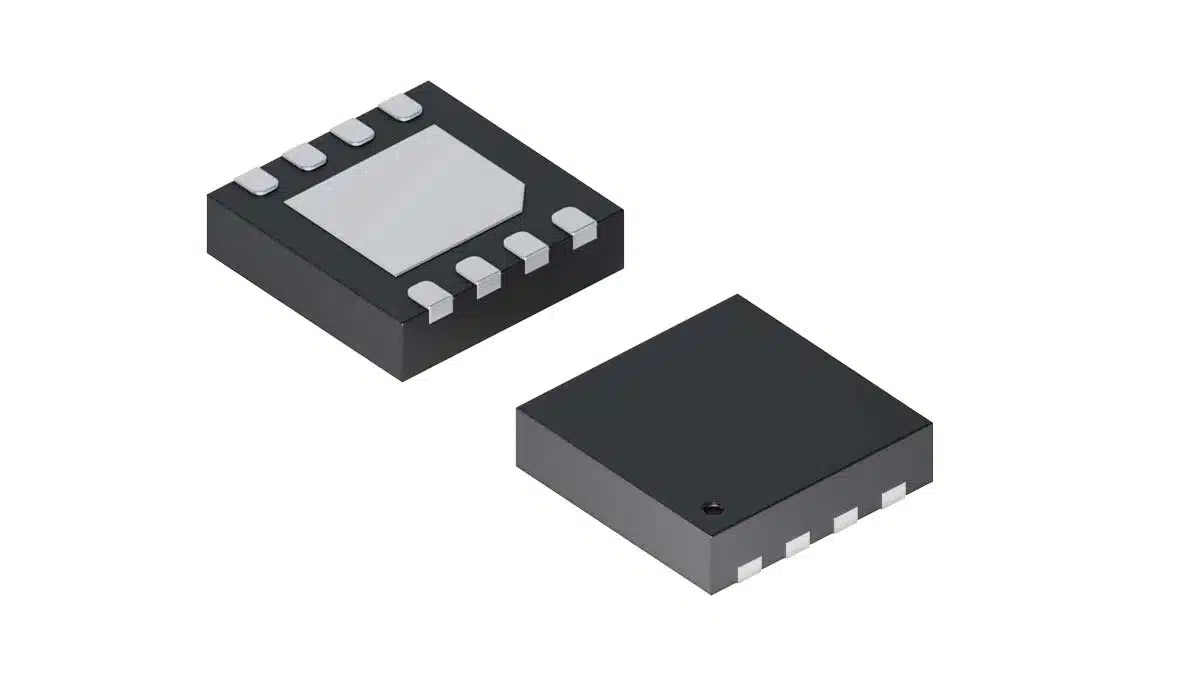
Littelfuse, Inc., an industrial technology manufacturing company empowering a sustainable, connected, and safer world, today announced the launch of the CPC1601M, an innovative 60 V, 2 A normally open (1-Form-A) solid-state latching relay designed to address critical integration and power efficiency challenges in thermostats, HVAC systems, and building automation. (View the video in English, Chinese & Japanese.)

RelatedPosts

Littelfuse Expands High-Voltage TVS Diodes

Littelfuse Presents Ultra-Miniature Half-Pitch SMT DIP Switches

Littelfuse NANO2 415 SMD Fuse Wins 2025 Product of the Year

The CPC1601M is the first PCB-mounted solid-state relay of its kind that combines load-powered operation with a latching architecture in a 3 × 3 mm DFN package. Its ability to harvest operating power directly from the load or draw less than 1 μA from the system supply enables zero-power operation, dramatically extending battery life or eliminating the need for batteries.

“With the launch of the CPC1601M, we’re giving our customers a powerful new tool to design smarter, more efficient control systems, especially in space-constrained and energy-sensitive applications like building automation,” said Dr. Hugo Guzman, Product Marketing Manager at Littelfuse.

“This innovative SSR (relay) reduces system power consumption through its unique load-powered operation and simplifies integration into both modern and legacy installations. It’s a natural extension of our solid-state relay portfolio, reinforcing our commitment to solving real-world design challenges with compact, reliable, and forward-thinking solutions.”

Solving Real-World Challenges

For engineers designing smart thermostats and two-wire control systems, the CPC1601M removes the need for a common (C) wire, simplifying installations, especially in older buildings. Its solid-state operation also eliminates clicking sounds and moving parts, offering a silent and long-lasting alternative to mechanical relays. End-users benefit from slimmer, quieter, and maintenance-free devices, while installers save time and cost by avoiding additional wiring or external power kits.

Features and Benefits

  • Latching relay architecture requires only a single pulse to change states, minimizing energy draw.
  • Harvest mode enables operation using only the open-circuit load—no system power required.
  • Power output pin provides up to 10 mW to external circuits, supporting additional low-power functions.
  • Compact 3 × 3 mm DFN package reduces PCB footprint and enables ultra-thin device profiles.
  • Zero-cross switching reduces electrical noise and improves reliability in AC loads.
  • TTL/CMOS-compatible inputs ensure easy integration with microcontrollers or logic circuits.

Markets & Application

  • Smart thermostats
  • Fire alarm panels
  • Security and access control systems
  • Building and HVAC automation
  • Industrial control systems
  • Utility metering and instrumentation

The CPC1601M marks a significant expansion of the Littelfuse solid-state relay portfolio, reinforcing its position as a leader in innovative switching solutions for next-generation control systems.


Related

Source: Littelfuse

Recent Posts

Planar vs Conventional Transformer: When it Make Sense

11.5.2026
28

Nichicon ADN Automotive Hybrid Aluminum Capacitors Now Available in EMEA

11.5.2026
21

Stackpole Expanded its AlN Thick Film Chip Resistors

6.5.2026
22

Würth Elektronik Introduces Compact Flat-wire SMT Power Inductors for Automotive

5.5.2026
48

KYOCERA AVX Extends MLV Varistors for 48V Automotive Protection

5.5.2026
23

YAGEO Introduces C0G Flexible Termination Automotive MLCCs

30.4.2026
34

SCHURTER Releases SMT Micro Switch for Compact HMIs

30.4.2026
12

binder Releases Tool‑Tightenable M12 Connectors for Improved Reliability

30.4.2026
12

Vishay Introduced Thin Film Submount Platform for Optical and RF Modules

30.4.2026
33

Upcoming Events

May 13
17:00 - 17:30 CEST

Winding Loss Modeling for Toroidal Magnetics – Including Gapped Cores

May 19
16:00 - 17:00 CEST

Designing Qi2 Wireless Power Systems: Practical Development and EMC Optimization

Jun 2
16:00 - 17:00 CEST

Calculation, Simulation and Measurement of 800V EMC Filters

View Calendar

Popular Posts

  • Buck Converter Design and Calculation

    0 shares
    Share 0 Tweet 0
  • Boost Converter Design and Calculation

    0 shares
    Share 0 Tweet 0
  • Flyback Converter Design and Calculation

    0 shares
    Share 0 Tweet 0
  • LLC Resonant Converter Design and Calculation

    0 shares
    Share 0 Tweet 0
  • MLCC and Ceramic Capacitors

    0 shares
    Share 0 Tweet 0
  • Dual Active Bridge (DAB) Topology

    0 shares
    Share 0 Tweet 0
  • Capacitor Charging and Discharging

    0 shares
    Share 0 Tweet 0
  • What Electronics Engineer Needs to Know About Passive Low Pass Filters

    0 shares
    Share 0 Tweet 0
  • Ripple Current and its Effects on the Performance of Capacitors

    3 shares
    Share 3 Tweet 0
  • MLCC Case Sizes Standards Explained

    0 shares
    Share 0 Tweet 0

Newsletter Subscription


Passive Components Blog

© EPCI - Leading Passive Components Educational and Information Site

  • Home
  • Privacy Policy
  • EPCI Membership & Advertisement
  • About

No Result
View All Result
  • Home
  • Knowledge Blog
  • PCNS

© EPCI - Leading Passive Components Educational and Information Site

This website uses cookies. By continuing to use this website you are giving consent to cookies being used. Visit our Privacy and Cookie Policy.
Go to mobile version