


Passive Components Blog
No Result
View All Result
  • Home
  • NewsFilter
    • All
    • Aerospace & Defence
    • Antenna
    • Applications
    • Automotive
    • Capacitors
    • Circuit Protection Devices
    • electro-mechanical news
    • Filters
    • Fuses
    • Inductors
    • Industrial
    • Integrated Passives
    • inter-connect news
    • Market & Supply Chain
    • Market Insights
    • Medical
    • Modelling and Simulation
    • New Materials & Supply
    • New Technologies
    • Non-linear Passives
    • Oscillators
    • Passive Sensors News
    • Resistors
    • RF & Microwave
    • Telecommunication
    • Weekly Digest

    High-Q RF & Microwave MLCCs: A Cross-Vendor Benchmark

    Molex Unveils Automotive Ethernet Connectors for Next‑Gen SDV Architectures

    TAIYO YUDEN Introduced Hybrid Aluminum Capacitors for 48V Automotive Power Supplies

    ECIA Industry Pulse June 2026 Reaches Five‑Year High

    YAGEO Announces July 2026 Capacitor Price Increase

    YAGEO Presents Single-Phase Common Mode Chokes for Industrial EMI Suppression

    Enabling the 800 V AI Server Era: How C0G High-Voltage MLCC Supports Next-Generation Power Architectures

    binder Prints Electronics on 3D Components Connector Surface

    Vishay Introduces SMD Polymer PTC Thermistors for Fast Resettable Overcurrent Protection

    Trending Tags

    • Ripple Current
    • RF
    • Leakage Current
    • Tantalum vs Ceramic
    • Snubber
    • Low ESR
    • Feedthrough
    • Derating
    • Dielectric Constant
    • New Products
    • Market Reports
  • VideoFilter
    • All
    • Antenna videos
    • Capacitor videos
    • Circuit Protection Video
    • Filter videos
    • Fuse videos
    • Inductor videos
    • Inter-Connect Video
    • Non-linear passives videos
    • Oscillator videos
    • Passive sensors videos
    • Resistor videos

    KYOCERA AVX Presents Antenna Integrator Studio Tutorial for Antenna Placement and RF Design

    Power Design Simulation Tools for Faster Inductor Selection and Loss Optimization

    EMC‑Compliant PCB and Connector Design Guidelines

    Why Isolated DC/DC Power Supplies Fail Late, Würth Elektronik Podcast

    Designing 800 V DC EMC Filters: Calculation, Simulation and Measurement

    Current Sense Transformer Datasheet and Design‑in Guide

    Designing a USB Type‑C Flyback Planar Transformer with Frenetic’s Planar Tool

    Magnetics Design in High‑Frequency GaN Converters

    Qi2 Wireless Charging: Inductors, Capacitors and EMC Filters

    Trending Tags

    • Capacitors explained
    • Inductors explained
    • Resistors explained
    • Filters explained
    • Application Video Guidelines
    • EMC
    • New Products
    • Ripple Current
    • Simulation
    • Tantalum vs Ceramic
  • Knowledge Blog
  • DossiersNew
  • Suppliers
    • Who is Who
  • PCNS
    • PCNS 2025
    • PCNS 2023
    • PCNS 2021
    • PCNS 2019
    • PCNS 2017
  • Events
  • Home
  • NewsFilter
    • All
    • Aerospace & Defence
    • Antenna
    • Applications
    • Automotive
    • Capacitors
    • Circuit Protection Devices
    • electro-mechanical news
    • Filters
    • Fuses
    • Inductors
    • Industrial
    • Integrated Passives
    • inter-connect news
    • Market & Supply Chain
    • Market Insights
    • Medical
    • Modelling and Simulation
    • New Materials & Supply
    • New Technologies
    • Non-linear Passives
    • Oscillators
    • Passive Sensors News
    • Resistors
    • RF & Microwave
    • Telecommunication
    • Weekly Digest

    High-Q RF & Microwave MLCCs: A Cross-Vendor Benchmark

    Molex Unveils Automotive Ethernet Connectors for Next‑Gen SDV Architectures

    TAIYO YUDEN Introduced Hybrid Aluminum Capacitors for 48V Automotive Power Supplies

    ECIA Industry Pulse June 2026 Reaches Five‑Year High

    YAGEO Announces July 2026 Capacitor Price Increase

    YAGEO Presents Single-Phase Common Mode Chokes for Industrial EMI Suppression

    Enabling the 800 V AI Server Era: How C0G High-Voltage MLCC Supports Next-Generation Power Architectures

    binder Prints Electronics on 3D Components Connector Surface

    Vishay Introduces SMD Polymer PTC Thermistors for Fast Resettable Overcurrent Protection

    Trending Tags

    • Ripple Current
    • RF
    • Leakage Current
    • Tantalum vs Ceramic
    • Snubber
    • Low ESR
    • Feedthrough
    • Derating
    • Dielectric Constant
    • New Products
    • Market Reports
  • VideoFilter
    • All
    • Antenna videos
    • Capacitor videos
    • Circuit Protection Video
    • Filter videos
    • Fuse videos
    • Inductor videos
    • Inter-Connect Video
    • Non-linear passives videos
    • Oscillator videos
    • Passive sensors videos
    • Resistor videos

    KYOCERA AVX Presents Antenna Integrator Studio Tutorial for Antenna Placement and RF Design

    Power Design Simulation Tools for Faster Inductor Selection and Loss Optimization

    EMC‑Compliant PCB and Connector Design Guidelines

    Why Isolated DC/DC Power Supplies Fail Late, Würth Elektronik Podcast

    Designing 800 V DC EMC Filters: Calculation, Simulation and Measurement

    Current Sense Transformer Datasheet and Design‑in Guide

    Designing a USB Type‑C Flyback Planar Transformer with Frenetic’s Planar Tool

    Magnetics Design in High‑Frequency GaN Converters

    Qi2 Wireless Charging: Inductors, Capacitors and EMC Filters

    Trending Tags

    • Capacitors explained
    • Inductors explained
    • Resistors explained
    • Filters explained
    • Application Video Guidelines
    • EMC
    • New Products
    • Ripple Current
    • Simulation
    • Tantalum vs Ceramic
  • Knowledge Blog
  • DossiersNew
  • Suppliers
    • Who is Who
  • PCNS
    • PCNS 2025
    • PCNS 2023
    • PCNS 2021
    • PCNS 2019
    • PCNS 2017
  • Events
No Result
View All Result
Passive Components Blog
No Result
View All Result

Panasonic Releases SMD Solid Polymer Aluminum Electrolytic Capacitors with Extended Lifetime

8.3.2022
Reading Time: 4 mins read
A A

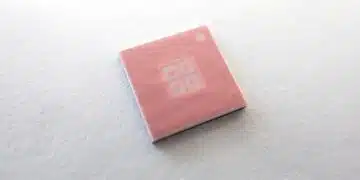
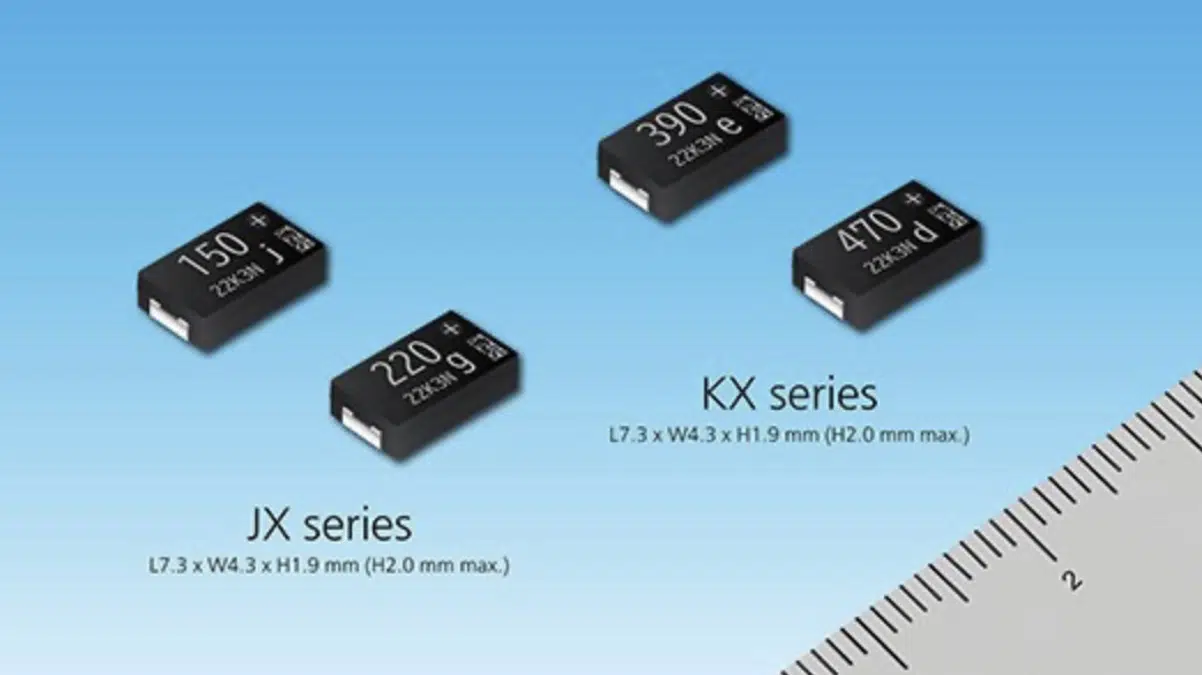
Panasonic Corporation releases the KX Series SP-Cap® conductive polymer aluminum electrolytic capacitors with industry’s longest 5,500 hours of endurance life time.

Panasonic Corporation announced today that its Industry Company has commercialized the KX series of SP-Cap® conductive polymer aluminum electrolytic capacitors[1] with the highest level of reliability in the industry – up to 5,500 hours of endurance at 125°C. This new series of capacitors is suitable for use in power circuits for servers and communication base stations, etc. that require capacitors with a higher durability for high-speed communications. Mass production of the new capacitors will start in April 2022.

RelatedPosts

Panasonic Releases Relays for IEC 62955 Compliant Single‑Phase EV Wallboxes

Panasonic High Precision Chip Resistors Bridge Gap Between Thin and Thick Technology

Panasonic Releases Transparent EMI Shielding Film for Displays

Panasonic pursues even higher endurance performance in the development of conductive polymer aluminum electrolytic capacitors. With the combination of its proprietary conductive polymer forming technology and manufacturing process technology, the company has commercialized the KX series of SP-Cap® with the industry’s longest endurance*1 of 5,500 hours at 125°C, 1.8 times the lifetime of the JX series SP-Cap®.

Panasonic has also expanded the JX series SP-Cap® product lineup with low-ESR[2] products and an added range of rated voltages.

Furthermore, both the KX and JX series of SP-Cap® guarantee long endurance even under high temperature and high humidity conditions – 1,000 hours at 85°C/85% (dump-heat steady state).

Panasonic contributes to stabilizing power supply circuits through the development of conductive polymer aluminum electrolytic capacitors that feature low ESR and excellent large capacitance characteristics.

Applications:

Output-side of low voltage power rail in power supply circuits employed in the ICT infrastructure industries such as communication base stations, servers, etc.

Features:

  1. Achieving the Industry’s Longest*1 5,500 Hours of Endurance at 125°C: KX series SP-Cap®Panasonic’s SP-Cap® capacitors adopt a stacking structure of capacitor elements using aluminum electrode foils. With the combination of the company’s proprietary conductive polymer forming technology and manufacturing process technology, the KX series SP-Cap® capacitors achieve high reliability with endurance of 5,500 hours at 125°C – 1.8 times the lifetime of the JX series SP-Cap®.
  2. Product lineup expansion with addition of low-ESR products and a further variety of rated voltages: JX series SP-Cap®. Panasonic has added products with ESR of 3/4.5 mΩ (100 kHz) to the 2 V and 2.5 V product lineups (currently, 9 mΩ / 100 kHz) as well as increasing the variety of rated voltages by adding 4 V and 6.3 V products (currently 2 V and 2.5 V). These products will facilitate equipment design with long endurance, contributing to performance improvements.
  3. Space-saving and lowering environmental impact. The newly developed capacitors, with an effective capacitance equivalent to that of MLCCs, enable a reduction in the number of required capacitors. Replacing multiple MLCCs with an SP-Cap® capacitor will reduce mounting areas and enable the miniaturization of equipment, thereby lowering environmental impact through the reduction of materials used.

Basic specifications:

KX series SP-Cap®

  • Rated Voltage: 2-2.5V
  • Capacitance: 220 – 470 μF
  • Category temperature range: -55°C to +125°C
  • Endurance: 125°C 5,500 hours
  • ESR: 9 mΩ max.(100 kHz/+20℃)
  • Dimensions: L7.3 mm x W4.3 mm x H1.9 mm

JX series SP-Cap®

  • Rated Voltage: 2-6.3V
  • Capacitance: 120 – 470 μF
  • Category temperature range: -55°C to +125°C
  • Endurance: 125°C 3,000 hours
  • ESR: 3-15 mΩ max.(100 kHz/+20℃)
  • Dimensions: L7.3 mm x W4.3 mm x H1.9 mm

Term Descriptions:

  1. Conductive polymer aluminum electrolytic capacitors. A collective term for aluminum electrolytic capacitors that use a conductive polymer, which is a solid electrolyte, instead of an electrolytic solution. There are two types of structures: the wound type, as used in conventional aluminum electrolytic capacitors, and the stacking type. Conductive polymers have high conductivity and excellent low ESR characteristics. *SP-Cap® is a registered trademark of Panasonic Corporation.
  2. ESR (Equivalent Series Resistance). ESR stands for equivalent series resistance, which is a resistance component on the equivalent circuit of electrolytic capacitors. Capacitors with a lower ESR value allow more ripple currents, as well as exhibiting excellent noise absorption.

Related

Source: Panasonic

Recent Posts

High-Q RF & Microwave MLCCs: A Cross-Vendor Benchmark

2.7.2026
31

TAIYO YUDEN Introduced Hybrid Aluminum Capacitors for 48V Automotive Power Supplies

2.7.2026
18

YAGEO Announces July 2026 Capacitor Price Increase

1.7.2026
266

Enabling the 800 V AI Server Era: How C0G High-Voltage MLCC Supports Next-Generation Power Architectures

1.7.2026
76

MLCCs in the Age of AI: Q2 2026 Market Tightness

30.6.2026
228

AI Hardware Demand for Passive Components Dossier

30.6.2026
78

Skeleton Supercapacitor Achieves UL‑certified 3,500 A Peak Current for AI Data Centers

26.6.2026
63

100 V Hybrid Polymer Capacitor from VINA Enesol Targets 48–72 V Power Platforms

26.6.2026
129

Using a Virtual Anode Thermal Model to Evaluate Miniaturization Risk in Tantalum Capacitors

24.6.2026
45

Upcoming Events

Jul 14
16:00 - 17:00 CEST

EMC Design Essentials: Mastering Varistors and Common Mode Chokes

Jul 21
16:00 - 17:00 CEST

Safety by design: X and Y Interference suppression capacitors for power line filters

Jul 28
8:00 - 11:00 CEST

Post Procurement Testing of EEE Components for LEO Space Applications

View Calendar

Popular Posts

  • Boost Converter Design and Calculation

    0 shares
    Share 0 Tweet 0
  • Buck Converter Design and Calculation

    0 shares
    Share 0 Tweet 0
  • LLC Resonant Converter Design and Calculation

    0 shares
    Share 0 Tweet 0
  • Flyback Converter Design and Calculation

    0 shares
    Share 0 Tweet 0
  • MLCC and Ceramic Capacitors

    0 shares
    Share 0 Tweet 0
  • Nvidia Vera Rubin: Why One AI Rack Needs So Many More MLCC Capacitors

    0 shares
    Share 0 Tweet 0
  • Earthing Systems and IEC Classification Explained

    0 shares
    Share 0 Tweet 0
  • Dual Active Bridge (DAB) Topology

    0 shares
    Share 0 Tweet 0
  • MLCC Case Sizes Standards Explained

    0 shares
    Share 0 Tweet 0
  • SEPIC Converter Design and Calculation

    0 shares
    Share 0 Tweet 0

Newsletter Subscription


Passive Components Blog

© EPCI - Leading Passive Components Educational and Information Site

  • Home
  • Privacy Policy
  • EPCI Membership & Advertisement
  • About

No Result
View All Result
  • Home
  • Knowledge Blog
  • Dossiers
  • PCNS

© EPCI - Leading Passive Components Educational and Information Site

This website uses cookies. By continuing to use this website you are giving consent to cookies being used. Visit our Privacy and Cookie Policy.
Go to mobile version