


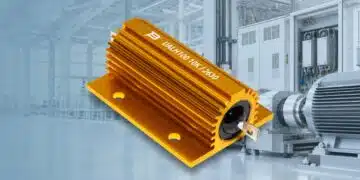


This article written by Jennifer Lewis, published by TTI Market Eye clarifies critical role of high-frequency resistors in 5G wireless communication systems.
You may have already experienced the benefits of 5G — while chatting on a Zoom call, streaming video, or playing a game online. It’s extremely fast, especially when compared to 4G and 3G. But without high-frequency resistors, your video chat may have been a series of Picasso-esque frozen frames, and that realistic video game may have looked more like Pacman.
This is because high-frequency resistors allow 5G-enabled devices and network components to send messages back and forth. Without properly configured resistors, every communication would suffer from dropouts, glitches, or complete failure. High-frequency resistors play a pivotal role in the booming market of 5G wireless communication systems.
Understanding High-Frequency Resistors
A high-frequency resistor excels at providing resistance at high frequencies. In this way, it enables:
- Precision and stability. High-frequency signals can travel through the resistor to the receiving component at the exact rate they need to and without excessive power fluctuations.
- Power handling capabilities. With the right resistor, you don’t have to worry about excessive power burning out electrical components on the other side.
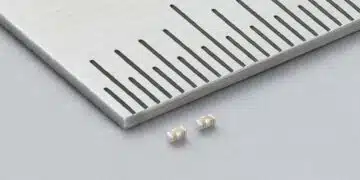
- Miniaturization and compact designs. The correct high-speed resistor is compact and can fit in tiny devices, including 5G-capable personal, wearable, and small IoT devices.
The Crucial Role of High-Frequency Resistors in 5G Systems
High-frequency resistors make 5G communications possible because they can manage the increased number of signals that travel across high 5G frequencies.
Signal Processing in 5G Networks
5G networks operate at far higher frequencies than their 4G and 3G predecessors. This is why they can transmit so much information so quickly. A 3G network may only allow you to send around 2 or 3 Megabits per second. That means that a 720p video, which may contain around 17Mbps, may have a hard time playing.
When you step up to 4G LTE, you may get around 20 Mbps, so your 720 video may come through, or it could be a little choppy occasionally as the signal fluctuates.
With 5G, you’d have no problem. You can expect real-world speeds of about 200 MBPS or higher, peaking at around 10Gbps.
The Role of Resistors in High-speed Signal Processing
This is possible because the frequency at which the data gets sent out is far higher. For instance, on a high-band 5G network, you may see frequencies as high as 24 GHz. In other words, if each wave sends a single unit of information, you’d be getting 24 billion units of data every second. That’s almost 10 times more than what 4G produces, which tops out at around 2.5 GHz.
To process these billions of signals, you need a high-frequency resistor. In this way, a cell phone, smartwatch, surgical instrument, or other IoT device can function without dropouts or excessive latency.
Signal Integrity Challenges
High-frequency signals can present a challenge because as the amount of data you transmit goes up, so does the chance of error. However, high-frequency resistors enable the kind of precise, reliable signal processing a 5G device needs to communicate. As a result, data-packed streaming, whether it’s used for a video chat or to control an automated vehicle, provides devices with accurate, consistent, uninterrupted information.
The Demand for Precision and Reliability
5G networks use multiple technologies that enhance precision, such as massive multiple input, multiple output (MIMO), beamforming, and, as alluded to above, millimeter-wave technology. With high-frequency resistors, these technologies can process billions of signals, aiming them at specific devices, for instance, without suffering from latency or an unreliable signal.
How High-Frequency Resistors Address the Specific Needs of 5G Systems
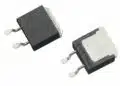
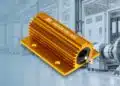
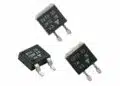
High-frequency resistors use materials and precisely-engineering configurations to operate at the high frequencies that 5G systems depend on.
This may involve the use of thin-film or thick-film resistors. The electrical signal passes through, some of it gets shed as heat energy, allowing only the exact amount to reach the device.
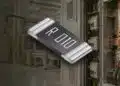
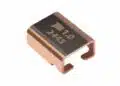
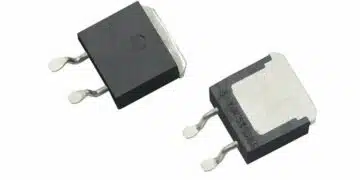
Similarly, chip resistors are mounted on the surface of devices, positioned in such a way as to dispel just the right amount of electricity, preventing it from overloading the device it’s traveling to.
For instance, an augmented reality system, which superimposes computerized images over real ones, can receive realistic, detailed images and send vast amounts of data about the real world without suffering from reliability issues.
With high-frequency resistors, users can enjoy:
- Enhanced performance at higher frequencies. There’s no need to worry about whether a device will be able to handle real-time AI, machine learning, or big data processing functions, for example.
- Improved power handling for increased data rates. By combining multiple high-frequency resistors, you have the freedom to power high-speed, parallel computing systems that can process large volumes of data.
Market Trends and Growth Factors
The current market for high-frequency resistors is positive, partly due to the emergence of 5G technology. One of the downsides of 5G is because it operates at such high frequencies, devices need to be relatively close to each other to avoid signal degradation. While a 3G signal can travel for several miles, a millimeter wave 5G transmission may only travel a couple thousand feet in a dense, crowded, urban setting.
So, to enable a robust 5G network, you need many devices strung together to ensure high-speed connectivity. This requires more high-frequency resistors.
Similarly, designers need high-frequency resistors to build mobile and IoT devices that are 5G-compatible. As 5G-powered data signals become more and more commonplace, a device without high-speed resistors may drift into obsolescence.
Challenges and Innovations
Some of the biggest challenges in manufacturing and sourcing high-frequency resistors include:
- Creating resistors that provide optimum resistance levels. No two applications are the same, and manufacturers need to diversify the kinds of resistors they offer to meet a wider range of needs.
- Ensuring adequate miniaturization. Many 5G devices have to fit in the palm of your hand or smaller spaces. This requires miniaturized high-frequency resistors to balance their power management.
- Choosing the best resistor for your application. With the variety of resistance levels, materials, and form factors available, it can be a challenge to pinpoint the best high-frequency resistor for your specific application. You also have to take into consideration heat management, spatial, and other engineering factors in the decision-making process.
The following innovations make meeting these challenges a little easier:
- Advanced thin-film technologies. With ultra-thin materials, it’s easier to configure resistors according to very precise needs.
- Advanced modeling techniques. Using computer simulations, engineers can ascertain exactly how different iterations of the resistors they are designing will perform under varying conditions.
- Customized and holistic design principles. Using Agile methodologies and other cross-functional approaches, designers can customize high-frequency resistors by taking into account the rest of the tech stack, component capabilities, and aesthetic factors.
Future Prospects
Several emerging technologies will continue to increase the demand for high-frequency resistors. For example:
- IoT-enabled medical devices and tools that connect to 5G networks will need high-speed resistors to process and transmit data.
- Self-driving vehicles will also drive the need for more high-frequency resistors as they consume and transmit vast amounts of data every second.
- Manufacturers undergoing digital transformations will often need 5G connectivity to gather and analyze data from the factory floor in real-time.
As 5G develops, it’s likely that the capabilities of its core functions, such as MIMO and beamforming, will be extended over greater distances. This may involve using additional devices in networks or further fine-tuning how devices adjust the trajectory and amplitude of their signals. Regardless of how the innovation plays out, high-frequency resistors will be pivotal in the production process.
High-frequency Resistors Are the Backbone of 5G Technology
With high-frequency resistors, 5G technologies can transmit, receive, and process data at speed without worrying about signal degradation, latency, or unreliability. This creates a symbiotic relationship between 5G’s technological advancements and resistor innovation. 5G tech can only move forward as resistor technology advances.