




Passive Components Blog
No Result
View All Result
  • Home
  • NewsFilter
    • All
    • Aerospace & Defence
    • Antenna
    • Applications
    • Automotive
    • Capacitors
    • Circuit Protection Devices
    • electro-mechanical news
    • Filters
    • Fuses
    • Inductors
    • Industrial
    • Integrated Passives
    • inter-connect news
    • Market & Supply Chain
    • Market Insights
    • Medical
    • Modelling and Simulation
    • New Materials & Supply
    • New Technologies
    • Non-linear Passives
    • Oscillators
    • Passive Sensors News
    • Resistors
    • RF & Microwave
    • Telecommunication
    • Weekly Digest

    April 2026 Interconnect, Passives and Electromechanical Components Market Insights

    SPICE Simulation of Non-Linear Resistors: Vishay’s Thermistor and PPTC Modelling Ecosystem

    KYOCERA AVX Introduces Traction‑Grade DC Link Film Capacitors

    When More Capacitance Hurts Reliability: The Role of the Metallic Skeleton in Tantalum Anodes

    Why Power Inductors Use a Ferrite Core With an Air Gap

    Wk 16 Electronics Supply Chain Digest

    YAGEO Introduces High‑Current Y2/X1 Film Capacitors for Wide-bandgap Power Systems

    Amphenol Explanded Liquid Cooling Connectors for AI, ESS and EV Systems

    Hirose Introduced BGA connector for PCIe Gen6 for AI and Edge Computing

    Trending Tags

    • Ripple Current
    • RF
    • Leakage Current
    • Tantalum vs Ceramic
    • Snubber
    • Low ESR
    • Feedthrough
    • Derating
    • Dielectric Constant
    • New Products
    • Market Reports
  • VideoFilter
    • All
    • Antenna videos
    • Capacitor videos
    • Circuit Protection Video
    • Filter videos
    • Fuse videos
    • Inductor videos
    • Inter-Connect Video
    • Non-linear passives videos
    • Oscillator videos
    • Passive sensors videos
    • Resistor videos

    Why Power Inductors Use a Ferrite Core With an Air Gap

    Transformer-Based Power-Line Harvester Magnetic Design

    Thermal Modeling of Magnetics

    Standard vs Planar LLC transformers Comparison for Battery Chargers

    How Modern Tools Model Magnetic Components for Power Electronics

    Advanced Loss Modeling for Planar Magnetics in the Frenetic Planar Tool

    2026 Power Magnetics Design Trends: Flyback, DAB and Planar

    Enabling Software‑Defined Vehicle Architectures: Automotive Ethernet and Zonal Smart Power

    Calculating Resistance Value of a Flyback RC Snubber 

    Trending Tags

    • Capacitors explained
    • Inductors explained
    • Resistors explained
    • Filters explained
    • Application Video Guidelines
    • EMC
    • New Products
    • Ripple Current
    • Simulation
    • Tantalum vs Ceramic
  • Knowledge Blog
  • DossiersNew
  • Suppliers
    • Who is Who
  • PCNS
    • PCNS 2025
    • PCNS 2023
    • PCNS 2021
    • PCNS 2019
    • PCNS 2017
  • Events
  • Home
  • NewsFilter
    • All
    • Aerospace & Defence
    • Antenna
    • Applications
    • Automotive
    • Capacitors
    • Circuit Protection Devices
    • electro-mechanical news
    • Filters
    • Fuses
    • Inductors
    • Industrial
    • Integrated Passives
    • inter-connect news
    • Market & Supply Chain
    • Market Insights
    • Medical
    • Modelling and Simulation
    • New Materials & Supply
    • New Technologies
    • Non-linear Passives
    • Oscillators
    • Passive Sensors News
    • Resistors
    • RF & Microwave
    • Telecommunication
    • Weekly Digest

    April 2026 Interconnect, Passives and Electromechanical Components Market Insights

    SPICE Simulation of Non-Linear Resistors: Vishay’s Thermistor and PPTC Modelling Ecosystem

    KYOCERA AVX Introduces Traction‑Grade DC Link Film Capacitors

    When More Capacitance Hurts Reliability: The Role of the Metallic Skeleton in Tantalum Anodes

    Why Power Inductors Use a Ferrite Core With an Air Gap

    Wk 16 Electronics Supply Chain Digest

    YAGEO Introduces High‑Current Y2/X1 Film Capacitors for Wide-bandgap Power Systems

    Amphenol Explanded Liquid Cooling Connectors for AI, ESS and EV Systems

    Hirose Introduced BGA connector for PCIe Gen6 for AI and Edge Computing

    Trending Tags

    • Ripple Current
    • RF
    • Leakage Current
    • Tantalum vs Ceramic
    • Snubber
    • Low ESR
    • Feedthrough
    • Derating
    • Dielectric Constant
    • New Products
    • Market Reports
  • VideoFilter
    • All
    • Antenna videos
    • Capacitor videos
    • Circuit Protection Video
    • Filter videos
    • Fuse videos
    • Inductor videos
    • Inter-Connect Video
    • Non-linear passives videos
    • Oscillator videos
    • Passive sensors videos
    • Resistor videos

    Why Power Inductors Use a Ferrite Core With an Air Gap

    Transformer-Based Power-Line Harvester Magnetic Design

    Thermal Modeling of Magnetics

    Standard vs Planar LLC transformers Comparison for Battery Chargers

    How Modern Tools Model Magnetic Components for Power Electronics

    Advanced Loss Modeling for Planar Magnetics in the Frenetic Planar Tool

    2026 Power Magnetics Design Trends: Flyback, DAB and Planar

    Enabling Software‑Defined Vehicle Architectures: Automotive Ethernet and Zonal Smart Power

    Calculating Resistance Value of a Flyback RC Snubber 

    Trending Tags

    • Capacitors explained
    • Inductors explained
    • Resistors explained
    • Filters explained
    • Application Video Guidelines
    • EMC
    • New Products
    • Ripple Current
    • Simulation
    • Tantalum vs Ceramic
  • Knowledge Blog
  • DossiersNew
  • Suppliers
    • Who is Who
  • PCNS
    • PCNS 2025
    • PCNS 2023
    • PCNS 2021
    • PCNS 2019
    • PCNS 2017
  • Events
No Result
View All Result
Passive Components Blog
No Result
View All Result

Researchers Evaluate Fungal Electronics Potential

14.1.2022
Reading Time: 5 mins read
A A
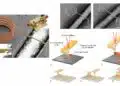
Fungal Electronics; Image Credit: Adamatzky, A et al., axriv

Fungal Electronics; Image Credit: Adamatzky, A et al., axriv

Researchers from UK and EU explore possibilities of manufacturing devices from pure mycelium or mycelial composites, a paper has been published in arXiv.

Fungal electronics is a family of living electronic devices made of mycelium bound composites or pure mycelium. Fungal electronic devices are capable of changing their impedance and generating spikes of electrical potential in response to external control parameters. Fungal electronics can be embedded into fungal materials and wearables or used as stand alone sensing and computing devices.

RelatedPosts

Electroninks Releases Gold and Platinum Particle-Free Conductive Inks

Peak Nano Installs Production Line for Innovative Capacitor Films

Electrical Properties Study of SMD Resistor Integrated Metallic Yarn for Smart Textiles

Flexible electronic devices have many designs. Typical designs include thin-film pressure sensors and transistors embedded in materials such as polymers and multilayered graphene. Hybrid electrodes can be printed to provide applications for piezoresistive pressure sensing or electromyographic recording, and other designs include devices with intrinsically conductive polymer-filled channels. Components that give flexible devices the ability to power themselves have been investigated in recent years.

Whilst typical flexible electronic devices have superior mechanical and electrical properties, they lack the ability to repair themselves or grow. Possessing these properties would be hugely advantageous to flexible electronic devices, helping to develop applications for fields such as “living” architecture, self-growing soft robots, and the development of smart materials. To overcome these issues, components based on biological organisms have been explored.

To explore the potential of flexible, smart electronics with self-repair and growth properties, the team behind the research in arXiv have investigated the development of various fungal electronic devices their application. The research includes explorations of fungal memristors, electronic oscillators, sensors that can detect pressure, chemical, and optical changes, and electrical analog computers.

Fungal Memristors

Memristors are resistors that possess a memory capability. In a memristor, the resistance is dependent on the past signal waveform of the current across it. A state-dependent Ohm’s law governs the function of a memristor. A memristor can be used to provide functionalities that are not possible with standard resistors, capacitors, or inductors. Another term for a memristors is a Resistive Switching Device and they contain two or three terminals.

In the research focused on using P. ostractus fruit bodies to create fungal memristors. Ideally, a memristor will have a crossing point at 0V. By attaching electrodes to the fruit bodies, a signal was recorded at this voltage, demonstrating that fungal bodies could generate a current. Thus, it was concluded that fungal bodies could be used as potential memristors.

Fungal Oscillators

In an oscillator, direct current is converted into an alternating current. To investigate the potential of fungal oscillators, the team carried out a series of experiments by applying a direct voltage to fungal substrates of P. ostractus and measuring the output voltage. The results of these experiments demonstrated clear voltage spikes using the mycelial-bound composite. It was concluded that fungi could be used in biological circuit designs as very low-frequency electronic oscillators.

Fungal Pressure Sensors

The research used blocks of substrate colonized with G. resinaceum. A 16 kg weight was rested on the blocks of the substrate with electrodes attaches to measure the fungal composite’s electrical activity when exposed to pressure.

The recorded electrical spikes demonstrated that the fungal composite could detect when the cast-iron weight was rested on it and when it was taken off, and the team concluded that fungal composite materials could be used as components in organic-based pressure sensors and in fungal building materials.

Fungal Photosensors

By using sheets of G. resinaceum skin, the research demonstrated the possibility of using mycelial composites in photosensors. The response to illumination in the fungi caused a raise in baseline potential, and the response did not subside until the illumination was ceased. The research concluded that the fungi displayed a change in electrical potential in response to illumination, facilitating their potential use as actuators and logical circuits with optical inputs.

Fungal Chemical Sensors

Hemp colonized with P. ostractus mycelium was used to test the response of fungal composites to chemical stimuli. The composites responded to these stimuli by increasing their frequency of electrical potential spiking. Whilst the research identified that this showed enormous potential, it pointed out that research is needed into calibrating these materials.

Mycelial Analog Computing

The research used Aspergillus niger fungal strains to investigate using fungi as components in electrical analog computers. It was found that mycelium-bound composites could implement a range of Boolean circuits, demonstrating their potential for hybrid and biological analog computing.

Potential Applications

Researchers propose a potential practical implementation of the electronic properties of fungi would be in sensorial and computing circuits embedded into mycelium bound composites. For example, an approach of exploiting reservoir computing for sensing, where the information about the environment is encoded in the state of the reservoir memristive computing medium, can be employed to prototype sensing-memritive devices from living fungi.

A very low frequency of fungal electronic oscillators does not preclude us from considering inclusion of the oscillators in fully living or hybrid analog circuits embedded into fungal architectures and future specialised circuits and processors made from living fungi functionalised with nanoparticles, as have been illustrated in prototypes of hybrid electronic devices with slime mould.

Electrical resistance of living substrates is used to identify their morphological and physiological state. Examples include determination of states of organs, detection of decaying wood in living trees, estimation of root vigour, the study of freeze-thaw injuries of plants, as well as classification of breast tissue.

Reference

Adamatzky, A et al. (2021) Fungal electronics [online] axriv.org. Available at: https://arxiv.org/abs/2111.11231

Related

Recent Posts

April 2026 Interconnect, Passives and Electromechanical Components Market Insights

22.4.2026
6

When More Capacitance Hurts Reliability: The Role of the Metallic Skeleton in Tantalum Anodes

20.4.2026
23

Why Power Inductors Use a Ferrite Core With an Air Gap

20.4.2026
15

AI-Assisted Structural Diagnostics and Physics-Based Reliability Interpretation of Tantalum Capacitor Anodes

14.4.2026
33

ECIA March 2026 Industry Pulse Points to Best Sales Climate in Five Years

13.4.2026
49

March 2026 Interconnect, Passives and Electromechanical Components Market Insights

2.4.2026
114

APEC 2026 Power Electronics Trends and Implications for Passive Components

1.4.2026
136

Indias ECMS Wave Brings New Capacity For Passive Components Manufacturing in India

31.3.2026
58

Panasonic High Precision Chip Resistors Bridge Gap Between Thin and Thick Technology

30.3.2026
93

Upcoming Events

Apr 29
10:00 - 11:00 CDT

SEPIC Design Done Right

May 5
16:00 - 17:00 CEST

Understanding and Selecting Capacitors – Fundamentals, Technologies and Latest Trends

May 12
16:00 - 17:00 CEST

Accelerating Power Supply Design with Wurth Elektronik and STMicroelectronics

View Calendar

Popular Posts

  • Buck Converter Design and Calculation

    0 shares
    Share 0 Tweet 0
  • Boost Converter Design and Calculation

    0 shares
    Share 0 Tweet 0
  • Flyback Converter Design and Calculation

    0 shares
    Share 0 Tweet 0
  • LLC Resonant Converter Design and Calculation

    0 shares
    Share 0 Tweet 0
  • MLCC and Ceramic Capacitors

    0 shares
    Share 0 Tweet 0
  • Dual Active Bridge (DAB) Topology

    0 shares
    Share 0 Tweet 0
  • Capacitor Charging and Discharging

    0 shares
    Share 0 Tweet 0
  • What Electronics Engineer Needs to Know About Passive Low Pass Filters

    0 shares
    Share 0 Tweet 0
  • MLCC Case Sizes Standards Explained

    0 shares
    Share 0 Tweet 0
  • Ripple Current and its Effects on the Performance of Capacitors

    3 shares
    Share 3 Tweet 0

Newsletter Subscription


Passive Components Blog

© EPCI - Leading Passive Components Educational and Information Site

  • Home
  • Privacy Policy
  • EPCI Membership & Advertisement
  • About

No Result
View All Result
  • Home
  • Knowledge Blog
  • PCNS

© EPCI - Leading Passive Components Educational and Information Site

This website uses cookies. By continuing to use this website you are giving consent to cookies being used. Visit our Privacy and Cookie Policy.
Go to mobile version