




Passive Components Blog
No Result
View All Result
  • Home
  • NewsFilter
    • All
    • Aerospace & Defence
    • Antenna
    • Applications
    • Automotive
    • Capacitors
    • Circuit Protection Devices
    • electro-mechanical news
    • Filters
    • Fuses
    • Inductors
    • Industrial
    • Integrated Passives
    • inter-connect news
    • Market & Supply Chain
    • Market Insights
    • Medical
    • Modelling and Simulation
    • New Materials & Supply
    • New Technologies
    • Non-linear Passives
    • Oscillators
    • Passive Sensors News
    • Resistors
    • RF & Microwave
    • Telecommunication
    • Weekly Digest

    AI Data Centers Push Aluminium Capacitor Prices Higher

    Murata Releases 1210 Metal Terminal Common Mode Choke for 10Base‑T1S In‑Vehicle Ethernet

    DigiKey Ads 27,000 New In-Stock Parts and 104 Additional Suppliers in Q2 2026

    Würth Elektronik Coupled Inductors Harnessing Leakage Inductance in SEPIC, ZETA and Ćuk Converters

    Samsung Introduces Ultra‑compact, High‑Capacitance MLCCs for AI Edge and Wearable designs

    Knowles Presents Pulse Power Capacitors for Demanding MedTech, Industrial and Defense Applications

    Bourns Introduces LTCC Band Pass Filters for 5G C‑Band RF Front‑End Designs

    YAGEO Extends its Supercapacitor Series Line-Up

    SCHURTER Presents EKO High‑Voltage Fuses for Global Energy Systems

    Trending Tags

    • Ripple Current
    • RF
    • Leakage Current
    • Tantalum vs Ceramic
    • Snubber
    • Low ESR
    • Feedthrough
    • Derating
    • Dielectric Constant
    • New Products
    • Market Reports
  • VideoFilter
    • All
    • Antenna videos
    • Capacitor videos
    • Circuit Protection Video
    • Filter videos
    • Fuse videos
    • Inductor videos
    • Inter-Connect Video
    • Non-linear passives videos
    • Oscillator videos
    • Passive sensors videos
    • Resistor videos

    EMC Design Fundamentals: Safe Use of Varistors and Common Mode Chokes in Mains and Data-Line Filters

    Ferrite versus Nanocrystalline Power Inductor Cores: Turns, Gap and Size

    KYOCERA AVX Presents Antenna Integrator Studio Tutorial for Antenna Placement and RF Design

    Power Design Simulation Tools for Faster Inductor Selection and Loss Optimization

    EMC‑Compliant PCB and Connector Design Guidelines

    Why Isolated DC/DC Power Supplies Fail Late, Würth Elektronik Podcast

    Designing 800 V DC EMC Filters: Calculation, Simulation and Measurement

    Current Sense Transformer Datasheet and Design‑in Guide

    Designing a USB Type‑C Flyback Planar Transformer with Frenetic’s Planar Tool

    Trending Tags

    • Capacitors explained
    • Inductors explained
    • Resistors explained
    • Filters explained
    • Application Video Guidelines
    • EMC
    • New Products
    • Ripple Current
    • Simulation
    • Tantalum vs Ceramic
  • Knowledge Blog
  • Dossiers
    • AI Hardware Dossier
    • Power Converter Dossier
    • Automotive Dossier
    • Capacitor Dossier
    • Resistor Dossier
    • Inductor Dossier
    • Circuit Protection Dossier
  • Suppliers
    • Who is Who
  • PCNS
    • PCNS 2025
    • PCNS 2023
    • PCNS 2021
    • PCNS 2019
    • PCNS 2017
  • Events
  • Home
  • NewsFilter
    • All
    • Aerospace & Defence
    • Antenna
    • Applications
    • Automotive
    • Capacitors
    • Circuit Protection Devices
    • electro-mechanical news
    • Filters
    • Fuses
    • Inductors
    • Industrial
    • Integrated Passives
    • inter-connect news
    • Market & Supply Chain
    • Market Insights
    • Medical
    • Modelling and Simulation
    • New Materials & Supply
    • New Technologies
    • Non-linear Passives
    • Oscillators
    • Passive Sensors News
    • Resistors
    • RF & Microwave
    • Telecommunication
    • Weekly Digest

    AI Data Centers Push Aluminium Capacitor Prices Higher

    Murata Releases 1210 Metal Terminal Common Mode Choke for 10Base‑T1S In‑Vehicle Ethernet

    DigiKey Ads 27,000 New In-Stock Parts and 104 Additional Suppliers in Q2 2026

    Würth Elektronik Coupled Inductors Harnessing Leakage Inductance in SEPIC, ZETA and Ćuk Converters

    Samsung Introduces Ultra‑compact, High‑Capacitance MLCCs for AI Edge and Wearable designs

    Knowles Presents Pulse Power Capacitors for Demanding MedTech, Industrial and Defense Applications

    Bourns Introduces LTCC Band Pass Filters for 5G C‑Band RF Front‑End Designs

    YAGEO Extends its Supercapacitor Series Line-Up

    SCHURTER Presents EKO High‑Voltage Fuses for Global Energy Systems

    Trending Tags

    • Ripple Current
    • RF
    • Leakage Current
    • Tantalum vs Ceramic
    • Snubber
    • Low ESR
    • Feedthrough
    • Derating
    • Dielectric Constant
    • New Products
    • Market Reports
  • VideoFilter
    • All
    • Antenna videos
    • Capacitor videos
    • Circuit Protection Video
    • Filter videos
    • Fuse videos
    • Inductor videos
    • Inter-Connect Video
    • Non-linear passives videos
    • Oscillator videos
    • Passive sensors videos
    • Resistor videos

    EMC Design Fundamentals: Safe Use of Varistors and Common Mode Chokes in Mains and Data-Line Filters

    Ferrite versus Nanocrystalline Power Inductor Cores: Turns, Gap and Size

    KYOCERA AVX Presents Antenna Integrator Studio Tutorial for Antenna Placement and RF Design

    Power Design Simulation Tools for Faster Inductor Selection and Loss Optimization

    EMC‑Compliant PCB and Connector Design Guidelines

    Why Isolated DC/DC Power Supplies Fail Late, Würth Elektronik Podcast

    Designing 800 V DC EMC Filters: Calculation, Simulation and Measurement

    Current Sense Transformer Datasheet and Design‑in Guide

    Designing a USB Type‑C Flyback Planar Transformer with Frenetic’s Planar Tool

    Trending Tags

    • Capacitors explained
    • Inductors explained
    • Resistors explained
    • Filters explained
    • Application Video Guidelines
    • EMC
    • New Products
    • Ripple Current
    • Simulation
    • Tantalum vs Ceramic
  • Knowledge Blog
  • Dossiers
    • AI Hardware Dossier
    • Power Converter Dossier
    • Automotive Dossier
    • Capacitor Dossier
    • Resistor Dossier
    • Inductor Dossier
    • Circuit Protection Dossier
  • Suppliers
    • Who is Who
  • PCNS
    • PCNS 2025
    • PCNS 2023
    • PCNS 2021
    • PCNS 2019
    • PCNS 2017
  • Events
No Result
View All Result
Passive Components Blog
No Result
View All Result

Murata Releases 1210 Metal Terminal Common Mode Choke for 10Base‑T1S In‑Vehicle Ethernet

30.7.2026
Reading Time: 7 mins read
A A

Automotive Ethernet is rapidly moving from infotainment into safety‑critical control networks, and passive components now have to meet stricter signal integrity and reliability requirements.

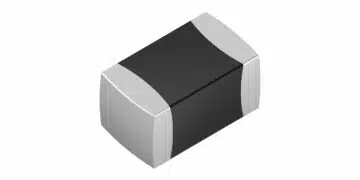
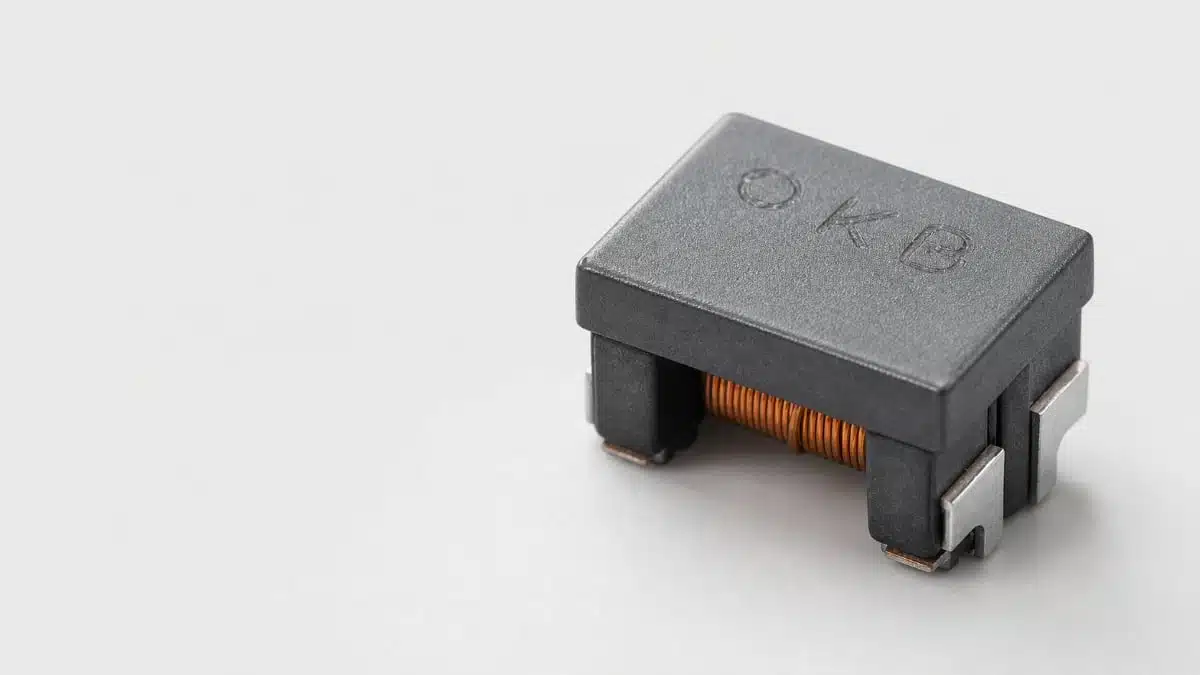
Murata’s DLW32MH241MX2 is a 1210 size metal‑terminal common mode choke coil designed specifically to meet the OPEN Alliance 10Base‑T1S in‑vehicle Ethernet specifications, giving hardware designers a qualified drop‑in option for new automotive interfaces.

RelatedPosts

June 2026: AI Demand Pushes Japanese and Korean MLCC Makers to Five‑Year Shipment High

Murata Unveils Lead Disc Ceramic Capacitors for Automotive Safety and EMI Suppression

Murata Expands Ansys Simulation Models for RF inductors, MLCCs, and Power Inductors

Key features and benefits

  • Dedicated 10Base‑T1S compliance
    The DLW32MH241MX2 is engineered to satisfy Scc21: Class3 (240 µH) and Cp: Class3 (≤ 10 pF) requirements defined by the OPEN Alliance 10Base‑T1S in‑vehicle Ethernet standard, so designers can focus on system‑level validation instead of choke coil qualification according to manufacturer datasheet.
  • Automotive‑grade robustness
    The component is AEC‑Q200 compliant, indicating that it has passed automotive stress tests for thermal cycling, mechanical shock, vibration, and humidity according to manufacturer datasheet. This makes it suitable for deployment in ECUs exposed to harsh under‑hood and chassis environments.
  • Compact 1210 footprint with metal terminals
    With a 3.2 × 2.5 mm footprint, the choke fits the 1210 inch size class and uses metal terminal technology to improve mechanical strength and solder joint reliability. Metal terminals help absorb board flex and thermal stress, reducing the risk of micro‑cracks or solder fatigue in long‑life automotive designs.
  • Wide operating temperature range
    The specified operating temperature range of −40 to 125 °C aligns with typical automotive component classes according to manufacturer datasheet. This supports placement close to heat‑generating ICs and in engine compartment environments.
  • Optimized for low‑speed single‑pair Ethernet
    The nominal common mode inductance of 240 µH at 0.1 MHz with a tolerance of −20%/+50% is tuned for common‑mode noise suppression on 10 Mbps single‑pair Ethernet lines. This helps maintain signal integrity over cable harnesses without excessive insertion loss in the differential signal band.

Main specifications overview

ParameterValue / classification
Product numberDLW32MH241MX2
Size class1210 inch (3.2 × 2.5 mm)
Common mode inductance240 µH (−20% / +50%) at 0.1 MHz
Rated voltage80 V
Rated current70 mA
Operating temperature−40 to 125 °C
Automotive qualificationAEC‑Q200 compliant
Target standard10Base‑T1S, Scc21: Class3, Cp: Class3

Typical applications

The DLW32MH241MX2 is targeted at signal‑line common mode noise suppression in automotive Ethernet networks, specifically where 10Base‑T1S single‑pair links are used.

  • Domain and zone controllers
    Central vehicle computers and gateway ECUs that aggregate data from multiple sensors and actuators can use 10Base‑T1S for deterministic, low‑speed control traffic. The choke coil sits close to the Ethernet PHY, suppressing common‑mode noise injected onto harnesses.
  • Sensor and actuator nodes
    Smart sensors (e.g. radar modules with low‑rate configuration channels), motor drivers, and other distributed nodes can use 10Base‑T1S to simplify cabling. The component helps ensure EMC compliance when cables run near high‑current wiring or switching power stages.
  • Body and comfort systems
    Door modules, seat controllers, HVAC units, and lighting controllers increasingly rely on networked communication instead of standalone CAN segments. A dedicated 10Base‑T1S choke simplifies EMC design when migrating these subsystems to Ethernet‑based architectures.
  • Transition from CAN to Ethernet
    As OEMs move from legacy CAN bus to Ethernet for control interfaces, mixed networks and adapter modules must maintain compatibility and meet EMC standards. Using a choke coil validated for 10Base‑T1S reduces integration risk when introducing Ethernet into existing harness topologies.

In practice, the choke will be placed either in front of or behind the Ethernet PHY on each twisted pair, typically in series with the line, forming part of the common‑mode filter network together with surge protection and termination components.

Technical highlights

10Base‑T1S and OPEN Alliance requirements

10Base‑T1S is an in‑vehicle single‑pair Ethernet standard capable of 10 Mbps communication over a single twisted pair. It is designed for multi‑drop topologies and relatively short distances typical of automotive harnesses. The OPEN Alliance specification defines classes for common mode choke coils:

  • Scc21: Class3 defines the required common mode inductance (240 µH) at a specific test frequency.
  • Cp: Class3 defines the maximum parasitic capacitance (≤ 10 pF).

Meeting these values is critical: too little inductance reduces common‑mode attenuation, while too high parasitic capacitance can distort the differential signal and increase insertion loss or reflections at the operating frequency band.

Metal terminal structure

Murata integrates metal terminal technology into the DLW32MH241MX2. Compared with conventional chip inductors with exposed ceramic ends, metal terminals:

  • Improve mechanical robustness by decoupling ceramic stress from PCB flex.
  • Offer more consistent solder fillets and wetting, which is beneficial for automated optical inspection and reliability analysis.
  • Help mitigate failures due to board warpage during reflow, especially on large automotive PCBs.

For designers, this means the choke can be placed in areas subject to mechanical stress (e.g. near board edges or mounting points) with lower risk of cracking.

Electrical ratings and derating considerations

  • The rated voltage of 80 V is sufficient for typical automotive Ethernet applications, which operate well below this level in normal conditions but may see transient spikes.
  • The rated current of 70 mA covers common 10Base‑T1S PHY implementations that operate at low line currents.
  • The wide inductance tolerance (−20%/+50%) reflects the design trade‑off between meeting EMC targets and manufacturing dispersion; selection should be done with this spread in mind when simulating line behavior.

Although exact derating curves and frequency characteristics are not detailed in the press release, engineers should refer to the manufacturer datasheet for impedance vs. frequency plots, insertion loss, and common‑mode attenuation to finalize filter design.

Design‑in notes for engineers

  • Follow 10Base‑T1S layout guidelines
    Place the common mode choke as close as possible to the Ethernet PHY line pins, keeping the differential pair tightly coupled and length‑matched through the component. Avoid unnecessary vias and stubs around the choke to minimize impedance discontinuities.
  • Consider EMC at harness level
    The choke’s primary role is to attenuate common‑mode noise that can radiate from vehicle wiring. Combine it with proper cable shielding, connector selection, and return path control to meet CISPR and OEM‑specific EMC requirements.
  • Account for inductance tolerance in simulations
    Use the worst‑case range of 240 µH with −20%/+50% tolerance in signal integrity and EMC simulations. This helps ensure sufficient margin even when components are at tolerance extremes.
  • Verify thermal behavior in actual ECU
    Although the component is specified up to 125 °C, local hot spots near power devices can push temperatures higher in practice. Include the common mode choke in thermal analysis and, if possible, measure its case temperature in prototype units.
  • Check compatibility with other Ethernet variants
    While DLW32MH241MX2 is targeted at 10Base‑T1S, using it in other Ethernet PHY configurations (e.g. different single‑pair standards) should be evaluated against their specific choke requirements. The manufacturer’s recommended interface list is a useful starting point.
  • Plan for mechanical robustness and assembly
    The metal terminal design helps with board flex and vibration, but overall ECU mechanical design (mounting points, enclosure stiffness) still matters. Align the component orientation with the main flex directions of the PCB and adhere to recommended land pattern dimensions from the datasheet.

Source

This article is based on information published in the manufacturer’s product and event news press release for the DLW32MH241MX2, complemented by the official product page and recommended interface documentation according to manufacturer datasheet and related materials.
References

  1. Murata press release – DLW32MH241MX2 1210 metal terminal common mode choke for 10Base‑T1S
  2. Murata product page – DLW32MH241MX2
  3. Murata – List of recommended common mode choke coils per in‑vehicle interfaces (PDF)

Related

Recent Posts

Würth Elektronik Coupled Inductors Harnessing Leakage Inductance in SEPIC, ZETA and Ćuk Converters

29.7.2026
26

YAGEO Extends its Supercapacitor Series Line-Up

28.7.2026
46

SCHURTER Presents EKO High‑Voltage Fuses for Global Energy Systems

28.7.2026
16

TDK Releases SMD Common‑Mode Chokes for Compact High‑Current EMI Filtering

28.7.2026
31

Samsung Introduces 1000V C0G and X7 MLCCs for 800V DC Systems

27.7.2026
57

Exxelia Offers 1200V Capacitors and Magnetics for 800V Aerospace Platforms

22.7.2026
62

Bourns Introduces Automotive BMS Signal Transformer with Integrated Common Mode Chokes

17.7.2026
46

Itelcond Introduces High‑Voltage Aluminium Capacitors for Modern IGBT DC‑links

17.7.2026
100

Bourns Introduces Automotive Shielded Power Inductors for Compact DC‑DC Converters

16.7.2026
70

Upcoming Events

Sep 29
16:00 - 17:00 CEST

Cybersecurity 2026

View Calendar

Popular Posts

  • Buck Converter Design and Calculation

    0 shares
    Share 0 Tweet 0
  • YAGEO Announces July 2026 Capacitor Price Increase

    0 shares
    Share 0 Tweet 0
  • Boost Converter Design and Calculation

    0 shares
    Share 0 Tweet 0
  • LLC Resonant Converter Design and Calculation

    0 shares
    Share 0 Tweet 0
  • Flyback Converter Design and Calculation

    0 shares
    Share 0 Tweet 0
  • MLCCs in the Age of AI: Q2 2026 Market Tightness

    0 shares
    Share 0 Tweet 0
  • MLCC and Ceramic Capacitors

    0 shares
    Share 0 Tweet 0
  • Earthing Systems and IEC Classification Explained

    0 shares
    Share 0 Tweet 0
  • Dual Active Bridge (DAB) Topology

    0 shares
    Share 0 Tweet 0
  • Nvidia Vera Rubin: Why One AI Rack Needs So Many More MLCC Capacitors

    0 shares
    Share 0 Tweet 0

Newsletter Subscription


Passive Components Blog

© EPCI - Leading Passive Components Educational and Information Site

  • Home
  • Privacy Policy
  • EPCI Membership & Advertisement
  • About

No Result
View All Result
  • Home
  • Knowledge Blog
  • Dossiers
  • PCNS

© EPCI - Leading Passive Components Educational and Information Site

This website uses cookies. By continuing to use this website you are giving consent to cookies being used. Visit our Privacy and Cookie Policy.