




Passive Components Blog
No Result
View All Result
  • Home
  • News
    • All
    • Aerospace & Defence
    • Antenna
    • Applications
    • Automotive
    • Capacitors
    • Circuit Protection Devices
    • electro-mechanical news
    • Filters
    • Fuses
    • Inductors
    • Industrial
    • Integrated Passives
    • inter-connect news
    • Market & Supply Chain
    • Market Insights
    • Medical
    • Modelling and Simulation
    • New Materials & Supply
    • New Technologies
    • Non-linear Passives
    • Oscillators
    • Passive Sensors News
    • Resistors
    • RF & Microwave
    • Telecommunication
    • Weekly Digest
    onsemi solid-state transformer concept for 800 V HVDC AI data center power conversion with SiC modules, DC-link capacitors and high-frequency magnetics

    Solid-State Transformers for 800 V AI Data Centers: Passive Component Design Considerations

    Littelfuse TX00AT314AMA omnipolar TMR magnetic switch sensor in a leaded TO-92-3 through-hole package

    Littelfuse Expands Omnipolar TMR Switch with Leaded TO-92 Package Option

    SCHURTER THT DIP Switches Support Hardware-Level Configuration

    TDK CN series 10 µF 100 V X7R soft-termination multilayer ceramic capacitor in 3225 EIA 1210 package

    TDK Releases 100 V Soft-Termination X7R MLCCs 10 uF in 3225 Package

    Compact inductive rotary position encoder sensor near a motor shaft, representing the Vishay RAIK045I MP encoder category

    Vishay Introduces 16-Bit Inductive Encoder for Motor-Adjacent Position Sensing

    Hirose FH51 automotive FPC/FFC connector with low-profile receptacle construction and top-and-bottom contact arrangement

    Hirose Automotive FPC/FFC Connector Adds One-Action Mating up to 125°C

    Overview of fabricated ferroelectric capacitors improving hyperdimensional computing task learning accuracy. a The experimental work reported in this study comprises ferroelectric capacitor (FeCAP) device fabrication, structural and electrical characterization, analog state identification and their reliability study. b The computational part of the work explores the benefits of using characteristics from the fabricated devices in a hyperdimensional computing scheme; source: authors

    High-Precision Hyperdimensional Computing with Multi-Level Ferroelectric HZO Capacitors

    Coilcraft Introduces Automotive Common Mode Chokes Target CISPR 25 Class 5 EMC Compliance

    Murata Expands Automotive Metal Power Inductor Range

    Trending Tags

    • Ripple Current
    • RF
    • Leakage Current
    • Tantalum vs Ceramic
    • Snubber
    • Low ESR
    • Feedthrough
    • Derating
    • Dielectric Constant
    • New Products
    • Market Reports
  • Knowledge Blog
  • Dossiers
    • AI Hardware Dossier
    • Automotive Dossier
    • Industrial Robotics Dossier
    • Power Converter Dossier
    • Capacitor Dossier
    • Resistor Dossier
    • Inductor Dossier
    • Circuit Protection Dossier
  • Suppliers
    • Who is Who
  • PCNS
    • PCNS 2025
    • PCNS 2023
    • PCNS 2021
    • PCNS 2019
    • PCNS 2017
  • Events
  • Home
  • News
    • All
    • Aerospace & Defence
    • Antenna
    • Applications
    • Automotive
    • Capacitors
    • Circuit Protection Devices
    • electro-mechanical news
    • Filters
    • Fuses
    • Inductors
    • Industrial
    • Integrated Passives
    • inter-connect news
    • Market & Supply Chain
    • Market Insights
    • Medical
    • Modelling and Simulation
    • New Materials & Supply
    • New Technologies
    • Non-linear Passives
    • Oscillators
    • Passive Sensors News
    • Resistors
    • RF & Microwave
    • Telecommunication
    • Weekly Digest
    onsemi solid-state transformer concept for 800 V HVDC AI data center power conversion with SiC modules, DC-link capacitors and high-frequency magnetics

    Solid-State Transformers for 800 V AI Data Centers: Passive Component Design Considerations

    Littelfuse TX00AT314AMA omnipolar TMR magnetic switch sensor in a leaded TO-92-3 through-hole package

    Littelfuse Expands Omnipolar TMR Switch with Leaded TO-92 Package Option

    SCHURTER THT DIP Switches Support Hardware-Level Configuration

    TDK CN series 10 µF 100 V X7R soft-termination multilayer ceramic capacitor in 3225 EIA 1210 package

    TDK Releases 100 V Soft-Termination X7R MLCCs 10 uF in 3225 Package

    Compact inductive rotary position encoder sensor near a motor shaft, representing the Vishay RAIK045I MP encoder category

    Vishay Introduces 16-Bit Inductive Encoder for Motor-Adjacent Position Sensing

    Hirose FH51 automotive FPC/FFC connector with low-profile receptacle construction and top-and-bottom contact arrangement

    Hirose Automotive FPC/FFC Connector Adds One-Action Mating up to 125°C

    Overview of fabricated ferroelectric capacitors improving hyperdimensional computing task learning accuracy. a The experimental work reported in this study comprises ferroelectric capacitor (FeCAP) device fabrication, structural and electrical characterization, analog state identification and their reliability study. b The computational part of the work explores the benefits of using characteristics from the fabricated devices in a hyperdimensional computing scheme; source: authors

    High-Precision Hyperdimensional Computing with Multi-Level Ferroelectric HZO Capacitors

    Coilcraft Introduces Automotive Common Mode Chokes Target CISPR 25 Class 5 EMC Compliance

    Murata Expands Automotive Metal Power Inductor Range

    Trending Tags

    • Ripple Current
    • RF
    • Leakage Current
    • Tantalum vs Ceramic
    • Snubber
    • Low ESR
    • Feedthrough
    • Derating
    • Dielectric Constant
    • New Products
    • Market Reports
  • Knowledge Blog
  • Dossiers
    • AI Hardware Dossier
    • Automotive Dossier
    • Industrial Robotics Dossier
    • Power Converter Dossier
    • Capacitor Dossier
    • Resistor Dossier
    • Inductor Dossier
    • Circuit Protection Dossier
  • Suppliers
    • Who is Who
  • PCNS
    • PCNS 2025
    • PCNS 2023
    • PCNS 2021
    • PCNS 2019
    • PCNS 2017
  • Events
No Result
View All Result
Passive Components Blog
No Result
View All Result

Bourns Extends Current Sense Resistors for High-Current Power Designs with 0.1 mΩ, 15 W

26.8.2026
Reading Time: 7 mins read
A A

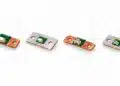
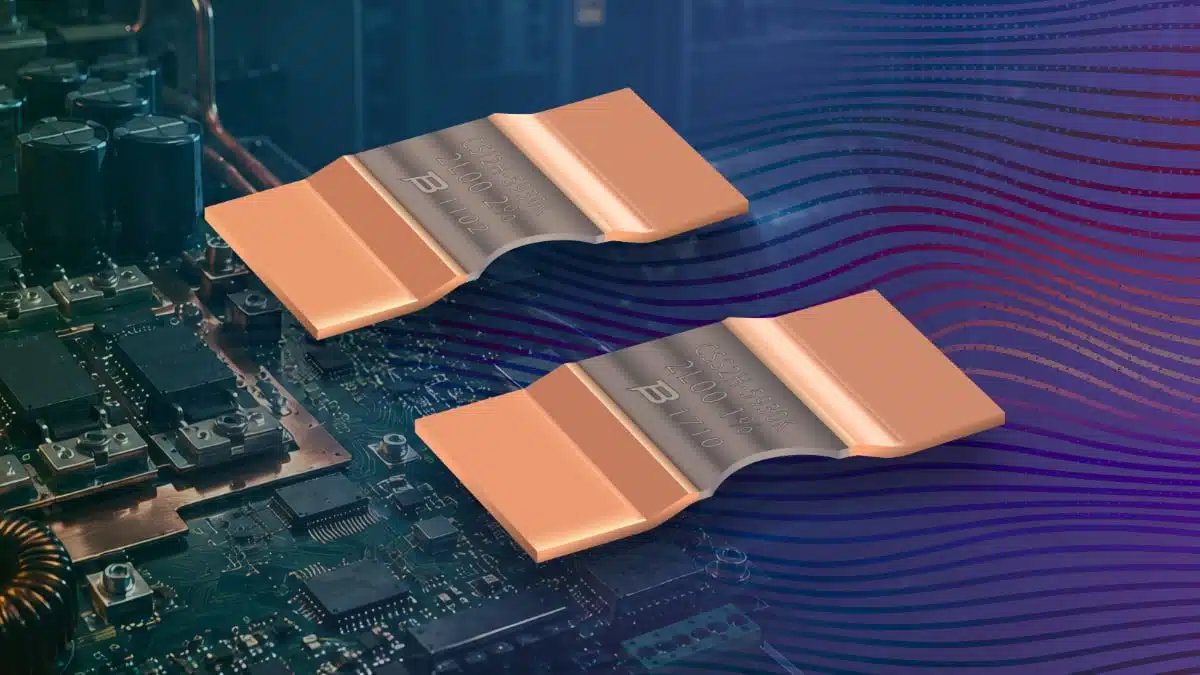
Bourns has extended its CSS2H-5930 and CSI2H-5930 current sense resistor families with 0.1 mΩ models rated at 15 W.

The ultra-low-resistance SMD shunts target applications where high current must be measured with minimal insertion loss, low inductance and controlled thermal drift.

RelatedPosts

Bourns Releases Low-Profile Incremental Ring Encoder Targets Compact Industrial HMIs

Bourns Copper-Electrode MOV Series Targets High-Energy Line Surge Protection

Bourns Expands 12 mm SMD Incremental Encoder with Shaft-Length Options for Compact HMI Controls

The new devices use an electron-beam-welded metal-strip construction. In practice, the 0.1 mΩ value reduces the sense-voltage burden and dissipation in demanding battery, converter and industrial power paths, while still providing a measurable signal for an appropriate current-sense amplifier or ADC.

Key features and benefits

  • 0.1 mΩ resistance and 15 W rating: This combination is intended for high-current paths where a conventional milliohm-range resistor would create excessive voltage drop and heat.
  • Low inductance: Bourns specifies less than 3 nH for Material Type R, supporting use in switching power stages and control loops where fast current transients must be measured with limited parasitic effects.
  • Electron-beam-welded metal-strip element: The construction is specified to provide low resistance, low thermal EMF and long-term stability.
  • Low TCR alloy: The resistive alloy is specified at ±50 ppm/°C from 20 °C to 60 °C, helping reduce resistance drift caused by changing operating temperature.
  • Wide operating-temperature range: Both new models are rated from −55 °C to +170 °C.
  • Automotive option: The CSS2H-5930R-L100x is stated to be AEC-Q200 compliant and automotive grade, making it relevant for qualified vehicle electronics programmes.
  • Environmental compliance: Bourns specifies RoHS compliance and halogen-free construction for the series.

A current sense shunt resistor converts load current into a small voltage drop. At very low resistance values, the practical design trade-off shifts toward measurement-chain offset, layout resistance and thermal gradients rather than simple resistor dissipation alone.

Technical highlights

ParameterCSS2H-5930R-L100xCSI2H-5930R-L100x
Resistance value0.1 mΩ0.1 mΩ
Power rating at 70 °C15 W15 W
Operating temperature−55 °C to +170 °C−55 °C to +170 °C
Resistive-alloy TCR, 20 °C to 60 °C±50 ppm/°C±50 ppm/°C
TCR including copper terminals, 20 °C to 60 °C±275 ppm/°C±275 ppm/°C
Inductance, Material Type R<3 nH<3 nH
Resistance tolerance±1%, ±5%±1%, ±2%, ±5%
Automotive qualificationAEC-Q200 compliant, automotive gradeNot stated

The difference between the alloy-only TCR and the TCR including copper terminals is important in sub-milliohm sensing. At 0.1 mΩ, terminal and PCB interconnect contributions can become a meaningful part of the total measurement error, particularly where current and temperature vary widely.

For a nominal 0.1 mΩ shunt, 100 A produces a 10 mV sense voltage and dissipates 1 W. At 300 A, the nominal voltage is 30 mV and dissipation is 9 W; final suitability still depends on the manufacturer’s derating data, PCB copper area, airflow, ambient temperature and overload conditions.

Typical applications

Bourns identifies the new 0.1 mΩ variants for:

  • Current sensing in high-current power paths
  • Battery management systems, specifically for the CSS2H-5930R-L100x
  • Power modules
  • Frequency converters
  • Industrial power systems
  • Voltage-divider functions where the electrical and power requirements are appropriate

The combination of a 15 W rating and sub-milliohm resistance is particularly relevant to battery charge/discharge monitoring, inverter phase-current measurement, motor drives, power-distribution monitoring and DC/DC converter protection functions.

Application fit

Design environmentWhy the 0.1 mΩ option may fitMain verification priority
Battery management systemLow loss in high-current charge and discharge paths; automotive-qualified CSS2H optionFull error budget across temperature, current range and connector/copper resistance
Inverter or frequency converterLow parasitic inductance supports fast switching-current measurementPulse performance, layout-induced noise and sense-amplifier bandwidth
Industrial power module15 W rating supports comparatively high continuous current with low burden voltageThermal spreading through PCB copper and system-level derating
Power-distribution monitoringLow voltage drop helps preserve rail efficiencyADC resolution and amplifier offset at low sense voltages

Design-in notes for engineers

  • Calculate the real operating point: Use P=I2RP=I2R for continuous dissipation, then apply the datasheet derating conditions. A 15 W nominal rating is not a substitute for checking the actual board-level thermal environment.
  • Account for low sense voltage: A 0.1 mΩ resistor produces only millivolt-level signals at many operating currents. Confirm that amplifier offset, gain error, ADC resolution and reference accuracy meet the required current-measurement error budget.
  • Use Kelvin sense routing: Route the voltage-sense pair from the inner edges of the resistor pads, separately from the high-current copper path. This is essential because milliohm and sub-milliohm measurements are easily distorted by trace and solder-joint voltage drops.
  • Keep the thermal environment symmetrical: Unequal heating of terminals, copper pours or nearby switching devices can add thermal EMF and resistance-related offset. Avoid placing sensitive sense traces near hot MOSFETs, inductors or switching nodes.
  • Check the complete temperature coefficient: The specified alloy TCR is only one contributor. For board-level accuracy, include the stated terminal-inclusive TCR, copper resistance and self-heating in the calculation.
  • Validate transient conditions: Evaluate start-up, battery fault, inrush, motor stall and short-circuit events against the manufacturer’s pulse and overload data according to the manufacturer datasheet.
  • Select tolerance deliberately: CSS2H offers ±1% and ±5% options, while CSI2H adds ±2%. Tighter initial tolerance can reduce calibration requirements, but it does not eliminate temperature-related and layout-related errors.
  • Confirm qualification status by exact part number: Bourns specifically identifies CSS2H-5930R-L100x as AEC-Q200 compliant and automotive grade. Do not extend that statement to other variants without checking the current manufacturer documentation.

For additional layout and error-budget guidance, see Overcoming the Challenges of Using Sub-Milliohm SMD Current Sense Chip Resistors.

Further reading

  • Current Sense Shunt Resistor
  • How to Choose Current Sense Resistor
  • Current Sense Resistor Selection Tradeoffs
  • Performance of AEC-Q200 Rated Power Resistors for Automotive Use

Source

This article is based on the Bourns manufacturer press release covering the CSS2H-5930 and CSI2H-5930 Series extensions. Engineers should consult the current manufacturer datasheet, derating curves, ordering information and qualification documentation before final component selection and design release.


  1. Bourns press release: Current Sense Resistors Add 0.1 mΩ Option for High-Current Sensing Applications
  2. Bourns CSS2H-5930 Series datasheet
  3. Bourns CSI2H-5930 Series datasheet
  4. Bourns current sense resistors and shunts

Related

Recent Posts

Littelfuse TX00AT314AMA omnipolar TMR magnetic switch sensor in a leaded TO-92-3 through-hole package

Littelfuse Expands Omnipolar TMR Switch with Leaded TO-92 Package Option

9.9.2026
2

SCHURTER THT DIP Switches Support Hardware-Level Configuration

9.9.2026
1
TDK CN series 10 µF 100 V X7R soft-termination multilayer ceramic capacitor in 3225 EIA 1210 package

TDK Releases 100 V Soft-Termination X7R MLCCs 10 uF in 3225 Package

9.9.2026
3
Compact inductive rotary position encoder sensor near a motor shaft, representing the Vishay RAIK045I MP encoder category

Vishay Introduces 16-Bit Inductive Encoder for Motor-Adjacent Position Sensing

9.9.2026
2
Hirose FH51 automotive FPC/FFC connector with low-profile receptacle construction and top-and-bottom contact arrangement

Hirose Automotive FPC/FFC Connector Adds One-Action Mating up to 125°C

8.9.2026
2

Bourns Releases Low-Profile Incremental Ring Encoder Targets Compact Industrial HMIs

7.9.2026
3

August 2026 Interconnect, Passives and Electromechanical Components Market Insights

4.9.2026
35

AEM Introduced High-Power Fuses for Compact Automotive and Industrial Overcurrent Protection

4.9.2026
8

Knowles Cornell Dubilier 105C Flatpack Aluminum Electrolytic Capacitors Target Low-Profile High-Density Power Designs

4.9.2026
31

Upcoming Events

Sep 10
11:00 - 12:00 CEST

Equipment models and model strategies for Space Missions

Sep 16
17:00 - 18:00 CEST

Designing a 5 kW, 800 V-to-50 V PSFB Converter for Next-Generation Data Centers

Sep 29
16:00 - 17:00 CEST

Cybersecurity 2026

View Calendar

Popular Posts

  • Buck Converter Design and Calculation

    0 shares
    Share 0 Tweet 0
  • LLC Resonant Converter Design and Calculation

    0 shares
    Share 0 Tweet 0
  • Boost Converter Design and Calculation

    0 shares
    Share 0 Tweet 0
  • Flyback Converter Design and Calculation

    0 shares
    Share 0 Tweet 0
  • Earthing Systems and IEC Classification Explained

    0 shares
    Share 0 Tweet 0
  • MLCC and Ceramic Capacitors

    0 shares
    Share 0 Tweet 0
  • Capacitor Charging and Discharging

    0 shares
    Share 0 Tweet 0
  • Resistor Symbols

    0 shares
    Share 0 Tweet 0
  • Audio Capacitors: Choosing Capacitors for Crossover Circuits

    0 shares
    Share 0 Tweet 0
  • Thermistors Basics, NTC and PTC Thermistors

    0 shares
    Share 0 Tweet 0

Newsletter Subscription


Passive Components Blog

© 2015–2026
All rights reserved

  • Home
  • Privacy Policy
  • EPCI Membership & Advertisement
  • About

No Result
View All Result
  • Home
  • Knowledge Blog
  • Dossiers
  • PCNS

© 2015–2026
All rights reserved